Rexroth LSC-130-4-30-560/RJ-S02 Industrial Network Interface for LSC Systems: Precision Data Link and Smart Factory Connection
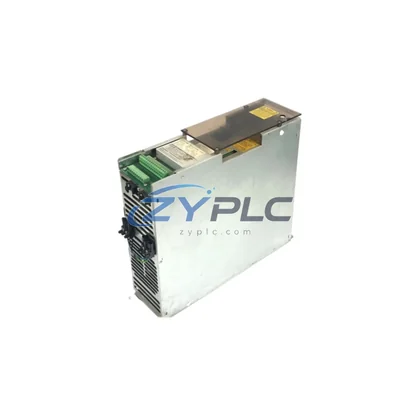
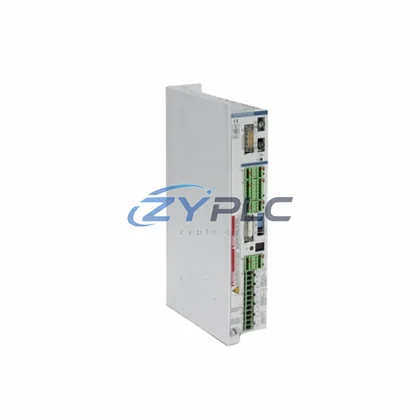
In modern industrial environments where every millisecond of latency and every byte of process data matters, the Bosch Rexroth LSC-130-4-30-560/RJ-S02 AC Servo Drive stands as a critical node in the real-time communication architecture of high-performance production lines. Built around the SERCOS III (Serial Real-time Communication System) industrial Ethernet protocol, this LSC Series servo drive does far more than convert electrical power into precise mechanical motion — it actively participates in the digital data fabric of the smart factory, enabling seamless integration between field-level actuators, motion controllers, SCADA systems, and upper-level MES platforms.
The LSC-130-4-30-560/RJ-S02 is engineered for demanding servo applications requiring synchronized multi-axis coordination, real-time feedback, and deterministic communication. Its SERCOS III interface delivers cycle times as low as 31.25 µs, making it suitable for high-speed packaging lines, precision CNC machining centers, semiconductor handling equipment, and automated assembly systems where positional accuracy and network responsiveness are non-negotiable.
Compatibility & Integration Notes
| Parameter |
Specification |
| Communication Protocol |
SERCOS III (Industrial Ethernet, IEC 61491) |
| Interface Type |
RJ-45 (Dual-port ring topology) |
| Cycle Time |
31.25 µs – 65 ms (configurable) |
| Network Compatibility |
Bosch Rexroth IndraMotion, IndraControl, IndraDrive systems |
| Power Supply Range |
560 V DC bus voltage |
| Rated Current |
30 A continuous |
| System Application |
Multi-axis servo systems, CNC, robotics, packaging, assembly |
| Remote Diagnostics |
Supported via SERCOS III parameter channel |
| Warranty |
warranty terms confirmed during quotation — Tested before shipment |
Connected Automation Data Flow
The LSC-130-4-30-560/RJ-S02 operates as an intelligent network participant within the Bosch Rexroth motion control ecosystem. In a typical smart factory deployment, the drive connects directly to a Rexroth IndraControl XM22 motion controller via SERCOS III ring topology, enabling deterministic real-time command and feedback exchange across all axes simultaneously. The controller issues position, velocity, and torque setpoints every servo cycle, while the LSC drive returns actual values, status words, and diagnostic data — all within a single network frame.
Upstream from the motion controller, a Rexroth IndraControl L65 PLC handles the logic layer, coordinating production sequences, safety interlocks, and recipe management. The PLC communicates with the motion controller over PROFINET, bridging the servo network to the plant-wide automation backbone. This architecture allows operators to monitor drive status, axis positions, and fault codes directly from a Rexroth IndraControl VPP 40 HMI panel without any additional protocol conversion hardware.
For remote monitoring and SCADA integration, the LSC-130-4-30-560/RJ-S02 exposes its full parameter set through the SERCOS III service channel, which can be accessed by a Rexroth IndraWorks DS engineering workstation or forwarded to a SCADA platform via an OPC-UA gateway. This enables plant engineers to perform remote diagnostics, trend analysis, and predictive maintenance scheduling without physical access to the control cabinet.
The drive’s DC bus is supplied by a Rexroth HMV01.1E-W0120 supply unit, which manages regenerative energy feedback to the grid during deceleration phases — a key contributor to overall system energy efficiency. Multiple LSC drives share the same DC bus rail, and the supply unit’s network interface reports real-time power consumption data to the energy management system, enabling granular energy accounting per production order.
On the feedback side, the LSC-130-4-30-560/RJ-S02 supports high-resolution encoder interfaces compatible with Rexroth IndraDyn S MSK servo motors, providing sub-micron positional resolution for precision applications. The encoder data is transmitted over the drive’s internal feedback bus and simultaneously made available on the SERCOS III network for cross-axis synchronization and electronic gearing functions.
For applications requiring distributed I/O at the machine level, a Rexroth Inline PROFINET I/O module cluster can be integrated alongside the servo system, connecting proximity sensors, pneumatic valve islands, and safety relays to the same network infrastructure. This eliminates dedicated point-to-point wiring and reduces cabinet complexity while improving diagnostic transparency.
All units supplied by ZYPLC are sourced from verified inventory channels, subjected to functional power-on testing, and shipped with a warranty terms confirmed during quotation. Each LSC-130-4-30-560/RJ-S02 is inspected for firmware version compatibility, connector integrity, and SERCOS III communication handshake before dispatch.
Solving Data Isolation in Industrial Sites
One of the most persistent challenges in industrial automation is the fragmentation of data across incompatible protocols and isolated control islands. A factory may operate Siemens PROFIBUS devices alongside Rexroth SERCOS III drives, Modbus RTU sensors, and EtherNet/IP safety systems — each generating valuable process data that never reaches the MES or ERP layer because no unified communication path exists.
The LSC-130-4-30-560/RJ-S02 addresses this at the drive level by providing a standards-compliant SERCOS III interface that integrates natively with Bosch Rexroth’s open automation platform. When combined with an appropriate protocol gateway — such as an HMS Anybus X-gateway bridging SERCOS III to PROFINET or EtherNet/IP — the drive’s real-time data becomes accessible to any upper-level system regardless of the plant’s existing network infrastructure.
This connectivity eliminates data silos by making drive-level information — including actual torque, speed, position error, temperature, and fault history — available to SCADA dashboards, OEE calculation engines, and predictive maintenance algorithms in real time. Production line transparency improves dramatically: operators can identify bottlenecks, detect abnormal vibration signatures, and schedule preventive maintenance based on actual operating hours rather than fixed calendar intervals.
For multi-site operations, the SERCOS III parameter channel enables remote firmware updates, parameter backup, and fault log retrieval without dispatching field engineers — reducing mean time to repair and minimizing unplanned downtime. The drive’s dual-port ring topology also provides automatic network reconfiguration in the event of a single cable fault, ensuring communication continuity in critical production environments.
Industrial Connectivity FAQ
Q1: What communication protocol does the LSC-130-4-30-560/RJ-S02 support, and what cycle times are achievable?
The drive uses SERCOS III, an IEC 61491-compliant industrial Ethernet protocol. Minimum cycle time is 31.25 µs, making it suitable for high-speed synchronized multi-axis applications. The dual-port RJ-45 interface supports ring topology for automatic fault recovery.
Q2: Is the LSC-130-4-30-560/RJ-S02 compatible with non-Rexroth control systems?
The drive is optimized for Bosch Rexroth IndraMotion and IndraControl platforms. Integration with third-party controllers is possible via SERCOS III master implementations or protocol gateways. Compatibility should be verified against the target controller’s SERCOS III master specification before deployment.
Q3: What testing is performed before shipment, and what does the warranty terms confirmed during quotation cover?
Every unit undergoes functional power-on testing, SERCOS III communication handshake verification, and physical inspection before dispatch. The warranty terms confirmed during quotation covers manufacturing defects and functional failures under normal operating conditions. ZYPLC provides technical support and replacement coordination throughout the warranty period.
Q4: Can the drive’s parameters be backed up and restored remotely?
Yes. The SERCOS III service channel supports full parameter read/write access, enabling remote backup, restoration, and firmware updates via an IndraWorks DS engineering workstation or compatible SERCOS III master. This capability significantly reduces commissioning time for replacement units and supports centralized parameter management across multi-axis systems.