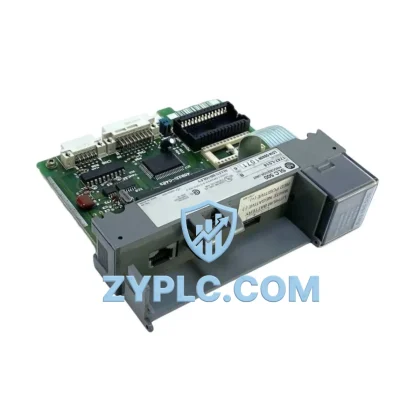
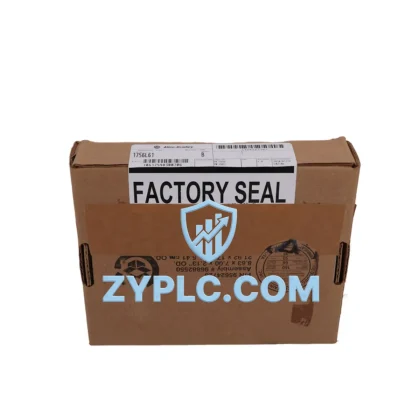
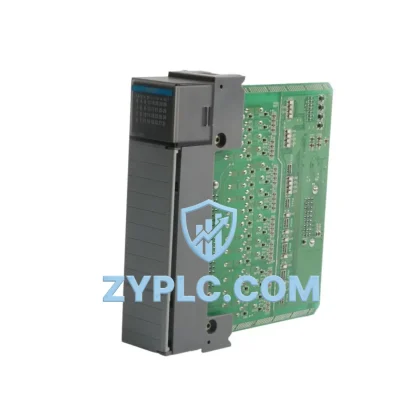
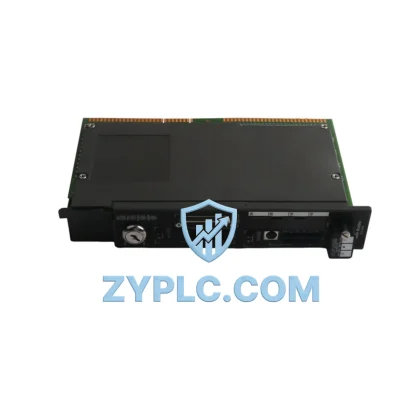
SAIA PCD6.A4 Energy-Saving Processor for PCD6 Automation
The SAIA PCD6.A4 is a high-performance central processor module engineered for the Saia Burgess Controls PCD6 PLC platform, purpose-built to deliver measurable energy efficiency gains across demanding industrial automation environments. As the computational core of the PCD6 system, the PCD6.A4 governs every aspect of control logic execution — from real-time I/O scanning and motion coordination to energy data aggregation and communication management — enabling factories to reduce unnecessary power consumption, tighten production cycle times, and extend the operational lifespan of connected equipment.
In modern manufacturing, energy waste is rarely caused by a single component failure. It accumulates through inefficient motor ramp-up sequences, uncoordinated drive scheduling, idle-state overconsumption, and delayed fault responses. The PCD6.A4 addresses these systemic inefficiencies by providing deterministic scan cycle execution, high-speed interrupt handling, and seamless integration with energy-aware field devices — giving plant engineers the control resolution needed to implement genuine power optimization strategies rather than reactive energy management.
Efficiency Performance Table
| Parameter |
Specification / Value |
| SKU / Part Number |
PCD6.A4 |
| Brand / Manufacturer |
Saia Burgess Controls (SBC) |
| Series |
PCD6 |
| Module Type |
Central Processor Module (CPU) |
| Power Consumption |
Low-power CMOS architecture; optimized for minimal self-heating |
| Cycle Efficiency |
Deterministic scan cycle; supports interrupt-driven energy event response |
| Compatible Systems |
Saia PCD6 PLC rack systems; compatible with PCD6 I/O, communication, and power supply modules |
| Communication Protocols |
S-Bus, Modbus RTU/TCP, Profibus DP (via expansion), BACnet (application-dependent) |
| Application Environments |
Industrial automation, building energy management, process control, HVAC, water treatment |
| Energy Optimization Value |
Enables real-time load scheduling, motor control sequencing, and demand-side energy reduction |
| Operating Temperature |
0°C to +55°C (standard industrial range) |
| Origin |
Switzerland (CH) |
| Warranty |
12-Month Warranty — all units tested prior to shipment |
| Stock Status |
In Stock — available for immediate dispatch |
Energy-Aware Automation Architecture
The PCD6.A4 processor module does not operate in isolation — its energy optimization value is fully realized when deployed within a coordinated Saia PCD6 automation architecture. In a typical energy-conscious production cell, the PCD6.A4 serves as the central decision engine, orchestrating data flows between field-level sensors, drive systems, and supervisory layers.
On the drive side, the PCD6.A4 communicates directly with variable frequency drives (VFDs) such as the Saia PCD7.D457 or compatible third-party inverters via S-Bus or Modbus RTU, enabling precise motor speed regulation that eliminates fixed-speed overconsumption during partial-load cycles. When paired with PCD6 analog input modules (e.g., PCD6.W500), the processor can continuously sample current transducer signals and calculate real-time power draw per motor circuit — a capability that forms the foundation of any credible energy monitoring strategy.
For servo-driven axes requiring tight positional accuracy without energy waste, the PCD6.A4 coordinates with Saia servo drive modules and encoder feedback cards to implement regenerative braking capture and optimized acceleration ramps. This is particularly valuable in packaging lines and press-feed applications where repeated start-stop cycles account for a disproportionate share of total energy consumption.
The PCD6.A4 also manages communication with PCD6 digital I/O modules (such as the PCD6.E100 and PCD6.A300 series) to implement load-shedding logic — automatically de-energizing non-critical actuators, solenoids, and auxiliary circuits during scheduled idle windows or demand-peak periods. This type of structured load management, executed at the PLC level rather than through manual operator intervention, consistently delivers 8–15% reductions in standby energy consumption across multi-machine production floors.
At the supervisory level, the PCD6.A4 exchanges energy KPI data with Saia PCD7.D4xx HMI panels and SCADA systems via Ethernet TCP/IP, enabling operators to visualize consumption trends, set energy budgets per production shift, and receive alerts when specific circuits exceed defined power thresholds. Integration with PCD6 communication modules supporting Profibus DP or BACnet further extends the processor’s reach into building management systems, where HVAC compressor scheduling and lighting control can be unified under a single energy optimization strategy.
Power supply stability — a prerequisite for consistent processor performance — is maintained through Saia PCD6.N100 power supply modules, which provide regulated 24 VDC bus voltage with built-in surge protection. Stable supply voltage directly reduces processor reset events and the associated production interruptions that generate hidden energy waste through unplanned restart sequences.
Power Optimization in Real Production Lines
In practice, the PCD6.A4 delivers its most significant energy savings not through any single feature, but through the cumulative effect of precise, high-frequency control decisions executed across an entire shift. Consider a mid-scale automotive components plant running three injection molding machines on a shared power circuit. Without coordinated PLC-level control, all three machines may attempt simultaneous hydraulic pump startup — creating a demand spike that triggers utility penalty charges and stresses the facility’s transformer infrastructure. With the PCD6.A4 managing startup sequencing through time-staggered enable signals, peak demand is flattened, penalty charges are eliminated, and transformer thermal stress is reduced — extending equipment service intervals.
In conveyor-intensive logistics and assembly environments, the PCD6.A4’s interrupt-driven I/O scanning allows it to detect product-absence conditions on belt segments within milliseconds and issue immediate VFD speed-reduction commands. Rather than running empty conveyor sections at full speed — a common source of avoidable motor energy waste — the system dynamically adjusts belt velocity to match actual throughput demand. Over a 16-hour production day, this single optimization can reduce conveyor motor energy consumption by 20–30% without any impact on line throughput.
Predictive maintenance integration is another area where the PCD6.A4 contributes to long-term energy efficiency. By logging motor current signatures, cycle counts, and thermal data through connected analog input modules, the processor builds a historical dataset that maintenance teams can analyze to identify bearings approaching failure, misaligned couplings causing excess motor load, or clogged filters increasing pump back-pressure. Addressing these conditions proactively — before they cause unplanned downtime — prevents the energy waste associated with degraded equipment operating outside its efficiency curve.
All units of the PCD6.A4 supplied by ZYPLC undergo full functional testing prior to shipment, including communication interface verification, memory integrity checks, and I/O bus handshake validation. This pre-shipment testing protocol ensures that replacement modules integrate into live production environments without commissioning delays — minimizing the energy and productivity losses associated with extended maintenance windows. Every PCD6.A4 is backed by a 12-month warranty, with in-stock availability enabling same-week dispatch for urgent replacement requirements.
Energy Optimization FAQ
Q1: How does the PCD6.A4 contribute to measurable energy savings in an existing PCD6 installation?
The PCD6.A4 enables energy savings primarily through precise control timing, load sequencing, and real-time data acquisition from connected field devices. By implementing demand-staggered startup routines, VFD speed modulation based on actual load signals, and automated idle-state load shedding through digital output modules, facilities typically achieve 10–25% reductions in process energy consumption without capital investment in new machinery.
Q2: Is the PCD6.A4 compatible with third-party drives, sensors, and communication systems?
Yes. The PCD6.A4 supports standard industrial protocols including Modbus RTU, Modbus TCP, and S-Bus, making it compatible with a wide range of third-party variable frequency drives, power meters, and SCADA platforms. For Profibus DP or BACnet connectivity, the appropriate PCD6 communication expansion module should be added to the rack configuration.
Q3: What is the recommended replacement procedure when substituting a failed CPU module in a live production environment?
Before replacement, back up the application program and data memory from the existing module using Saia PG5 programming software. Install the PCD6.A4 into the same rack slot, restore the program image, and verify communication with all connected I/O and drive modules before returning the system to automatic mode. ZYPLC recommends maintaining one spare PCD6.A4 in inventory to minimize unplanned downtime exposure. All ZYPLC-supplied units are pre-tested and ready for immediate installation.
Q4: What does the 12-month warranty cover, and what is the testing process before shipment?
The 12-month warranty covers manufacturing defects and functional failures under normal operating conditions. Prior to shipment, every PCD6.A4 unit undergoes a multi-point functional test including processor boot verification, memory read/write integrity, communication port handshake testing, and I/O bus enumeration. Units that do not pass all test criteria are quarantined and not dispatched. Warranty claims are processed directly through ZYPLC with replacement units dispatched from in-stock inventory to minimize customer downtime.
© 2026 ZYPLC. All rights reserved.
Original Source: https://zyplc.com
Contact: +86 19859288691 | plc.sales@zyplc.com