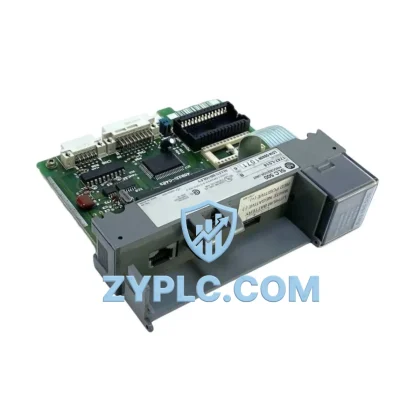
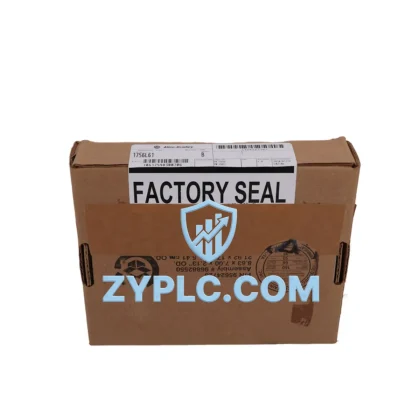
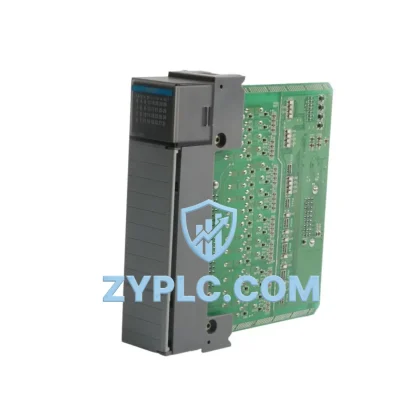
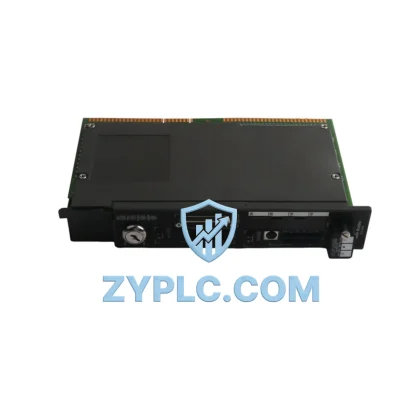
Schneider Electric 170AAI14000 System-Ready Analog Input for Momentum Architecture
The Schneider Electric 170AAI14000 is a high-performance analog input module purpose-built for the Modicon Momentum distributed I/O platform, one of the most widely deployed control architectures in industrial automation. Within a layered automation system, this module occupies a critical position at the field I/O layer, converting real-world analog signals — such as 4–20 mA current loops and 0–10 V voltage signals — into precise digital values that the control layer can act upon. Its role is not simply to acquire data; it is to ensure that the entire signal chain from sensor to controller remains accurate, stable, and architecturally consistent across the full lifecycle of the installation.
Understanding the 170AAI14000 requires understanding the Momentum system architecture as a whole. The Momentum platform is designed around a modular, distributed philosophy: a Momentum CPU adapter — such as the 171CCC96020 or 171CCC98020 — mounts directly onto an I/O base, forming a self-contained node that communicates upstream via Modbus TCP/IP, Modbus Plus, or other supported fieldbus protocols. The 170AAI14000 integrates seamlessly into this architecture, accepting up to 16 differential analog input channels and delivering high-resolution conversion that supports precise process control in demanding environments. When paired with a 170ADM54080 discrete I/O module or a 170ANR12090 analog output module on adjacent bases within the same control cabinet, the system achieves a balanced I/O architecture that minimizes wiring complexity while maximizing signal integrity.
At the control layer, the Momentum CPU communicates with a supervisory Modicon M340 or Modicon Premium PLC over a Modbus TCP/IP backbone, enabling centralized logic execution while distributing I/O acquisition to the field. This architecture reduces the load on the central processor and allows engineers to expand the system incrementally — adding new Momentum bases and I/O modules without redesigning the network topology. The 170AAI14000 supports this scalability by maintaining consistent register mapping and diagnostic behavior across firmware versions, which simplifies integration into existing Unity Pro or Concept programming environments.
From a power architecture perspective, the Momentum base accepts 24 VDC bus power, typically supplied by a Schneider Electric ABL8REM24030 or equivalent regulated power supply. Proper power zoning — separating analog I/O power from discrete output power — is essential to minimize ground loop interference on the 170AAI14000’s input channels. Engineers designing high-accuracy analog acquisition systems should also consider the placement of the 170XTS00100 terminal block adapter, which provides a clean, labeled wiring interface that reduces installation errors and simplifies field maintenance.
At the network layer, the Momentum platform supports transparent device integration through Ethernet-based communication. When the 170AAI14000 is deployed in a system using a 174CEV30010 Ethernet communication module or a 170ENT11001 network interface, the analog data acquired by this module becomes immediately accessible to SCADA systems, historians, and HMI platforms — including Schneider Electric’s Magelis XBTGT series — without requiring additional protocol conversion. This end-to-end data transparency is a defining advantage of the Momentum architecture in process-intensive industries.
For redundancy-critical applications, the 170AAI14000 can be deployed in dual-node configurations where two Momentum bases monitor the same process signals, with the control logic performing cross-validation to detect sensor drift or channel failure. This approach is particularly valuable in power generation, water treatment, and petrochemical applications where analog measurement accuracy directly affects process safety. The module’s built-in channel diagnostics — including open-circuit detection and over-range flagging — provide the real-time fault visibility needed to support predictive maintenance strategies.
Long-term maintainability is a core design principle of the Momentum platform, and the 170AAI14000 reflects this commitment. Its plug-and-play base mounting eliminates the need for specialized tools during replacement, and its consistent register structure means that a replacement module can be brought online without reprogramming the CPU. Combined with ZYPLC’s 12-Month Warranty and verified stock availability, this module represents a reliable, cost-effective solution for both new installations and legacy system maintenance.
Architecture Specification Table
| Parameter |
Specification |
| System Role |
Distributed Analog Input Module — Momentum I/O Platform |
| SKU / Part Number |
170AAI14000 |
| Brand / Manufacturer |
Schneider Electric |
| Series |
Modicon Momentum |
| Input Channels |
16 Differential Analog Input Channels |
| Input Signal Types |
4–20 mA, 0–20 mA, 0–10 V, ±10 V (configurable per channel) |
| Resolution |
12-bit (4096 steps) |
| Electrical Supply |
24 VDC via Momentum base bus |
| Communication |
Modbus RTU / Modbus Plus / Modbus TCP/IP (via CPU adapter) |
| Compatible CPU Adapters |
171CCC96020, 171CCC98020, 171CCC98030 and compatible Momentum adapters |
| Programming Environment |
Unity Pro, Concept, ProWORX |
| Operating Temperature |
0°C to +60°C |
| Protection Rating |
IP20 (panel-mount installation) |
| Country of Origin |
France |
| Warranty |
12-Month Warranty (ZYPLC) |
| Contextual Integration |
Full Contextual Integration with Modicon Momentum, M340, and Premium platforms |
Coordinated Control System Design
The 170AAI14000 achieves its full potential when deployed as part of a coordinated Momentum control system rather than as a standalone acquisition device. In a typical process control cabinet, the module shares a DIN-rail assembly with a 170ADM54080 discrete mixed I/O module handling digital field signals, a 170ANR12090 analog output module driving control valves and variable-speed drives, and a 170XTS00100 terminal block adapter providing organized, labeled field wiring terminations. The Momentum CPU adapter — commonly the 171CCC96020 running Modbus TCP/IP — serves as the node controller, aggregating all I/O data and transmitting it upstream to a Modicon M340 or Modicon Premium PLC acting as the system master.
At the supervisory level, a Magelis XBTGT5330 HMI panel provides operators with real-time visualization of the analog process values acquired by the 170AAI14000, including trend displays, alarm management, and manual setpoint adjustment. The HMI communicates with the M340 CPU over Ethernet, while the M340 communicates with the Momentum nodes over a dedicated Modbus TCP/IP subnet — a two-tier network architecture that isolates supervisory traffic from field-level I/O polling and improves overall system determinism.
For power distribution, a Schneider Electric ABL8REM24030 24 VDC regulated power supply feeds the Momentum base bus, with a separate supply dedicated to analog field instruments to prevent common-mode interference on the 170AAI14000’s input channels. Surge protection devices on the analog input wiring — particularly in outdoor or long-cable installations — further protect measurement accuracy and extend module service life.
Application in Layered Automation Systems
The 170AAI14000 is deployed across a wide range of industrial sectors where distributed analog acquisition is essential to process control integrity. In water and wastewater treatment facilities, the module monitors flow transmitters, pressure sensors, and dissolved oxygen probes distributed across pump stations and treatment basins, feeding real-time data to a central SCADA system for dosing control and regulatory compliance reporting. In power generation plants, it acquires temperature and pressure signals from turbine auxiliaries, supporting condition monitoring systems that detect early signs of mechanical degradation.
In petrochemical and refinery applications, the 170AAI14000 operates within safety-instrumented system architectures where analog measurement accuracy is directly linked to process safety. Its channel-level diagnostics — including open-circuit and over-range detection — provide the fault visibility required by functional safety standards. In metal processing and mining operations, the module monitors motor current, hydraulic pressure, and conveyor load signals, enabling energy optimization and predictive maintenance programs that reduce unplanned downtime. In pharmaceutical and food processing facilities, its high-resolution 12-bit conversion supports precise temperature and flow control in GMP-regulated production environments.
Architecture Engineering FAQ
Q1: Is the 170AAI14000 compatible with both legacy Concept and current Unity Pro programming environments?
Yes. The 170AAI14000 maintains full register-level compatibility with both Concept and Unity Pro (including EcoStruxure Control Expert), as the Momentum platform uses a consistent I/O register mapping across software generations. Engineers migrating from Concept to Unity Pro do not need to remap analog input registers for this module, which significantly reduces migration risk and engineering time.
Q2: Can the 170AAI14000 be used in a redundant I/O architecture, and what is the recommended configuration?
Yes. For redundancy-critical applications, two 170AAI14000 modules can be deployed on separate Momentum bases monitoring the same field signals, with the CPU logic performing cross-channel validation. This hot-standby analog acquisition approach is commonly used in power generation and water treatment applications. The consistent diagnostic register structure of the module simplifies the development of cross-validation logic in Unity Pro.
Q3: What does the 12-Month Warranty cover, and how does ZYPLC support long-term system maintenance?
ZYPLC’s 12-Month Warranty covers manufacturing defects and functional failures under normal operating conditions for the full warranty period from the date of shipment. For long-term system maintenance, ZYPLC maintains verified stock of the 170AAI14000 and compatible Momentum components, enabling rapid replacement without extended lead times. Technical support is available at [email protected] or +86 19859288691 to assist with compatibility verification, installation guidance, and system architecture consultation.
© 2026 ZYPLC. All rights reserved.
Original Source: https://zyplc.com
Contact: +86 19859288691 | [email protected]