Siemens 16137-177 System-Ready Signal Module for SIMATIC 505 Architecture: Control System Architecture and Upstream-Downstream Coordination
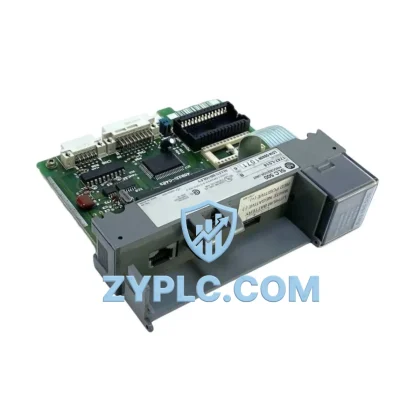
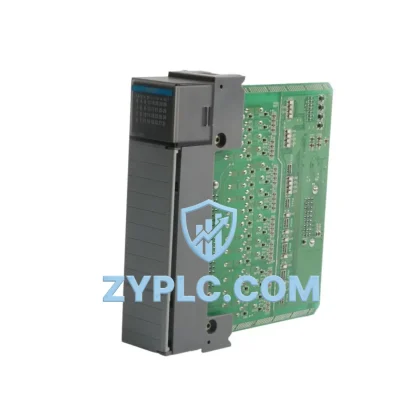
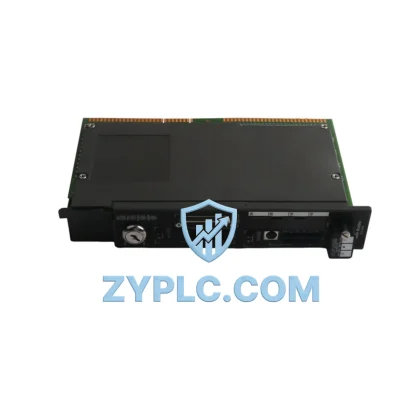
The Siemens 16137-177 is a discrete signal module engineered for deployment within the SIMATIC 505 programmable logic controller platform — one of Siemens’ most enduring and field-proven control architectures for heavy industrial environments. Rather than functioning as a standalone component, the 16137-177 is designed to operate as an integral node within a layered automation hierarchy, interfacing directly with the SIMATIC 505 CPU rack, coordinating I/O signal flow, and supporting the long-term maintainability of distributed control systems across manufacturing, power generation, petrochemical, and process industries.
Understanding the 16137-177 requires understanding the SIMATIC 505 system architecture as a whole. This module slots into the 505 series backplane — compatible with chassis such as the TI 505-6860 and TI 505-6870 rack systems — and communicates with the central processing unit via the internal rack bus. The CPU, whether a 505-CPU-1 or a higher-capacity 505-CPU-2 variant, orchestrates scan cycles and ladder logic execution while the 16137-177 handles field-level signal conditioning and I/O mapping. This division of responsibility is fundamental to the SIMATIC 505 architecture’s scalability and reliability in demanding plant environments.
Architecture Specification Table
| Parameter |
Specification |
| Part Number / SKU |
16137-177 |
| Brand |
Siemens (formerly Texas Instruments / Simatic) |
| Product Series |
SIMATIC 505 |
| Module Type |
PLC Signal Module (Discrete I/O) |
| System Role |
Field-level I/O signal interface within SIMATIC 505 rack architecture |
| Compatible Rack / Backplane |
SIMATIC 505 series backplane (TI 505-6860 / TI 505-6870 compatible) |
| Communication Interface |
Internal SIMATIC 505 rack bus |
| Installation Environment |
Industrial control cabinet, DIN rail or rack-mount, IP20 enclosure |
| Operating Temperature |
0°C to +60°C (standard industrial range) |
| Country of Origin |
Germany |
| Warranty |
12-Month Warranty — covers manufacturing defects and functional failure under normal operating conditions |
| Contextual Integration |
Supports Contextual Integration within SIMATIC 505 multi-rack and distributed I/O configurations |
| Supply Condition |
Tested, inspected, and ready to ship |
Coordinated Control System Design
The 16137-177 signal module does not operate in isolation — its value is realized through its coordination with every other layer of the SIMATIC 505 control system. At the processing layer, the module works in tandem with the SIMATIC 505 CPU modules, which execute the control program and manage the scan cycle. The CPU reads the I/O image table populated by modules like the 16137-177 and writes output states back through the rack bus, enabling deterministic, real-time control logic execution.
At the power layer, the 16137-177 depends on stable DC bus voltage supplied by the SIMATIC 505 power supply modules — such as the 505-6860 base unit power supply — which must be correctly sized to support the aggregate current draw of all installed I/O modules. Undersized or aging power supplies are a common root cause of intermittent signal faults in legacy 505 installations, making power supply integrity a critical consideration when integrating or replacing the 16137-177.
At the network and communications layer, SIMATIC 505 systems frequently employ TIWAY I or TIWAY II network interfaces, as well as Modbus RTU gateways, to connect the PLC rack to supervisory control and data acquisition (SCADA) systems or distributed control system (DCS) platforms. The 16137-177’s field signals are ultimately aggregated and transmitted upstream through these communication modules, making network layer stability essential to the module’s effective contribution to system-wide data integrity.
For human-machine interface (HMI) coordination, SIMATIC 505 installations commonly pair with Siemens TP or OP series operator panels, or legacy WinCC SCADA stations, which display real-time I/O states sourced from modules like the 16137-177. Accurate signal mapping between the module’s I/O addresses and the HMI tag database is a prerequisite for reliable operator visibility and alarm management.
At the field execution layer, the 16137-177 interfaces with actuators, solenoid valves, motor starters, and relay output circuits. In many installations, interposing relay modules or terminal blocks — such as Siemens SIRIUS relay modules or Phoenix Contact terminal assemblies — are used to isolate the PLC output signals from high-voltage field devices, protecting the 16137-177 from inductive load transients and extending its operational lifespan.
For redundancy-critical applications, the SIMATIC 505 platform supports hot-standby CPU configurations where a secondary CPU module mirrors the primary’s I/O image in real time. In such architectures, the 16137-177 must be installed in a rack configuration that supports dual-CPU arbitration, ensuring that a CPU failover event does not interrupt signal module operation or corrupt the I/O image table.
Application in Layered Automation Systems
The Siemens 16137-177 signal module has been deployed across a wide range of industrial sectors where the SIMATIC 505 platform established a long-term installed base. In manufacturing and discrete production lines, the module manages machine-level I/O for conveyor systems, assembly stations, and robotic cell interlocks, where deterministic scan cycle performance is essential for throughput consistency.
In power generation and electrical substation environments, the 16137-177 is used to monitor breaker status, transformer protection relay outputs, and auxiliary contact states, feeding real-time electrical system data to the SCADA layer. Its compatibility with the SIMATIC 505 rack architecture makes it a reliable choice for brownfield substation automation upgrades where full system replacement is not economically viable.
In petrochemical and refinery applications, the module supports process interlocking, emergency shutdown (ESD) signal monitoring, and field device status reporting within hazardous area control panels. The 12-Month Warranty and verified functional testing provided by ZYPLC ensure that replacement modules meet the reliability standards required for safety-instrumented system (SIS) adjacent applications.
In water and wastewater treatment facilities, the 16137-177 manages pump run/stop signals, valve position feedback, and level switch inputs across distributed pump stations, where the SIMATIC 505 platform’s robust rack architecture provides long-term operational stability with minimal maintenance overhead.
In mining, metallurgy, and heavy industry, the module’s industrial-grade construction supports operation in high-vibration, high-dust environments typical of ore processing, smelting, and materials handling applications. Its Contextual Integration capability within the SIMATIC 505 architecture allows engineers to expand I/O capacity by adding additional signal modules to the rack without modifying the CPU program structure, reducing commissioning time and engineering risk.
Architecture Engineering FAQ
Q1: Is the Siemens 16137-177 compatible with all SIMATIC 505 rack configurations, and can it be mixed with other 505-series I/O modules in the same chassis?
Yes. The 16137-177 is designed for the SIMATIC 505 backplane architecture and is compatible with standard 505-series rack chassis. It can be installed alongside other SIMATIC 505 I/O modules — including analog input modules, output modules, and specialty function modules — within the same rack, provided the rack’s total power budget is not exceeded. Always verify slot addressing and I/O image table mapping in the CPU configuration software before installation to ensure correct signal assignment and avoid address conflicts.
Q2: How should engineers approach long-term maintenance and spare parts planning for SIMATIC 505 systems that include the 16137-177?
Given that the SIMATIC 505 platform is a mature architecture, proactive spare parts inventory is the most effective long-term maintenance strategy. Engineers should maintain at least one replacement 16137-177 module per critical rack position, particularly in applications where unplanned downtime carries significant operational or safety consequences. ZYPLC supplies tested and warranted 16137-177 modules with a 12-Month Warranty, supporting both emergency replacement and planned maintenance cycles. All modules are functionally tested prior to shipment to minimize installation risk.
Q3: What commissioning steps are required when replacing a 16137-177 in an active SIMATIC 505 system, and does the 12-Month Warranty cover field installation issues?
When replacing the 16137-177, the recommended procedure is to power down the affected rack section, remove the faulty module, install the replacement in the same slot position, and restore power. The SIMATIC 505 CPU will automatically re-map the I/O addresses associated with that slot upon restart, provided the replacement module is of the same type and the CPU configuration has not been altered. No software changes are typically required for a like-for-like replacement. The 12-Month Warranty covers manufacturing defects and functional failures under normal operating conditions; it does not cover damage resulting from incorrect installation, overvoltage events, or physical mishandling. For commissioning support, contact ZYPLC at plc.sales@zyplc.com or +86 19859288691.
© 2026 ZYPLC. All rights reserved.
Original Source: https://zyplc.com
Contact: +86 19859288691 | plc.sales@zyplc.com