Siemens 500-2151 System-Ready Power Supply for S5-500 Architecture
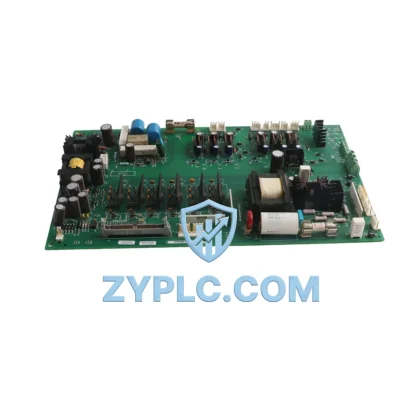
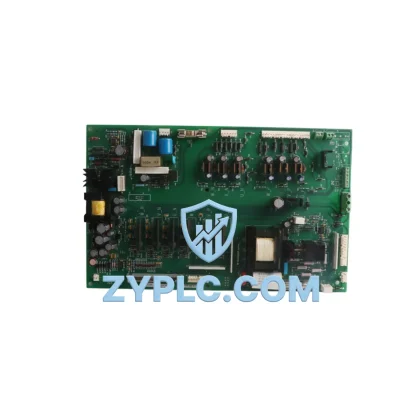
The Siemens 500-2151 is a dedicated power supply module engineered for the SIMATIC S5-500 programmable logic controller platform — one of Siemens’ most enduring and widely deployed industrial automation architectures. Rather than functioning as a standalone component, the 500-2151 occupies a foundational role within the S5-500 system hierarchy, providing stable, regulated DC power to the central rack and all connected I/O and communication modules. Understanding its position within the full control system architecture is essential for engineers responsible for system integration, long-term maintenance, and capacity planning in demanding industrial environments.
In a layered S5-500 control architecture, the power supply layer is the backbone upon which every other functional layer depends. The 500-2151 accepts 110VAC or 220VAC mains input and converts it to the internal DC bus voltages required by the S5-500 central rack. This dual-voltage input capability makes the module suitable for deployment across international facilities without hardware modification, reducing procurement complexity for global operations. The module’s regulated output ensures that upstream CPU modules — such as the S5-500 CPU 928B or CPU 948 — receive consistent power regardless of load fluctuations caused by I/O scanning cycles, communication bursts, or actuator switching events.
At the control layer, the 500-2151 works in direct coordination with the S5-500 CPU to maintain system uptime. The CPU relies on the power supply not only for operational voltage but also for the internal bus arbitration signals that govern module initialization and fault detection. When the 500-2151 is properly seated in the central rack alongside the CPU, the system can perform self-diagnostics at startup, flagging any module that fails to draw expected current — a feature that significantly reduces commissioning time and simplifies fault isolation during maintenance windows.
At the I/O layer, the 500-2151 supplies power to digital and analog I/O modules installed in the same rack or connected via expansion cables. Modules such as the S5 6ES5 430 digital input module, the 6ES5 470 digital output module, and the 6ES5 460 analog input module all draw their operating power from the central rack bus. The 500-2151’s current capacity must be evaluated against the aggregate load of all installed I/O modules to ensure stable operation, particularly in high-density configurations where multiple analog modules — which typically draw more current than digital equivalents — are present in the same rack.
At the network and communication layer, the S5-500 architecture frequently incorporates communication processors such as the CP 5430 TF or CP 5431 FMS, which enable PROFIBUS-DP and FMS connectivity to field devices, drives, and remote I/O stations. These communication modules also draw power from the central rack bus, and their initialization sequences can create brief current spikes that the 500-2151 is designed to absorb without causing bus voltage droop. Maintaining communication stability between the S5-500 CPU and field-level devices — including Siemens SIMOREG DC drives or ET 200 remote I/O stations — depends directly on the power supply’s ability to sustain consistent bus voltage under dynamic load conditions.
For systems requiring redundancy, the S5-500 platform supports redundant CPU configurations where two CPUs operate in parallel, with one acting as the active controller and the other in hot-standby mode. In such architectures, the power supply configuration must be carefully planned to ensure that a single power supply failure does not bring down both CPU channels. Engineers typically deploy separate 500-2151 modules on independent mains feeds for each redundant rack, with automatic switchover logic handled at the CPU level. This approach ensures that the control system continues to operate without interruption even during planned maintenance or unplanned power supply failures.
From an engineering and commissioning perspective, the 500-2151 is designed for straightforward installation in the S5-500 central rack. The module slots into the leftmost position of the rack, where it connects directly to the internal bus backplane. No external wiring to the bus is required — the backplane connector handles all internal signal and power distribution. Mains input is connected via a dedicated terminal block on the module’s front panel, and the module includes LED indicators for power-on status and fault conditions, enabling rapid visual diagnostics during commissioning and routine inspections.
Long-term maintenance of S5-500 systems in active production environments requires reliable access to genuine spare parts. The 500-2151 remains a critical spare for facilities that have standardized on the S5-500 platform and are not yet ready to migrate to the SIMATIC S7-400 or S7-1500 architecture. Maintaining a buffer stock of 500-2151 modules — alongside spares for the CPU 928B, IM 308-C interface module, and key I/O cards — is a recognized best practice for minimizing unplanned downtime in process-critical applications such as chemical batch reactors, power generation auxiliaries, and continuous casting lines in steel mills.
Every 500-2151 supplied by ZYPLC is covered by a 12-Month Warranty, ensuring that your system architecture investment is protected against manufacturing defects and premature failure. Our inventory is sourced from verified channels, and each unit undergoes functional verification prior to dispatch. With fast global shipping and dedicated technical support, ZYPLC is your trusted partner for SIMATIC S5-500 system continuity.
Architecture Specification Table
| Parameter |
Specification |
| System Role |
Central Rack Power Supply — SIMATIC S5-500 |
| SKU / Part Number |
500-2151 |
| Brand / Manufacturer |
Siemens |
| Compatible Series |
SIMATIC S5-500 |
| Input Voltage |
110VAC / 220VAC (selectable) |
| Input Frequency |
47–63 Hz |
| Output Voltage |
5VDC, 15VDC (internal bus) |
| Installation Position |
Slot 1 (leftmost) of S5-500 Central Rack |
| Mounting |
S5-500 Central Rack Backplane |
| Communication Capability |
Internal bus power — supports CP 5430 TF, CP 5431 FMS |
| Operating Temperature |
0°C to +60°C |
| Protection Class |
IP20 |
| Country of Origin |
Germany |
| Warranty |
12-Month Warranty (ZYPLC) |
Coordinated Control System Design
The 500-2151 does not operate in isolation — its value is realized through its integration with the full S5-500 module ecosystem. In a typical S5-500 central rack, the power supply works alongside the CPU 928B or CPU 948 as the primary processing unit, the IM 308-C interface module for PROFIBUS-DP master communication, and a combination of 6ES5 430 digital input and 6ES5 470 digital output modules for field signal acquisition and actuation. Analog process variables are handled by 6ES5 460 analog input modules, which interface with transmitters measuring pressure, temperature, flow, and level across the process plant.
Communication processors such as the CP 5431 FMS extend the S5-500’s connectivity to PROFIBUS-FMS networks, enabling peer-to-peer data exchange with other PLCs, SCADA systems, and operator panels. The OP 25 or OP 35 operator panels at the HMI layer connect to the S5-500 via the MPI or PROFIBUS interface, providing operators with real-time process visualization and alarm management. At the execution layer, the S5-500 controls SIMOREG DC Master drives and motor starters through digital output modules, with the power supply ensuring that output switching transients do not destabilize the internal bus voltage.
For systems with expansion requirements, the IM 304 send interface module and IM 314 receive interface module pair allows the S5-500 to extend its I/O capacity across multiple expansion racks, all powered by their own dedicated power supply modules. This modular expansion capability, supported by the stable power foundation provided by the 500-2151, allows engineers to scale the control system incrementally without redesigning the core architecture.
Application in Layered Automation Systems
The Siemens 500-2151 power supply module is deployed across a wide range of heavy industrial and process automation environments where the SIMATIC S5-500 platform has been the control standard for decades. In power generation facilities — including coal-fired, gas turbine, and hydroelectric plants — S5-500 systems manage auxiliary equipment such as cooling water pumps, fuel feed conveyors, and generator excitation systems. The 500-2151 provides the stable power foundation required for continuous, uninterrupted operation of these critical control loops.
In petrochemical and refinery applications, S5-500 controllers manage distillation column control, heat exchanger bypass valves, and compressor surge protection systems. The power supply’s ability to handle wide input voltage variations makes it suitable for facilities where mains quality may be inconsistent due to local grid conditions. In water and wastewater treatment plants, S5-500 systems control pump stations, dosing systems, and filtration processes, where the 500-2151 ensures that control system availability meets the stringent uptime requirements of municipal water authorities.
In metallurgical and steel mill environments, S5-500 controllers are found in continuous casting machines, rolling mill drives, and ladle furnace control systems. The harsh electromagnetic environment of these facilities — characterized by high-current switching transients from large drives and induction furnaces — demands a power supply with robust noise immunity, a characteristic that the 500-2151 delivers through its regulated output design. Similarly, in mining and mineral processing operations, S5-500 systems control conveyor drives, crusher sequencing, and flotation cell agitators, where reliable power supply performance directly impacts production throughput.
Architecture Engineering FAQ
Q1: Is the Siemens 500-2151 compatible with all S5-500 central rack configurations, and can it support a fully populated rack with mixed digital and analog I/O modules?
A: The 500-2151 is designed for the SIMATIC S5-500 central rack and is compatible with the standard S5-500 backplane. When planning a fully populated rack with mixed I/O, engineers should calculate the total current draw of all installed modules — including CPU, communication processors, digital I/O, and analog I/O cards — and verify that the aggregate load does not exceed the 500-2151’s rated output current. Analog modules typically draw more current than digital modules, so high-density analog configurations require particular attention. If the total load approaches the module’s rated capacity, distributing I/O across expansion racks with dedicated power supplies is the recommended architectural approach.
Q2: How does the 500-2151 support long-term maintenance strategies for S5-500 systems that are not scheduled for migration to newer platforms?
A: For facilities committed to maintaining S5-500 systems in production, the 500-2151 is a critical long-life spare component. ZYPLC recommends maintaining at least one spare 500-2151 per installed S5-500 system, alongside spares for the CPU module and key I/O cards. Each unit supplied by ZYPLC is covered by a 12-Month Warranty and has been functionally verified prior to shipment. Our global inventory and fast dispatch capability ensure that replacement units can be sourced quickly, minimizing the risk of extended downtime due to power supply failure. Detailed installation documentation and commissioning support are available upon request.
Q3: What should engineers verify during installation and commissioning of a replacement 500-2151 to ensure system stability?
A: During installation, engineers should first confirm that the mains input voltage selector on the 500-2151 is set to match the local supply voltage (110VAC or 220VAC) before energizing the module. After installation in the central rack, the system should be powered up with all I/O modules installed and the CPU in STOP mode to allow the power supply to stabilize before the CPU begins scanning. LED indicators on the 500-2151 should be checked for normal power-on status. If any fault indicators are active, the rack should be de-energized and each module checked for correct seating on the backplane. Following successful power-up, the CPU should be switched to RUN mode and the system monitored for any diagnostic messages related to module initialization or bus communication errors. The 12-Month Warranty covers any defects identified during this commissioning process.
© 2026 ZYPLC. All rights reserved.
Original Source: https://zyplc.com
Contact: +86 19859288691 | plc.sales@zyplc.com