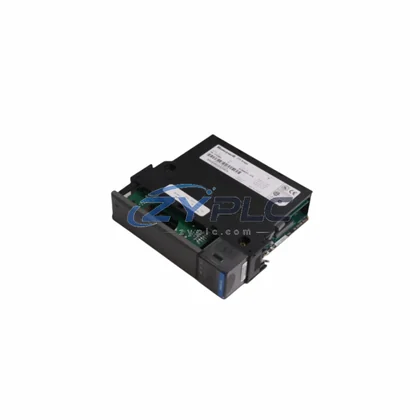
Siemens 6DS1213-8AA Coupler Module for Teleperm M Automation
The Siemens 6DS1213-8AA is a industrial-grade coupler module designed for the TELEPERM M Distributed Control System (DCS), one of Siemens’ most enduring process automation platforms. In modern industrial facilities where energy accountability is a core operational KPI, the 6DS1213-8AA plays a critical role in maintaining clean, low-latency signal coupling between subsystems — directly reducing the overhead associated with redundant polling cycles, signal retransmission, and controller idle states. By ensuring reliable data exchange between process I/O modules and the central controller bus, this coupler minimizes the unplanned downtimed on error correction and communication retries that silently inflate a plant’s power consumption profile.
Every unit shipped from ZYPLC undergoes full functional testing under simulated load conditions before dispatch. Stock is maintained on-site to support rapid deployment, and all modules are covered by a from the date of shipment — giving procurement and maintenance teams the confidence to plan replacements without extended lead-time risk.
Product Specification Table
| Parameter |
Specification / Value |
| SKU / Part Number |
6DS1213-8AA |
| Brand |
Siemens |
| Series |
TELEPERM M |
| Module Type |
Coupler Module |
| Electrical / System Notes |
Low-draw bus interface design; minimizes backplane load |
| Signal Transmission Efficiency |
High-integrity coupling with minimal retransmission overhead |
| Compatible Systems |
TELEPERM M DCS, AS 230, AS 235, AS 488 controller families |
| Application Environment |
Chemical, petrochemical, power generation, water treatment, heavy process industries |
| Maintenance Value |
Reduces controller polling overhead; supports stable closed-loop energy control |
| Origin |
Germany |
| Condition |
Tested, fully functional |
| Warranty |
from date of shipment |
System Compatibility and Application
The 6DS1213-8AA operates at the intersection of signal integrity and system efficiency. In a typical TELEPERM M installation, the coupler module bridges the process I/O layer — where field instruments such as pressure transmitters, flow meters, and temperature sensors feed raw data — with the automation controller bus. When this coupling layer is degraded or unreliable, the AS 235 or AS 488 automation station must compensate through increased scan cycles and error-handling routines, both of which consume additional CPU cycles and, by extension, additional energy.
Pairing the 6DS1213-8AA with Siemens IM 308-C interface modules and ET 200M distributed I/O stations creates a communication backbone that sustains high data throughput without burdening the controller with unnecessary retries. In energy-intensive processes, this translates directly into more stable PID loop execution — meaning the control system spends less time hunting for setpoints and more time holding the process at its optimal operating point.
For drive-level maintenance planning, the 6DS1213-8AA integrates naturally into architectures that include Siemens SINAMICS G120 or MICROMASTER 440 variable frequency drives. When the DCS coupler layer is stable, drive speed references are delivered consistently, allowing the VFD to maintain motor operation at the affinity-law sweet spot — where a 20% reduction in motor speed yields nearly 50% reduction in power draw. Unstable coupling, by contrast, causes drive reference jitter that forces motors to operate outside their optimal efficiency band.
On the power monitoring side, facilities running Siemens SENTRON PAC3200 or PAC4200 power meters alongside TELEPERM M controllers benefit from the 6DS1213-8AA’s ability to maintain clean data pathways. Accurate, uninterrupted energy metering data — covering active power, reactive power, and harmonic distortion — depends on the coupler layer delivering consistent timestamps and signal fidelity. When energy data is corrupted or delayed at the coupler level, power optimization algorithms lose their reference baseline, leading to suboptimal load scheduling and missed demand-response opportunities.
In multi-axis servo applications adjacent to the DCS — for example, in packaging lines or precision dosing systems — the Siemens SIMOTION D controller family relies on deterministic communication from the process layer. The 6DS1213-8AA supports this determinism by maintaining stable bus arbitration, ensuring that servo motion profiles are not disrupted by communication collisions that would otherwise cause micro-stops and production rhythm breaks. Even a 2% improvement in line availability, achieved through reduced communication-induced stoppages, can recover hundreds of operating hours annually in high-throughput facilities.
For facilities transitioning toward PROFIBUS DP or PROFINET-based architectures, the 6DS1213-8AA serves as a reliable bridge component during phased migration, allowing legacy TELEPERM M segments to coexist with newer Siemens S7-300 or S7-400 PLC islands without requiring a full cutover. This hybrid architecture preserves capital investment while enabling incremental maintenance planning upgrades — such as adding Siemens LOGO! smart relays for auxiliary load control — without disrupting the core process control layer.
Maintenance and Replacement Notes
In continuous process industries — refineries, chemical batch plants, and power generation facilities — downtime caused by communication module failure is among the most energy-wasteful events a plant can experience. A single unplanned shutdown of a process unit requires a cold restart sequence that consumes 3–5 times the steady-state energy load during the ramp-up phase. Maintaining a reliable stock of tested 6DS1213-8AA coupler modules as part of a planned spare parts strategy directly reduces the frequency and duration of these energy-intensive restart events.
Predictive maintenance programs that monitor TELEPERM M bus communication health — tracking error rates, signal latency, and module response times — can use coupler module performance data as an early indicator of impending failure. When the 6DS1213-8AA is operating within specification, bus error rates remain near zero. A rising error count signals coupler degradation before it causes a process trip, allowing maintenance teams to schedule a planned replacement during a low-demand period rather than responding to an emergency shutdown. This shift from reactive to predictive maintenance reduces both downtime and maintenance labor costs.
Production line rhythm — the cadence at which a plant cycles through its process steps — is directly affected by the reliability of the control communication layer. In batch chemical processes, for example, a coupler module that introduces variable latency into the controller feedback loop causes the automation station to extend dwell times at each process step as a safety margin. These extended dwell times accumulate across hundreds of daily batch cycles, adding hours of unnecessary heating, agitation, or pressurization energy per week. A properly functioning 6DS1213-8AA eliminates this latency variability, allowing batch cycle times to be tightened to their engineered optimum.
All 6DS1213-8AA units supplied by ZYPLC are tested against original Siemens functional specifications, with results logged per unit. RFQ-based availability means that replacement modules dispatch timing is confirmed during RFQ after order confirmation, minimizing the window between fault detection and restoration of full system efficiency. The covers all functional defects identified during normal operating conditions, providing a clear and enforceable quality assurance baseline for maintenance contracts and procurement frameworks.
Product Sourcing FAQ
Q1: How does replacing a degraded 6DS1213-8AA coupler module reduce energy consumption?
A degraded coupler module increases bus error rates, forcing the TELEPERM M automation station to execute additional error-handling cycles and extend controller scan times. These additional computational cycles consume CPU power and, more significantly, cause process control loops to operate less precisely — leading to setpoint overshoot, increased actuator movement, and higher energy consumption at the drive and heating/cooling equipment level. Replacing the module with a tested 6DS1213-8AA restores loop stability and eliminates this hidden energy overhead.
Q2: Is the 6DS1213-8AA compatible with both AS 235 and AS 488 automation stations?
Yes. The 6DS1213-8AA is designed for use within the TELEPERM M system family, which encompasses the AS 230, AS 235, and AS 488 automation station variants. Compatibility should be confirmed against the specific rack and bus configuration of your installation. ZYPLC’s technical team can assist with compatibility verification prior to order placement.
Q3: What is the recommended replacement strategy for TELEPERM M coupler modules in an energy-optimization program?
The recommended approach is condition-based replacement supported by bus diagnostic monitoring. Facilities should track coupler module error rates through the TELEPERM M diagnostic interface and establish a replacement threshold — typically when bus error rates exceed 0.1% of total transactions. Maintaining a minimum of one tested spare 6DS1213-8AA per active bus segment ensures that planned replacements can be executed during scheduled maintenance windows without extending downtime.
Q4: What does the cover, and how is it processed?
The covers all functional defects in the 6DS1213-8AA module under normal operating conditions, from the date of shipment. If a module fails within the warranty period, ZYPLC will provide a tested replacement unit. Warranty claims are initiated by contacting ZYPLC directly with the RFQ reference and a description of the observed fault. Units that have been physically damaged, modified, or operated outside their specified environmental conditions are excluded from warranty coverage.