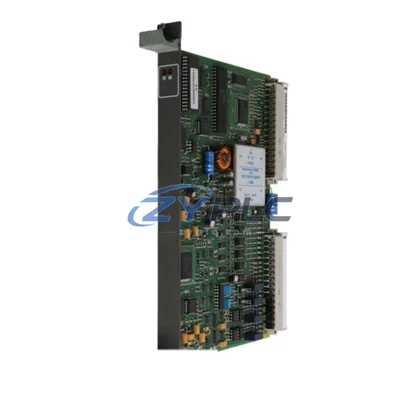
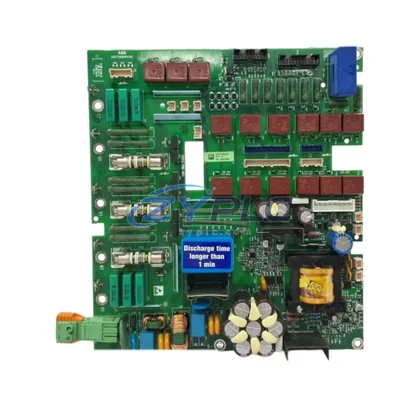
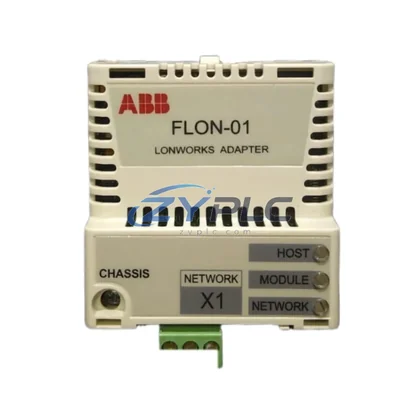
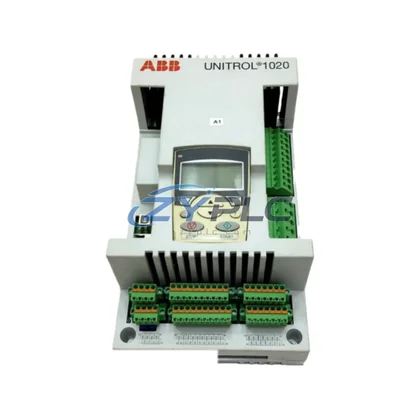
Siemens 6DS1916-8RR Signal Module for Teleperm M Automation
The Siemens 6DS1916-8RR is a high-efficiency signal module engineered for the Teleperm M distributed control system (DCS), one of Siemens’ most enduring platforms for process automation in power generation, chemical processing, and heavy manufacturing. In modern industrial environments where energy accountability is no longer optional, the 6DS1916-8RR plays a critical role in closing the loop between field-level signal acquisition and centralized maintenance planning. By delivering accurate, low-latency analog and digital signal processing, this module enables control engineers to make real-time decisions that directly reduce unnecessary energy consumption, minimize idle motor runtime, and improve overall equipment effectiveness (OEE).
Unlike generic replacement modules, the 6DS1916-8RR is designed to integrate seamlessly within the Teleperm M rack architecture, maintaining signal integrity across long cable runs and electrically noisy plant environments. Its stable signal conditioning reduces the need for repeated calibration cycles, which translates directly into lower maintenance labor costs and fewer unplanned shutdowns. Every hour of unplanned downtime in a process plant carries significant energy penalties — restarting large motors, reheating reactors, and re-pressurizing pipelines all consume disproportionate amounts of power. The 6DS1916-8RR helps prevent these events by ensuring that the control system always receives clean, reliable process data.
Each unit is sourced from verified industrial supply channels, subjected to functional bench testing prior to shipment, and backed by a warranty terms confirmed during quotation. Stock is maintained on-hand for fast dispatch, supporting both planned maintenance schedules and emergency replacement scenarios.
Product Specification Table
| Parameter |
Specification / Value |
| Part Number / SKU |
6DS1916-8RR |
| Compatible Platform |
Siemens Teleperm M DCS |
| Module Type |
Signal Module (Analog/Digital I/O) |
| Operating Voltage |
24 V DC (rack-supplied) |
| Power Consumption |
Low-draw design; minimizes rack-level heat load |
| Signal Accuracy |
High-resolution signal conditioning for precise process feedback |
| Compatible Systems |
Teleperm M AS230, AS388, CS275 controller racks |
| Application Environment |
Power plants, chemical plants, refineries, heavy manufacturing |
| Maintenance Value |
Reduces idle motor runtime, prevents false trips, lowers restart energy spikes |
| Country of Origin |
Germany |
| Testing |
Functional bench-tested before shipment |
| Warranty |
warranty terms confirmed during quotation |
| Availability |
RFQ Available — fast dispatch |
System Compatibility and Application
The 6DS1916-8RR does not operate in isolation — its value is realized within a broader industrial automation system. In a typical Teleperm M installation, the signal module feeds process variables such as flow rates, temperatures, pressures, and motor current readings into the central AS388 automation station or AS230 controller. These controllers then execute PID loops and sequence logic that govern actuators, variable frequency drives (VFDs), and motor starters across the plant.
When paired with Siemens SINAMICS G120 or MICROMASTER 440 variable frequency drives, the signal data from the 6DS1916-8RR enables precise speed regulation of pump and fan motors — the single largest category of industrial energy consumers. Instead of running motors at fixed full speed, the drive adjusts output frequency based on real-time demand signals, cutting energy consumption by 20–50% on variable-torque loads. The accuracy of the input signal from the 6DS1916-8RR is what makes this closed-loop efficiency possible.
On the I/O side, the 6DS1916-8RR works alongside other Teleperm M I/O modules such as the 6DS1400 series digital input modules and 6DS1500 series analog output modules to form a complete field interface layer. The ET 200M remote I/O stations, connected via PROFIBUS DP, extend this signal network to distributed field devices without adding significant latency or power overhead. Accurate signal acquisition at every node means the control system can identify unplanned downtime — such as a pump running against a closed valve or a conveyor operating without load — and trigger corrective action automatically.
For condition monitoring and reporting, the Teleperm M system can be integrated with Siemens SICAM power quality analyzers or third-party maintenance planning systems via the CS275 bus coupler or OPC DA/UA gateways. The 6DS1916-8RR’s reliable signal output ensures that energy metering data is not corrupted by signal noise or module faults, which is essential for accurate ISO 50001 energy audits and utility billing reconciliation. Complementing this, the SIMATIC S7-300 or S7-400 PLCs often serve as supervisory controllers in hybrid plant architectures, receiving aggregated data from the Teleperm M layer and executing higher-level maintenance planning strategies such as peak demand shaving and load shedding.
HMI visibility is provided through Siemens WinCC SCADA or the legacy Teleperm M OS operator stations, where energy KPIs — including specific energy consumption per production unit — are trended and alarmed. The integrity of these displays depends entirely on the quality of the underlying signal modules. A faulty or degraded signal module like a worn 6DS1916-8RR can introduce measurement drift that causes the SCADA system to misreport energy consumption, leading to incorrect operational decisions. Replacing it with a tested unit restores data confidence across the entire monitoring layer.
Maintenance and Replacement Notes
In a continuous process plant — a refinery, a paper mill, or a cement factory — energy is consumed 24 hours a day, 365 days a year. The difference between an optimized plant and an unoptimized one is often not the hardware itself, but the quality of the control signals that govern it. The Siemens 6DS1916-8RR addresses this at the most fundamental level: signal fidelity.
Consider a boiler feedwater pump controlled by a Teleperm M loop. The pump’s speed is regulated based on a differential pressure signal acquired through the 6DS1916-8RR. If the module introduces signal noise or offset, the PID controller will hunt — continuously adjusting the VFD output in response to phantom process variations. This hunting behavior wastes energy, accelerates mechanical wear on the pump and motor bearings, and shortens seal life. Replacing a degraded signal module with a tested 6DS1916-8RR eliminates the hunting, stabilizes the control loop, and can reduce pump energy consumption by several percentage points — meaningful savings when the pump runs continuously at hundreds of kilowatts.
On discrete manufacturing lines, the 6DS1916-8RR supports production rhythm optimization by ensuring that machine state signals — cycle complete, part present, fault active — are transmitted without delay or ambiguity. False fault signals caused by a degraded module can trigger unnecessary line stops, forcing operators to restart conveyor systems, robotic cells, and pneumatic actuators — all of which consume surge energy at startup. Eliminating false trips through reliable signal modules directly improves line OEE and reduces the energy cost per unit produced.
Predictive maintenance programs also benefit from accurate signal modules. Vibration transmitters, temperature sensors, and motor current transducers connected through the 6DS1916-8RR feed data into condition monitoring systems. If the signal module introduces drift or noise, the condition monitoring algorithm may generate false alarms or, worse, miss genuine early-warning signatures of bearing failure or insulation degradation. A tested, in-specification 6DS1916-8RR ensures that predictive maintenance decisions are based on real plant data, reducing both unnecessary preventive maintenance costs and the risk of catastrophic failures that result in extended, energy-intensive restart procedures.
From a supply chain perspective, maintaining a spare 6DS1916-8RR in the plant storeroom is a low-cost insurance policy against extended downtime. With availability subject to RFQ confirmation and export shipping options available from ZYPLC, plants can minimize the mean time to repair (MTTR) for signal module faults, keeping energy-intensive restart events to a minimum.
Product Sourcing FAQ
Q1: How does replacing the 6DS1916-8RR improve plant energy efficiency?
A degraded signal module introduces measurement errors that cause control loops to operate suboptimally — motors run faster than needed, valves hunt between positions, and alarms trigger unnecessarily. Replacing it with a tested 6DS1916-8RR restores loop stability, allowing VFDs and actuators to operate at their most efficient setpoints and reducing overall plant energy consumption.
Q2: Is the 6DS1916-8RR compatible with my existing Teleperm M rack and controller?
Yes. The 6DS1916-8RR is designed for the Teleperm M platform and is compatible with standard Teleperm M rack configurations including those using AS230 and AS388 automation stations. If you are integrating with a hybrid architecture that includes SIMATIC S7 controllers or PROFIBUS DP networks, compatibility depends on the specific bus coupler and gateway configuration — contact us to confirm before ordering.
Q3: What is the recommended replacement and testing procedure?
For planned replacement, the module should be swapped during a scheduled maintenance window with the associated control loop in manual mode. After installation, verify signal output against a calibrated reference instrument before returning the loop to automatic. Each unit shipped by ZYPLC has been bench-tested for functional operation prior to dispatch, reducing the risk of installing a non-functional replacement.
Q4: What does the warranty terms confirmed during quotation cover?
The warranty terms confirmed during quotation covers functional defects identified under normal operating conditions consistent with the Teleperm M platform specifications. Units that fail within the warranty period due to manufacturing or component defects will be replaced or refunded. The warranty does not cover damage resulting from incorrect installation, overvoltage events, or use outside the specified operating environment. Contact plc.sales@zyplc.com for warranty claims and RMA processing.