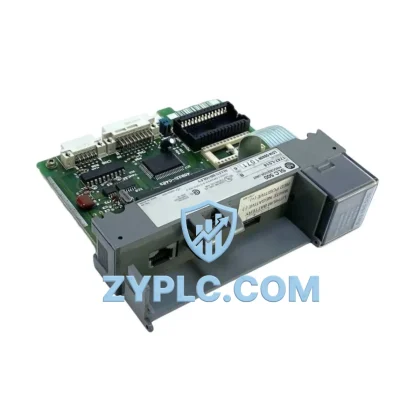
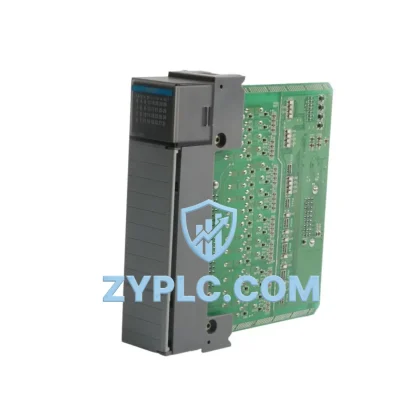
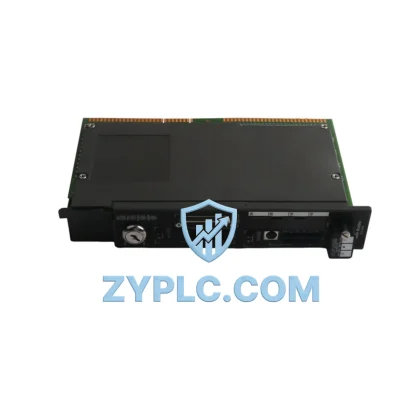
Siemens 6ES5927-3KA13 System-Ready Coordination Module for SIMATIC S5 Architecture
The Siemens 6ES5927-3KA13 is a dedicated coordination module engineered for deployment within the SIMATIC S5 programmable logic controller platform. Rather than functioning as a standalone component, this module occupies a critical position within the multi-tier control architecture — bridging the central processing unit with distributed I/O subsystems, communication gateways, and field-level devices. In complex industrial environments where system consistency, deterministic signal flow, and long-term maintainability are non-negotiable, the 6ES5927-3KA13 delivers the coordination layer that holds the entire control hierarchy together.
Designed for integration into the S5-900U and compatible S5 rack systems, this module supports the structured expansion of automation architectures across manufacturing, power distribution, petrochemical processing, water treatment, mining, metallurgy, and continuous process control applications. Its role within the control system is to manage inter-module communication, synchronize data exchange between the CPU and peripheral modules, and ensure that the overall system operates with the timing precision and signal integrity required by demanding industrial processes.
Architecture Specification Table
| Parameter |
Specification |
| Part Number / SKU |
6ES5927-3KA13 |
| Product Family |
SIMATIC S5 |
| Module Type |
Coordination Module |
| System Role |
Inter-rack coordination and CPU-to-I/O synchronization |
| Compatible Rack |
S5-900U, SIMATIC S5 expansion racks |
| Communication Interface |
SINEC H1 / S5 internal bus |
| Electrical Supply |
24 V DC (via backplane bus) |
| Operating Temperature |
0 °C to +60 °C |
| Storage Temperature |
-40 °C to +70 °C |
| Relative Humidity |
5% to 95%, non-condensing |
| Protection Class |
IP20 |
| Country of Origin |
Germany |
| Installation |
DIN rail / rack-mount, S5 backplane slot |
| Certifications |
CE, UL (SIMATIC S5 platform) |
| Warranty |
12-Month Warranty (ZYPLC) |
| Condition |
New / Refurbished / Tested & Verified |
Coordinated Control System Design
The 6ES5927-3KA13 does not operate in isolation — its value is fully realized when considered within the broader SIMATIC S5 system architecture. At the processing layer, the module works in direct coordination with S5 central processing units such as the 6ES5948-3UA11 (CPU 948) and 6ES5928-3UB21 (CPU 928B), ensuring that program execution cycles are synchronized with I/O update intervals across all connected racks. This synchronization is essential in multi-rack configurations where timing drift between the CPU and remote I/O can introduce process anomalies.
On the power supply side, the coordination module relies on stable DC bus voltage delivered by S5-compatible power supply units such as the 6ES5955-3LC41 or 6ES5955-3LF41. These units provide the regulated 24 V DC and 5 V DC rails required for consistent module operation. Any voltage instability at the power layer directly impacts the coordination module’s ability to maintain reliable inter-rack communication, making power supply selection a critical architectural decision.
At the I/O layer, the 6ES5927-3KA13 coordinates data exchange with digital input modules such as the 6ES5421-8MA11 and digital output modules such as the 6ES5441-8MA11, as well as analog I/O modules including the 6ES5466-3LA11 for process signal acquisition. The coordination module ensures that I/O scan cycles are aligned with the CPU’s program execution, preventing data inconsistency between field signals and the controller’s memory image.
For systems requiring inter-PLC communication or integration with SCADA platforms, the 6ES5927-3KA13 operates alongside communication processors such as the 6ES5734-3BD20 (CP 5430 TF) or 6ES5524-3UA15 (CP 524), which handle PROFIBUS-DP and SINEC H1 network traffic. This layered communication architecture allows the S5 system to participate in plant-wide automation networks while maintaining deterministic local control loop performance.
At the human-machine interface layer, operator panels and HMI systems connected via the S5 communication bus rely on the coordination module to provide consistent data refresh rates. Integration with OP series operator panels or third-party SCADA systems via the 6ES5734-3BD20 gateway ensures that process visualization remains synchronized with actual field conditions. The 6ES5927-3KA13 thus serves as the architectural backbone that enables coherent data flow from field sensors through the control layer to the operator interface.
In redundant system designs — common in power generation, chemical processing, and critical infrastructure applications — the coordination module supports hot-standby configurations where a secondary CPU rack monitors the primary system state. The module’s role in maintaining consistent rack-to-rack communication is fundamental to achieving the sub-second switchover times required by high-availability process control specifications.
Application in Layered Automation Systems
Manufacturing & Assembly Lines: In automotive and discrete manufacturing environments, the 6ES5927-3KA13 coordinates multi-rack S5 systems controlling conveyor drives, robotic welding stations, and quality inspection systems. Its ability to synchronize I/O updates across multiple expansion racks ensures that production sequencing logic executes with the timing precision required for high-throughput assembly operations.
Power Distribution & Substation Automation: In electrical utility applications, the module supports S5-based protection relay coordination systems, managing signal flow between current transformer inputs, protection logic CPUs, and circuit breaker output modules. The 12-Month Warranty and verified component condition are particularly valued in utility environments where unplanned outages carry significant operational and financial consequences.
Petrochemical & Refinery Process Control: Continuous process plants operating S5 systems for reactor temperature control, distillation column management, and pipeline pressure regulation depend on the coordination module to maintain deterministic scan cycles across distributed I/O racks. The module’s compatibility with S5 analog I/O modules enables precise process variable monitoring across the full range of refinery instrumentation.
Water & Wastewater Treatment: Municipal water treatment facilities using legacy SIMATIC S5 infrastructure rely on coordination modules to manage pump sequencing, chemical dosing control, and filtration system automation. The 6ES5927-3KA13 supports long-term system operation in these environments, where replacement of the entire control system is cost-prohibitive and spare parts availability is a primary maintenance concern.
Mining & Metallurgical Processing: In ore processing, smelting, and materials handling applications, the coordination module manages signal coordination between heavy-duty motor control centers, conveyor belt drives, and process monitoring systems. Its robust design for industrial rack environments ensures reliable operation in the high-vibration, high-dust conditions typical of mining facilities.
Architecture Engineering FAQ
Q1: Is the 6ES5927-3KA13 compatible with all SIMATIC S5 rack configurations, and can it be used in both central and expansion racks?
The 6ES5927-3KA13 is specifically designed for use within the SIMATIC S5 rack system, primarily in configurations involving the S5-900U central rack and its associated expansion racks. It occupies a dedicated coordination slot and interfaces directly with the S5 backplane bus. For multi-rack configurations, one coordination module is typically required per rack pair to maintain synchronized communication. Compatibility should be verified against the specific CPU variant (e.g., CPU 928B, CPU 948) and the firmware revision of the central processing unit to ensure full Contextual Integration within the target architecture.
Q2: How does the 6ES5927-3KA13 support long-term maintenance strategies for legacy S5 systems, and what is covered under the 12-Month Warranty?
For facilities operating SIMATIC S5 systems beyond their original design lifecycle, maintaining a verified spare parts inventory is the most effective strategy for minimizing unplanned downtime. The 6ES5927-3KA13 supplied by ZYPLC is tested and verified prior to shipment, with a 12-Month Warranty covering functional defects identified under normal operating conditions. This warranty period provides engineering teams with the confidence to integrate the module into critical control systems without the risk exposure associated with unverified surplus components. Long-term maintenance planning should also include spare CPU modules, power supply units, and key I/O modules to ensure complete system recoverability.
Q3: What commissioning steps are required when installing the 6ES5927-3KA13 as a replacement in an existing S5 system, and how is Contextual Integration verified?
Replacement commissioning for the 6ES5927-3KA13 involves powering down the affected rack, removing the existing coordination module, and installing the replacement in the correct backplane slot as specified in the S5 system configuration documentation. Following power-up, the CPU should be placed in STOP mode while the coordination module initializes its communication link with the central rack. Contextual Integration is verified by confirming that all I/O modules in the associated expansion rack are recognized by the CPU, that the I/O image table updates correctly during a test scan cycle, and that no bus fault indicators are active on the coordination module’s diagnostic LEDs. Full system validation should include a controlled test run of all process I/O points before returning the system to automatic operation.
© 2026 ZYPLC. All rights reserved.
Original Source: https://zyplc.com
Contact: +86 19859288691 | [email protected]