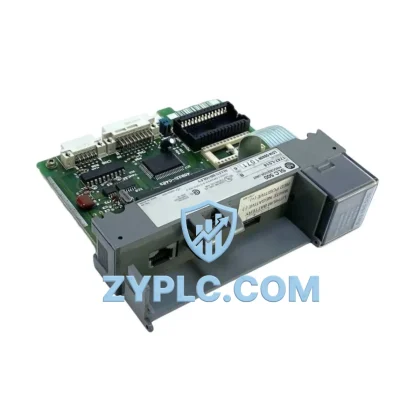
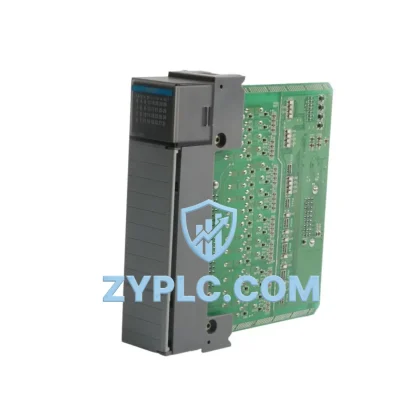
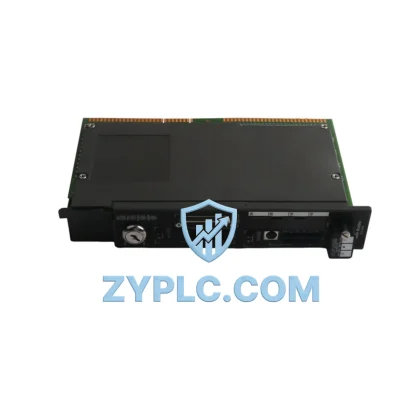
Siemens 6ES7 971-0BA00 System-Ready Backup Battery for S7-300 Architecture: Control System Architecture and Upstream-Downstream Coordination
In any industrial automation environment, the integrity of a programmable logic controller’s retentive memory is not a peripheral concern — it is a foundational requirement of the entire control architecture. The Siemens 6ES7 971-0BA00 backup battery module is engineered specifically for the SIMATIC S7-300 platform, providing sustained voltage support to preserve data blocks, retentive flags, timers, counters, and real-time clock values during power interruptions. Within a layered automation system, this component occupies a critical position at the control layer, directly supporting the CPU’s ability to resume operations without data loss or reinitialization cycles.
The S7-300 architecture is widely deployed across manufacturing, power distribution, petrochemical processing, water treatment, mining, metallurgy, packaging lines, and process control systems. In each of these environments, the 6ES7 971-0BA00 ensures that the CPU — whether a CPU 314, CPU 315-2 DP, CPU 317-2 PN/DP, or CPU 319-3 PN/DP — retains its program state and configuration data across unplanned shutdowns, maintenance windows, and scheduled power cycles. This continuity is not merely a convenience; in process-critical applications, it is the difference between a controlled restart and an unplanned production halt.
The 6ES7 971-0BA00 integrates directly into the CPU module’s battery compartment, requiring no additional wiring, no external power supply, and no software configuration. Its installation is governed by the standard S7-300 rack and mounting rail system, making it fully compatible with the 6ES7 390-1AE80-0AA0 mounting rail and the standard DIN rail enclosure configurations used across S7-300 deployments. The battery’s low self-discharge chemistry ensures reliable backup duration across extended operational periods, reducing the frequency of scheduled maintenance interventions and supporting long-term system uptime targets.
From a system architecture perspective, the backup battery’s role extends beyond the CPU itself. In distributed I/O configurations where the CPU communicates with ET 200M or ET 200S remote I/O stations via PROFIBUS DP, the retention of communication parameters and I/O mapping data within the CPU’s retentive memory ensures that the distributed architecture can be restored to its pre-fault state without manual reconfiguration. Similarly, in systems where the CP 343-1 or CP 343-1 Advanced communication processor manages Industrial Ethernet connectivity, the CPU’s retained network configuration data — including IP addressing, subnet masks, and routing parameters — remains intact across power cycles, eliminating the need for recommissioning after each interruption.
In redundant system designs, where a standby CPU or a hot-standby configuration using the 6ES7 960-1AA04-0XA0 sync module is employed, the 6ES7 971-0BA00 plays an equally important role in both the active and standby CPUs. Retentive data consistency between the primary and standby controllers is a prerequisite for seamless switchover, and the backup battery ensures that both units maintain synchronized memory states even during extended power-off periods during maintenance or module replacement. This is particularly relevant in high-availability applications such as substation automation, continuous chemical processing, and critical infrastructure control.
At the power layer, the S7-300 system relies on the PS 307 power supply modules — including the 6ES7 307-1BA01-0AA0 (2A) and 6ES7 307-1EA01-0AA0 (5A) variants — to deliver regulated 24 VDC to the CPU and I/O modules. The 6ES7 971-0BA00 backup battery operates independently of the PS 307, providing a dedicated voltage source for the CPU’s internal SRAM and real-time clock circuitry. This architectural separation ensures that even in the event of a complete power supply failure, the CPU’s retentive data remains protected without placing any additional load on the primary power distribution network.
For human-machine interface integration, S7-300 systems frequently incorporate SIMATIC HMI panels — such as the TP700 Comfort or KTP900 Basic — connected via PROFINET or MPI. The HMI’s ability to display accurate process values and alarm histories after a power restoration event depends directly on the CPU’s ability to recover its last known state from retentive memory. The 6ES7 971-0BA00 ensures that this recovery is immediate and complete, supporting operator confidence and reducing the time required to verify system status after an interruption.
In signal module configurations, where SM 321 digital input modules, SM 322 digital output modules, SM 331 analog input modules, and SM 332 analog output modules are installed across one or more expansion racks connected via the IM 360/IM 361 interface modules, the CPU’s retentive memory holds the process image and I/O configuration data that governs how each signal module is addressed and controlled. The backup battery’s role in preserving this data ensures that the entire I/O architecture — spanning multiple racks and potentially dozens of signal modules — can be restored to operational status without manual intervention at the module level.
From a maintenance and lifecycle management perspective, the 6ES7 971-0BA00 is a consumable component with a defined service life, and its replacement is a routine element of any S7-300 preventive maintenance program. ZYPLC maintains verified stock of this battery module, sourced from authorized supply chains, and each unit is supplied with a 12-Month Warranty covering manufacturing defects and premature capacity loss. This warranty commitment supports long-term maintenance planning and provides procurement teams with the assurance needed to include the 6ES7 971-0BA00 in multi-year spare parts contracts.
The Contextual Integration capability of the 6ES7 971-0BA00 within the S7-300 ecosystem means that it does not require any modification to the existing system architecture, software configuration, or hardware layout. It is a drop-in replacement for any S7-300 CPU that supports the standard battery compartment interface, and its installation can be performed during a scheduled maintenance window without taking the CPU offline in most configurations. This minimizes disruption to production schedules and supports the operational continuity objectives of facilities operating under tight uptime requirements.
Architecture Specification Table
| Parameter |
Specification |
| Part Number |
6ES7 971-0BA00 |
| Brand |
Siemens SIMATIC |
| Series |
S7-300 |
| System Role |
CPU Retentive Memory & Real-Time Clock Backup |
| Battery Type |
Lithium (Li) |
| Nominal Voltage |
3.0 V DC |
| Capacity |
Approx. 1000 mAh (typical) |
| Compatible CPUs |
CPU 312, 313, 314, 315, 315-2 DP, 316, 317, 318, 319 series |
| Installation Method |
Direct insertion into CPU battery compartment — no wiring required |
| Communication Compatibility |
MPI, PROFIBUS DP, PROFINET (via compatible CPUs) |
| Operating Temperature |
0°C to +60°C (storage: -40°C to +70°C) |
| Country of Origin |
Germany |
| Warranty |
12-Month Warranty (manufacturing defects & premature capacity loss) |
| Contextual Integration |
Drop-in replacement; no software or hardware reconfiguration required |
Coordinated Control System Design
The 6ES7 971-0BA00 functions as a silent but essential coordinator within the S7-300 control architecture. Its effectiveness is best understood in the context of the full system stack it supports. At the CPU layer, it directly backs up the CPU 315-2 DP (6ES7 315-2AH14-0AB0) and CPU 317-2 PN/DP (6ES7 317-2EK14-0AB0), which serve as the central processing nodes in mid-to-large scale automation systems. These CPUs manage program execution, I/O scanning, and communication scheduling — all of which depend on retentive data integrity across power cycles.
At the power supply layer, the PS 307 5A (6ES7 307-1EA01-0AA0) provides the primary 24 VDC rail, while the 6ES7 971-0BA00 independently sustains the CPU’s internal memory circuits. This dual-layer power architecture ensures that even a complete PS 307 failure does not result in data loss at the CPU level. In rack configurations using the 6ES7 390-1AE80-0AA0 mounting rail and 6ES7 400-1JA01-0AA0 central rack, the battery module’s compact form factor allows it to be installed without affecting the physical layout of adjacent signal modules or communication processors.
At the I/O layer, the battery’s protection of retentive process image data ensures that SM 321 (6ES7 321-1BH02-0AA0) digital input configurations and SM 332 (6ES7 332-5HB01-0AB0) analog output parameterizations are preserved across restarts. In distributed I/O architectures, where ET 200M stations are connected via PROFIBUS DP using the IM 153-2 (6ES7 153-2BA02-0XB0) interface module, the CPU’s retained DP configuration eliminates the need for a full GSD-based recommissioning cycle after each power restoration event.
At the network layer, the CP 343-1 (6GK7 343-1EX30-0XE0) Industrial Ethernet communication processor relies on the CPU’s retained IP configuration and connection table data to re-establish PROFINET and TCP/IP sessions after a restart. The 6ES7 971-0BA00 ensures that this network configuration data is available immediately upon CPU restart, reducing the time required to restore full network connectivity in multi-node SCADA and DCS integration scenarios.
Application in Layered Automation Systems
In manufacturing and discrete production environments, the 6ES7 971-0BA00 supports S7-300 CPUs managing assembly line sequencing, robotic cell coordination, and quality inspection systems. The preservation of retentive counters and production batch data across power interruptions ensures that production records remain accurate and that line restart procedures can be executed without manual data re-entry.
In power distribution and substation automation applications, S7-300 systems equipped with the 6ES7 971-0BA00 maintain protection relay coordination parameters, breaker status flags, and load shedding logic across planned and unplanned outages. The real-time clock backup function is particularly critical in these environments, where timestamped event logs must remain synchronized with SCADA systems for regulatory compliance and fault analysis.
In petrochemical and process control facilities, where continuous process variables — including temperature setpoints, PID tuning parameters, and interlock logic states — are stored in retentive data blocks, the 6ES7 971-0BA00 ensures that the CPU can resume closed-loop control immediately after a power restoration event without requiring operator intervention to reload process parameters. This capability is essential in facilities operating under strict process safety management (PSM) requirements.
In water treatment and municipal infrastructure systems, S7-300 controllers managing pump sequencing, chemical dosing, and flow metering rely on retentive totalizer values and alarm history data that must survive power interruptions without corruption. The 6ES7 971-0BA00 provides the memory backup infrastructure that makes this reliability possible, supporting compliance with environmental monitoring and reporting requirements.
In mining and metallurgical applications, where S7-300 systems control conveyor drives, crusher sequencing, and smelting process parameters in harsh electrical environments, the backup battery’s ability to maintain data integrity across frequent power fluctuations and emergency shutdowns is a key factor in reducing unplanned downtime and supporting safe restart procedures.
Architecture Engineering FAQ
Q1: Is the 6ES7 971-0BA00 compatible with all S7-300 CPU variants, and does replacing it require taking the CPU offline?
The 6ES7 971-0BA00 is compatible with the full range of S7-300 CPU modules that feature the standard battery compartment interface, including the CPU 312, 313, 314, 315-2 DP, 316-2 DP, 317-2 PN/DP, 318-2 DP, and 319-3 PN/DP. Battery replacement can typically be performed with the CPU in RUN mode, provided the replacement is completed within the CPU’s specified battery exchange window (usually a few minutes). This allows the maintenance procedure to be carried out during a brief operational pause rather than a full system shutdown, minimizing impact on production continuity.
Q2: How does the 6ES7 971-0BA00 interact with the S7-300’s memory card (MMC), and is the battery still required when an MMC is installed?
The SIMATIC Micro Memory Card (MMC), such as the 6ES7 953-8LF31-0AA0, stores the CPU’s user program and can also store retentive data if configured to do so via a “Copy RAM to ROM” function. However, the MMC does not replace the backup battery’s role in maintaining the real-time clock and providing continuous retentive memory backup during normal operation. The 6ES7 971-0BA00 remains a recommended component even in MMC-equipped systems, as it provides an additional layer of data protection and ensures real-time clock accuracy for timestamped event logging and scheduled task execution.
Q3: What does the 12-Month Warranty cover, and how does ZYPLC support long-term spare parts planning for the 6ES7 971-0BA00?
The 12-Month Warranty provided by ZYPLC covers manufacturing defects and premature capacity loss in the 6ES7 971-0BA00 battery module. Units that fail to meet specified voltage and capacity thresholds within the warranty period are eligible for replacement at no additional cost. For long-term spare parts planning, ZYPLC maintains verified stock of the 6ES7 971-0BA00 and can support multi-unit procurement for facilities managing large S7-300 fleets across multiple sites. Customers are encouraged to contact ZYPLC directly to discuss volume pricing, lead times, and scheduled delivery arrangements aligned with their preventive maintenance calendars.
© 2026 ZYPLC. All rights reserved.
Original Source: https://zyplc.com
Contact: +86 19859288691 | [email protected]