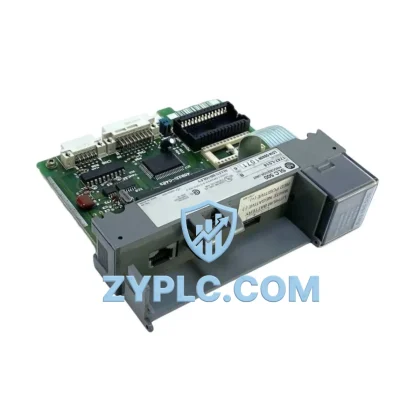
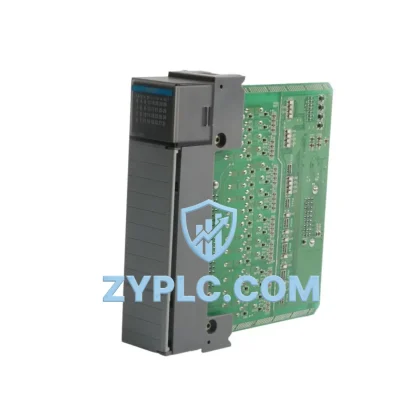
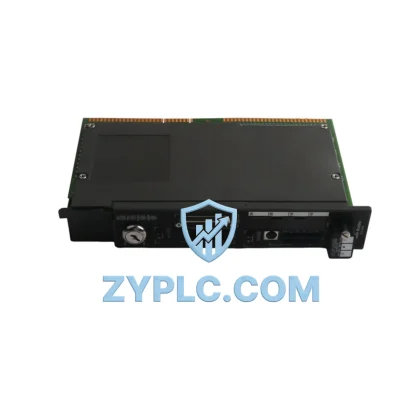
Siemens 6ES7211-0BA23-0XB0 System-Ready CPU for S7-200 Architecture: Control Layer Coordination and Upstream–Downstream Coherence
The Siemens 6ES7211-0BA23-0XB0 CPU 221 is a compact, high-reliability programmable logic controller designed as the central processing node within the SIMATIC S7-200 control architecture. Rather than functioning as a standalone device, this CPU module is engineered to operate as the command core of a layered automation system — coordinating signal acquisition from the I/O layer, executing ladder or STL logic at the control layer, communicating across the network layer, and driving outputs at the execution layer. Its role in the system hierarchy is to ensure deterministic scan cycles, consistent data exchange, and stable program execution across all connected subsystems.
In modern industrial automation, the CPU is not merely a processor — it is the architectural anchor. The 6ES7211-0BA23-0XB0 provides 6 digital inputs and 4 digital outputs in a DC/DC/DC configuration, making it suitable for direct integration with 24 VDC field devices, sensors, and actuators. Its onboard I/O eliminates the need for additional expansion in small-scale applications, while its PPI (Point-to-Point Interface) communication port enables seamless Contextual Integration with upstream SCADA systems, HMI panels, and peer CPUs within the same S7-200 network.
Architecture Specification Table
| Parameter |
Specification |
| System Role |
Central Processing Unit — Control Layer |
| Full SKU |
6ES7211-0BA23-0XB0 |
| Series |
SIMATIC S7-200 |
| Digital Inputs |
6 × DC 24V |
| Digital Outputs |
4 × DC 24V Transistor |
| I/O Configuration |
DC/DC/DC |
| Supply Voltage |
24 VDC |
| Program Memory |
4 KB |
| Data Memory |
2 KB |
| Communication Port |
1 × RS-485 (PPI/MPI) |
| Execution Speed |
0.37 µs/instruction (Boolean) |
| Installation |
DIN Rail or Panel Mount |
| Operating Temperature |
0°C to +55°C |
| Protection Rating |
IP20 |
| Origin |
Germany |
| Warranty |
12-Month Warranty |
Coordinated Control System Design
The 6ES7211-0BA23-0XB0 CPU 221 achieves its full architectural value when deployed within a coordinated S7-200 system environment. At the power layer, the CPU is typically paired with a dedicated 24 VDC power supply module such as the Siemens 6EP1332-1SH43 SITOP PSU100S, which provides stable, filtered DC power to both the CPU and connected I/O expansion modules. Voltage stability at this layer is critical — any ripple or dropout directly affects CPU scan cycle integrity and output reliability.
For applications requiring expanded I/O capacity beyond the onboard 6DI/4DO, the CPU 221 supports connection to digital expansion modules such as the 6ES7221-1BF22-0XA0 (8 × DI) and the 6ES7222-1BF22-0XA0 (8 × DO), extending the system’s field connectivity without requiring a larger CPU platform. Analog signal acquisition is handled through modules like the 6ES7231-0HC22-0XA0 (4 × AI), enabling the CPU to process temperature, pressure, or flow signals from process instrumentation.
At the network and communication layer, the CPU’s RS-485 PPI port enables multi-drop communication with operator panels such as the Siemens TD 200 text display or the TP 177 HMI panel, providing operators with real-time process visibility and parameter adjustment capability. For more complex network topologies, a CP 243-1 Ethernet communication processor can be added to bridge the S7-200 system into a PROFINET or Industrial Ethernet backbone, enabling Contextual Integration with MES or SCADA platforms at the supervisory layer.
In redundancy-sensitive applications, engineers often deploy dual CPU configurations using the PPI multi-master protocol, where a secondary 6ES7211-0BA23-0XB0 or a higher-tier CPU such as the 6ES7214-1BD23-0XB0 CPU 224 acts as a hot standby or supervisory controller. This architecture ensures that a single CPU fault does not interrupt the overall control loop, maintaining process continuity in critical environments such as water treatment, chemical dosing, or conveyor control systems.
Terminal block modules and signal conditioning components — including Siemens SIRIUS 3RT contactors and 3RV circuit breakers — are commonly integrated at the execution layer, where the CPU’s transistor outputs drive relay coils, motor starters, or solenoid valves. The DC transistor output type of the 6ES7211-0BA23-0XB0 ensures fast switching response and compatibility with inductive loads when appropriate suppression diodes are installed.
Application in Layered Automation Systems
The 6ES7211-0BA23-0XB0 CPU 221 is widely deployed across a broad range of industrial sectors where compact, reliable, and cost-effective PLC control is required. In manufacturing and assembly lines, the CPU manages sequential machine operations — part detection, actuator triggering, conveyor indexing, and reject sorting — within a deterministic scan cycle that ensures consistent throughput and minimal downtime.
In water and wastewater treatment facilities, the CPU 221 controls pump start/stop sequences, valve positioning, and level monitoring through its digital I/O, while communicating process data upstream to a SCADA system via the PPI port. Its compact form factor and DIN rail mounting make it ideal for installation in field control panels with limited enclosure space.
In power distribution and building automation applications, the CPU coordinates load switching, fault detection, and alarm relay logic, often operating alongside energy meters and protection relays within the same control cabinet. Its 12-Month Warranty and proven S7-200 platform reliability make it a preferred choice for facilities requiring long-term operational stability and predictable maintenance cycles.
In packaging and material handling systems, the CPU 221 manages multi-axis coordination through digital output signals to variable frequency drives (VFDs) and servo amplifiers, synchronizing conveyor speeds, label applicators, and reject gates. Its fast Boolean execution speed of 0.37 µs per instruction ensures that high-speed packaging lines maintain accurate timing without scan cycle overruns.
In petrochemical and process industries, the CPU is deployed in hazardous area control panels (with appropriate enclosure ratings) to manage flow control valves, pressure relief sequences, and emergency shutdown (ESD) logic. Its compatibility with analog expansion modules allows it to process 4–20 mA signals from field transmitters, enabling closed-loop PID control within the S7-200 architecture.
Architecture Engineering FAQ
Q1: Is the 6ES7211-0BA23-0XB0 compatible with existing S7-200 expansion modules and communication accessories?
Yes. The CPU 221 is fully compatible with the S7-200 expansion module family, including digital I/O modules (6ES7221/222 series), analog modules (6ES7231/232 series), and communication processors such as the CP 243-1 Ethernet module. It supports PPI and MPI protocols natively, enabling Contextual Integration with HMI panels, text displays, and supervisory systems without additional protocol converters. All expansion modules connect via the CPU’s integrated I/O bus connector on the right side of the housing.
Q2: What are the installation and commissioning requirements for integrating this CPU into an existing S7-200 control cabinet?
The 6ES7211-0BA23-0XB0 mounts on standard 35 mm DIN rail and requires a 24 VDC supply rated at a minimum of 0.7 A for the CPU alone, with additional current budget allocated for each connected expansion module. Commissioning is performed using STEP 7 Micro/WIN programming software via the RS-485 PPI port and a PC adapter cable (e.g., 6ES7901-3CB30-0XA0). Engineers should verify I/O addressing, communication baud rate settings, and program memory allocation during initial startup. Grounding and shielding of signal cables is essential in electrically noisy environments to prevent communication errors.
Q3: What does the 12-Month Warranty cover, and how does ZYPLC support long-term architectural maintenance for S7-200 systems?
The 12-Month Warranty covers manufacturing defects, functional failures under normal operating conditions, and verified hardware faults identified during incoming inspection or field deployment. ZYPLC provides pre-shipment functional testing for all CPU modules, ensuring that each unit is verified against its datasheet specifications before dispatch. For long-term architectural maintenance, ZYPLC maintains stock of S7-200 compatible CPUs, expansion modules, and communication accessories, enabling rapid replacement of failed components without extended lead times. Our technical team is available to assist with compatibility verification, system architecture review, and spare parts planning for ongoing S7-200 installations.
© 2026 ZYPLC. All rights reserved.
Original Source: https://zyplc.com
Contact: +86 19859288691 | plc.sales@zyplc.com