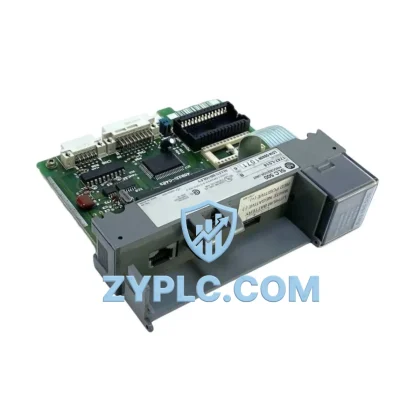
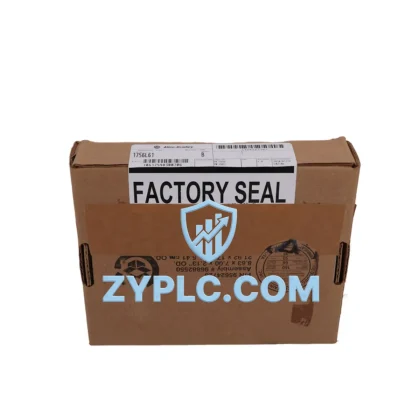
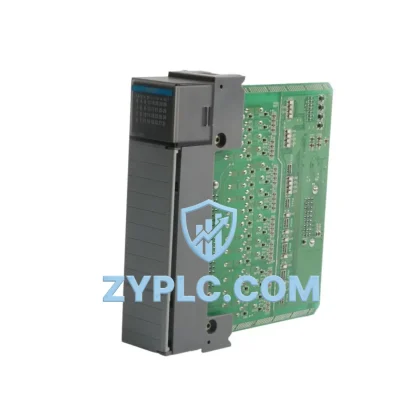
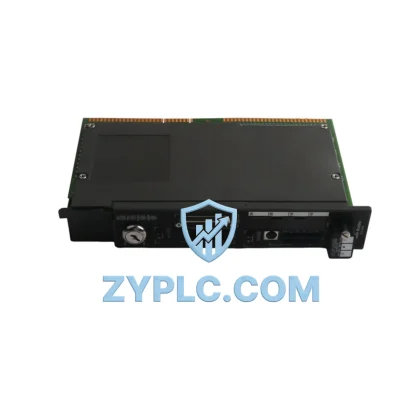
Siemens 6ES7212-1BB23-0XB8 Energy-Saving PLC CPU for Optimized S7-200 Automation
The Siemens 6ES7212-1BB23-0XB8 is a compact, high-reliability CPU module from the SIMATIC S7-200 series, engineered to deliver precise logic control with minimal power draw. Designed for small-to-mid-scale industrial automation, this CPU module enables factories to reduce idle energy consumption, tighten production cycle times, and maintain consistent equipment utilization across continuous and batch manufacturing environments. Whether deployed in standalone machine control or integrated into a broader distributed automation architecture, the 6ES7212-1BB23-0XB8 provides the processing backbone that keeps energy-aware production lines running efficiently.
At ZYPLC, every unit of the 6ES7212-1BB23-0XB8 undergoes full functional testing and burn-in verification before shipment. Stock is maintained on-hand for fast global dispatch, and each module is covered by a 12-month warranty — giving procurement teams and maintenance engineers the confidence to plan replacements and upgrades without supply-chain risk.
Efficiency Performance Table
| Parameter |
Specification |
| SKU / Part Number |
6ES7212-1BB23-0XB8 |
| Series |
SIMATIC S7-200 |
| CPU Type |
CPU 212, Compact PLC Module |
| Supply Voltage |
24 V DC |
| Power Consumption |
≤ 3 W (typical operating load) |
| Digital Inputs / Outputs |
8 DI / 6 DO (transistor) |
| Program Memory |
2 KB |
| Data Memory |
1 KB |
| Execution Speed |
0.8 ms / 1K instructions |
| Communication Interface |
PPI / MPI (RS-485) |
| Compatible Systems |
SIMATIC S7-200, STEP 7-Micro/WIN, TD 200 Text Display |
| Application Environment |
Packaging, conveyor, HVAC, pump control, light assembly |
| Operating Temperature |
0 °C to +55 °C |
| Energy Saving Value |
Low standby draw; transistor outputs eliminate relay coil losses |
| Origin |
Germany (DE) |
| Warranty |
12-Month Warranty (ZYPLC) |
| Condition |
Tested, Refurbished / New Old Stock |
Energy-Aware Automation Architecture
The 6ES7212-1BB23-0XB8 is most effective when positioned as the central control node within a lean, energy-conscious automation cell. In typical S7-200 deployments, this CPU communicates over PPI protocol with expansion modules such as the 6ES7221-1BF22-0XA0 digital input expansion and the 6ES7222-1BF22-0XA0 digital output expansion, allowing the control system to scale I/O capacity without adding unnecessary processing overhead or power draw.
For analog signal acquisition — critical in energy monitoring applications — the 6ES7231-0HC22-0XA0 analog input module pairs directly with the S7-200 CPU to capture current, voltage, and temperature signals from field sensors. This data feeds into the CPU’s scan cycle, enabling real-time load balancing decisions that prevent motors and actuators from running at unnecessary power levels during low-demand periods.
On the drive side, pairing the 6ES7212-1BB23-0XB8 with a Siemens SINAMICS G110 or MICROMASTER 420 (6SE6420-2UD17-5AA1) variable frequency drive allows the CPU to modulate motor speed in direct response to process demand signals. Rather than running motors at fixed full speed, the VFD adjusts output frequency based on CPU commands, cutting motor energy consumption by 20–50% in variable-load applications such as fans, pumps, and conveyors.
For operator interaction and local energy data visualization, the TD 200 Text Display (6ES7272-0AA30-0YA1) connects natively to the S7-200 CPU via PPI, providing operators with real-time status readouts, alarm acknowledgment, and parameter adjustment without requiring a full HMI panel. In more demanding visualization scenarios, the SIMATIC TP177 Micro HMI can be integrated to display energy trend graphs and production KPIs.
Network-level energy data aggregation is supported through the CP 243-1 Ethernet module (6GK7243-1EX01-0XE0), which bridges the S7-200 system to Industrial Ethernet and enables remote monitoring via SCADA or MES platforms. This connectivity allows energy managers to correlate PLC cycle data with power meter readings across multiple production cells, identifying inefficiency hotspots without manual data collection.
Power supply integrity is maintained by the SITOP PSU100S 24V/5A (6EP1333-2BA20) regulated power supply, which ensures the 6ES7212-1BB23-0XB8 and its expansion modules receive stable, clean DC power — reducing the risk of CPU resets or I/O errors caused by voltage fluctuations that can disrupt production and waste energy through unplanned restarts.
Power Optimization in Real Production Lines
In a typical light manufacturing or packaging line, the 6ES7212-1BB23-0XB8 manages the sequencing of conveyor drives, pneumatic actuators, and sensor arrays. By implementing time-based and demand-based control logic within the CPU’s 2 KB program memory, engineers can program energy-saving routines that automatically reduce motor speeds during product changeovers, shut down idle conveyor segments during scheduled breaks, and stagger motor startups to avoid peak demand spikes on the facility’s power grid.
The transistor-based digital outputs of the 6ES7212-1BB23-0XB8 are particularly valuable in energy optimization contexts. Unlike relay outputs, transistor outputs switch without mechanical wear, enabling high-frequency control cycles that allow the CPU to implement pulse-width modulation-style control over certain actuator types — reducing average power delivery without sacrificing response speed. This directly lowers heat generation in control panels, reducing cooling load and extending the service life of adjacent components.
Predictive maintenance integration is achievable by connecting runtime hour counters and fault registers within the S7-200 CPU to upstream SCADA systems via the CP 243-1 Ethernet module. Maintenance teams can monitor cumulative operating hours for motors and drives controlled by the 6ES7212-1BB23-0XB8, scheduling preventive service before efficiency-degrading wear occurs. This approach reduces unplanned downtime — one of the largest hidden energy costs in industrial operations, as emergency restarts and production catch-up runs consume disproportionate energy compared to steady-state operation.
For facilities managing multiple S7-200 nodes, the 6ES7212-1BB23-0XB8 supports MPI network topologies that allow a supervisory CPU or SCADA system to poll energy-relevant data — such as cycle counts, fault codes, and output states — from multiple controllers simultaneously. This centralized visibility enables energy managers to identify underperforming cells, optimize production scheduling, and reduce the total energy cost per unit produced.
ZYPLC maintains ready stock of the 6ES7212-1BB23-0XB8 with same-week shipping capability. Each unit is tested under load conditions that simulate real production environments, and the 12-month warranty covers functional failure under normal operating conditions — ensuring that energy optimization investments are protected from component risk.
Energy Optimization FAQ
Q1: How much energy can the 6ES7212-1BB23-0XB8 save compared to older relay-based control systems?
The 6ES7212-1BB23-0XB8 consumes as little as 3 W in typical operation, compared to relay logic panels that can draw 20–50 W or more due to coil energization and inefficient switching. When combined with VFD-controlled motors, system-level energy savings of 25–45% are commonly achieved in conveyor and pump applications.
Q2: Is the 6ES7212-1BB23-0XB8 compatible with existing S7-200 expansion modules and programming tools?
Yes. The 6ES7212-1BB23-0XB8 is fully compatible with the S7-200 expansion module range, including digital I/O, analog I/O, and communication modules. It is programmed using STEP 7-Micro/WIN software and supports PPI and MPI communication protocols, making it a direct replacement for other S7-200 CPU 212 variants.
Q3: What is the recommended replacement or upgrade path if the 6ES7212-1BB23-0XB8 reaches end of service life?
For applications requiring expanded memory and I/O, the 6ES7214-1BD23-0XB8 (CPU 214) is the natural upgrade within the S7-200 family, offering 4 KB program memory and additional I/O points. For new projects, migration to the SIMATIC S7-1200 series with STEP 7 Basic (TIA Portal) provides a modern, energy-efficient platform with integrated Ethernet and enhanced diagnostic capabilities.
Q4: What does the 12-month warranty from ZYPLC cover, and what is the testing process?
Every 6ES7212-1BB23-0XB8 shipped by ZYPLC undergoes a multi-stage test process: power-on verification, I/O functional test, communication port check, and a burn-in cycle under simulated load. The 12-month warranty covers any functional failure under normal operating conditions. Defective units are replaced or refunded promptly, and ZYPLC’s technical team provides pre-sales compatibility support to ensure the correct module is selected for your application.
© 2026 ZYPLC. All rights reserved.
Original Source: https://zyplc.com
Contact: +86 19859288691 | [email protected]