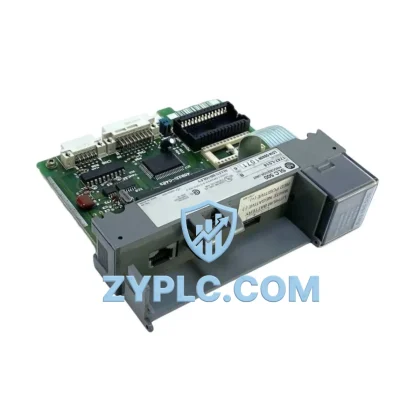
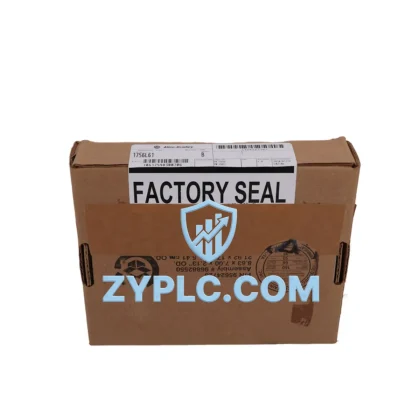
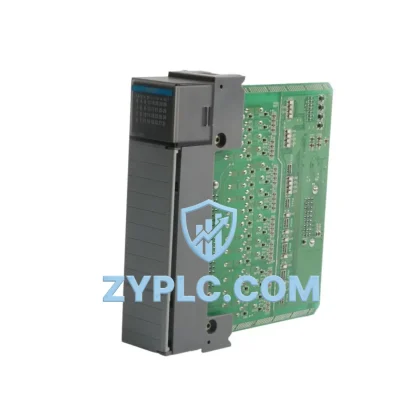
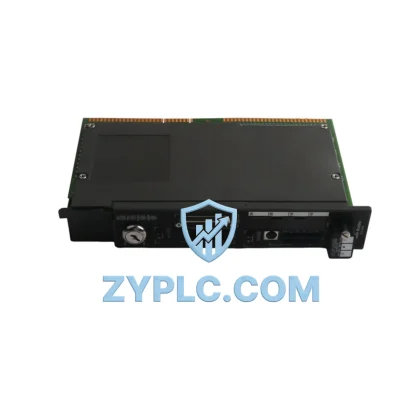
Siemens 6ES7223-1BL22-0XA0 System-Ready Digital I/O for S7-200 Control Architecture
The Siemens 6ES7223-1BL22-0XA0, part of the EM 223 expansion module family, is a 16-input / 16-output digital I/O module engineered for seamless integration within the SIMATIC S7-200 Micro PLC control architecture. Rather than functioning as a standalone peripheral, this module is designed to operate as a coordinated node within a layered automation system — extending the I/O capacity of the CPU 224, CPU 224XP, or CPU 226 central processing units while maintaining deterministic signal processing and system-wide coherence.
In a complete S7-200 control system, the 6ES7223-1BL22-0XA0 occupies the I/O expansion layer, directly connected to the CPU via the local I/O bus. Its 24 VDC digital inputs and relay or transistor outputs interface with field devices including solenoid valves, motor contactors, proximity sensors, and pushbutton stations. The module’s role is not merely signal acquisition — it is a structural component that defines the system’s ability to respond to process events with precision and speed.
System architects integrating this module into a broader control cabinet design will typically pair it with the CPU 226 (6ES7216-2BD23-0XB0) as the master controller, supported by a SITOP PSU100S 24 VDC power supply module to ensure stable bus voltage across all expansion slots. The EM 223 module connects directly to the CPU expansion port, and multiple EM modules — including analog input modules such as the EM 231 (6ES7231-0HC22-0XA0) and analog output modules such as the EM 232 (6ES7232-0HB22-0XA0) — can be chained to build a comprehensive mixed-signal I/O architecture.
For applications requiring network connectivity, the CP 243-1 Ethernet communication processor (6GK7243-1EX01-0XE0) can be added to the S7-200 rack to enable PROFINET or Industrial Ethernet communication, allowing the CPU and its I/O expansion modules — including the 6ES7223-1BL22-0XA0 — to participate in supervisory SCADA systems or MES data exchange. Alternatively, the CP 243-2 AS-Interface master module supports field-level device networks, further extending the system’s reach into distributed I/O topologies.
Human-machine interface integration is achieved through the SIMATIC TD 400C text display or the TP 177 Micro HMI panel, both of which communicate with the S7-200 CPU via the PPI (Point-to-Point Interface) protocol. The I/O states managed by the 6ES7223-1BL22-0XA0 are directly reflected in the HMI’s process visualization, enabling operators to monitor digital signal status, acknowledge alarms, and initiate control sequences without additional engineering overhead.
From a redundancy and reliability perspective, the EM 223 module supports the S7-200 system’s inherent watchdog and diagnostic functions. In the event of a CPU fault or power interruption, the module’s output states can be configured to hold last value or default to a safe de-energized state, depending on the application’s safety requirements. This behavior is coordinated through the CPU’s system block configuration, ensuring that the entire I/O layer — including this module — responds predictably to abnormal conditions.
Installation follows standard DIN rail mounting procedures, with the module snapping directly onto 35 mm DIN rail and connecting to the CPU or adjacent EM module via the integrated expansion cable. Wiring terminals accept conductors up to 1.5 mm², and the module’s compact form factor allows dense cabinet layouts without compromising accessibility for maintenance personnel. All I/O points are individually fused at the field wiring level, and LED status indicators on the module face provide real-time diagnostic feedback for each input and output channel.
Long-term maintainability is a core design consideration for the 6ES7223-1BL22-0XA0. As a standard catalog component within the SIMATIC S7-200 product line, replacement modules are available from authorized distributors and specialist suppliers, ensuring that installed systems can be maintained without extended downtime. ZYPLC maintains verified stock of this module, with pre-shipment functional testing and a 12-Month Warranty covering all supplied units. This warranty encompasses manufacturing defects, electrical parameter conformance, and firmware compatibility with the S7-200 CPU family.
Architecture Specification Table
| Parameter |
Specification |
| System Role |
Digital I/O Expansion Module (EM 223) |
| Compatible CPUs |
CPU 221, CPU 222, CPU 224, CPU 224XP, CPU 226 |
| Digital Inputs |
16 × 24 VDC, IEC Type 1 Sink |
| Digital Outputs |
16 × Relay, 2A per point, 10A per common |
| Input Voltage Range |
20.4–28.8 VDC |
| Output Type |
Relay (Form A), Isolated Commons |
| Power Consumption |
5 VDC: 110 mA; 24 VDC: 60 mA (from CPU bus) |
| Communication Interface |
Local I/O Expansion Bus (S7-200 proprietary) |
| Mounting |
35 mm DIN Rail |
| Operating Temperature |
0°C to +55°C |
| Protection Rating |
IP20 |
| Dimensions (W×H×D) |
196 mm × 80 mm × 62 mm |
| Weight |
Approx. 360 g |
| Warranty |
12-Month Warranty (ZYPLC) |
Coordinated Control System Design
The 6ES7223-1BL22-0XA0 achieves its full operational value when deployed within a coordinated S7-200 system architecture. A typical system configuration begins with the CPU 226 (6ES7216-2BD23-0XB0) as the central processing unit, providing 24 digital inputs and 16 digital outputs onboard, with the capacity to support up to seven expansion modules. The EM 223 module extends this capacity by adding 16 additional inputs and 16 relay outputs, enabling the system to manage complex multi-zone control sequences without requiring a larger PLC platform.
Power integrity across the expansion bus is maintained by the SITOP PSU100S 6EP1334-2BA20 24 VDC / 10A power supply, which provides regulated bus voltage to the CPU and all connected EM modules. For analog process variables — such as temperature, pressure, or flow — the EM 231 analog input module (6ES7231-0HC22-0XA0) and EM 232 analog output module (6ES7232-0HB22-0XA0) are integrated into the same expansion chain, allowing the CPU to process both digital and analog signals within a unified program cycle.
Network-layer integration is provided by the CP 243-1 Ethernet module (6GK7243-1EX01-0XE0), which connects the S7-200 system to Industrial Ethernet infrastructure and enables communication with SCADA platforms via S7 protocol or Modbus TCP. For field-level device networks, the CP 243-2 AS-Interface master (6GK7243-2AX01-0XA0) extends the system’s reach to distributed sensors and actuators. HMI visualization is handled by the SIMATIC TP 177 Micro or TD 400C text display, both communicating with the CPU via PPI, with I/O states from the EM 223 module directly mapped to operator screen elements.
Application in Layered Automation Systems
The 6ES7223-1BL22-0XA0 is deployed across a wide range of industrial automation environments where the S7-200 platform provides cost-effective, reliable control. In manufacturing and assembly lines, the module manages conveyor drive start/stop sequences, part presence detection via inductive proximity sensors, and pneumatic cylinder actuation through solenoid valve outputs. Its relay output configuration is particularly suited to motor starter and contactor control in 230 VAC or 24 VDC drive circuits.
In water treatment and pumping stations, the EM 223 module controls pump motor contactors, valve actuators, and level switch inputs, with the CPU 226 executing PID control loops for flow regulation. The module’s robust relay outputs withstand the inductive loads typical of pump motor starters, and its 24 VDC inputs interface directly with float switches and pressure transducer digital outputs.
For power distribution and substation automation applications, the module provides digital status monitoring of circuit breaker auxiliary contacts, transformer tap position switches, and alarm relay inputs, feeding real-time status data to the CPU for SCADA reporting via the CP 243-1 Ethernet module. In packaging and filling lines, the 6ES7223-1BL22-0XA0 coordinates product counting, reject gate actuation, and conveyor indexing sequences, with cycle times well within the S7-200 CPU’s scan cycle performance envelope.
Architecture Engineering FAQ
Q1: How many 6ES7223-1BL22-0XA0 modules can be connected to a single S7-200 CPU, and are there bus power limitations to consider?
The S7-200 CPU supports up to seven expansion modules in total, shared across all EM types. The 6ES7223-1BL22-0XA0 draws 110 mA from the 5 VDC CPU bus and 60 mA from the 24 VDC sensor supply. The CPU 226 provides 1000 mA on the 5 VDC bus and 400 mA on the 24 VDC bus. When combining multiple EM 223 modules with analog modules, the total bus current draw must be calculated against the CPU’s supply capacity. If the combined load exceeds the CPU’s output, an external 24 VDC supply must be used for sensor power, and the CPU bus current budget must be respected to avoid system instability.
Q2: Is the 6ES7223-1BL22-0XA0 compatible with STEP 7-Micro/WIN for configuration and diagnostics, and what firmware version is required?
Yes, the EM 223 module is fully supported by STEP 7-Micro/WIN V4.0 SP9 and later versions. No separate module configuration is required — the CPU automatically detects the expansion module during startup and maps its I/O addresses into the process image. Diagnostic information, including module presence and I/O error flags, is accessible via the CPU’s system status bits. For systems using the CPU 224XP or CPU 226, firmware version V2.0 or later is recommended to ensure full compatibility with all EM 223 relay output variants.
Q3: What does the 12-Month Warranty cover, and what is the process for warranty claims on modules supplied by ZYPLC?
The 12-Month Warranty provided by ZYPLC covers manufacturing defects, electrical parameter non-conformance, and compatibility failures with the specified S7-200 CPU family under normal operating conditions. All modules undergo pre-shipment functional testing, including I/O point verification and bus communication checks. In the event of a warranty claim, customers should contact ZYPLC at [email protected] or +86 19859288691 with the order reference and a description of the fault. ZYPLC will arrange return logistics and provide a replacement or repaired unit within the agreed service timeline. Warranty coverage does not extend to damage caused by incorrect wiring, overvoltage conditions, or installation outside the module’s specified environmental ratings.
© 2026 ZYPLC. All rights reserved.
Original Source: https://zyplc.com
Contact: +86 19859288691 | [email protected]