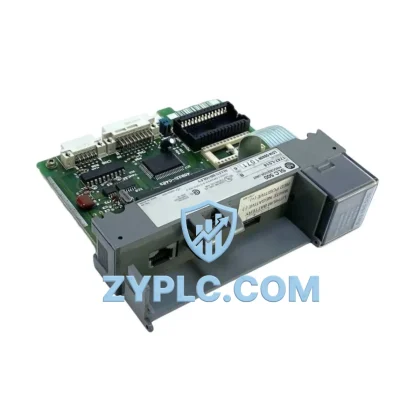
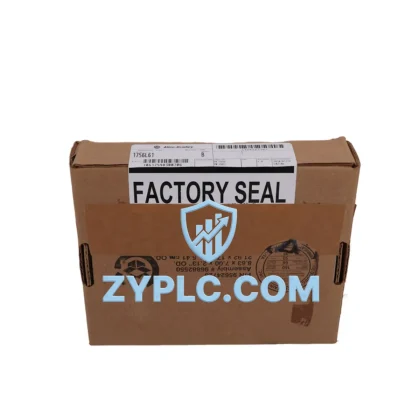
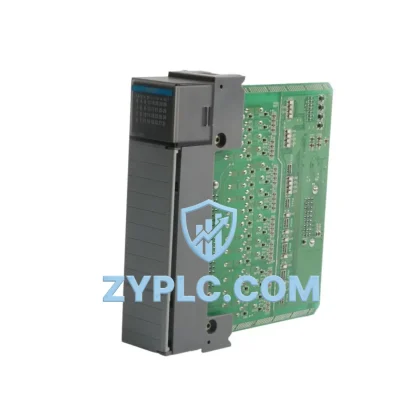
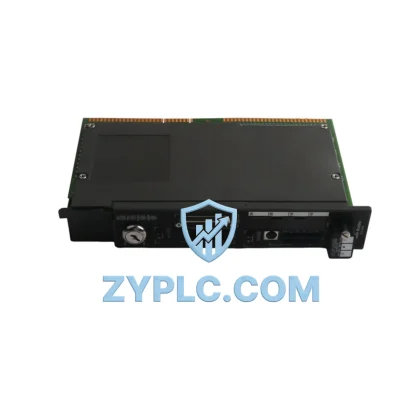
Siemens 6ES7253-1AA22-0XA0 System-Ready Positioning Module for S7-200 Control Architecture
The Siemens 6ES7253-1AA22-0XA0, commercially designated as the EM 253 Positioning Module, is a dedicated expansion module engineered for seamless integration within the SIMATIC S7-200 Micro PLC control architecture. Rather than functioning as a standalone device, the 6ES7253-1AA22-0XA0 is designed to operate as a coordinated node within a layered automation system — interfacing directly with the S7-200 CPU, the system’s I/O expansion bus, and the downstream drive or stepper motor layer. Its role in the control hierarchy is to offload high-speed pulse generation and position tracking from the main CPU, enabling deterministic motion control without compromising the scan cycle performance of the primary controller.
In a complete S7-200-based control system, the 6ES7253-1AA22-0XA0 connects to the CPU 224, CPU 224XP, or CPU 226 via the local I/O expansion bus, occupying a defined slot in the modular rack configuration. The module communicates with the CPU through the internal expansion interface, receiving positioning commands and returning encoder feedback data in real time. This architecture allows the CPU to manage broader process logic — including PID loops, communication tasks, and HMI data exchange — while the EM 253 handles the precision timing demands of stepper or servo positioning sequences independently.
Architecture Specification Table
| Parameter |
Specification |
| System Role |
Motion Control Expansion Module (EM 253) for S7-200 Micro PLC |
| Compatible CPUs |
CPU 224, CPU 224XP, CPU 226 (SIMATIC S7-200 Series) |
| Pulse Output |
Up to 200 kHz high-speed pulse output for stepper/servo drives |
| Positioning Modes |
Absolute, relative, and continuous positioning; reference point search |
| Encoder Input |
Single-ended or differential encoder feedback (A/B/Z signals) |
| Supply Voltage |
24 VDC (from S7-200 system bus or external 24 VDC supply) |
| Communication Interface |
S7-200 local expansion bus (internal I/O bus) |
| Installation |
DIN rail mount; right-side expansion of S7-200 CPU module |
| Operating Temperature |
0°C to +55°C (IEC 61131-2 compliant) |
| Protection Class |
IP20 |
| Origin |
Germany (DE) |
| Warranty |
12-Month Warranty — all units tested prior to dispatch |
Coordinated Control System Design
The 6ES7253-1AA22-0XA0 achieves its full potential when deployed within a coherent S7-200 system architecture. A typical coordinated configuration begins with the CPU 226 as the central processing unit, managing program execution, communication scheduling, and I/O coordination. The EM 253 module mounts directly to the right of the CPU on the DIN rail, connected via the expansion bus ribbon cable, and receives motion commands through the CPU’s internal data exchange mechanism — no additional fieldbus wiring is required for basic positioning tasks.
On the power layer, the S7-200 system relies on a dedicated 24 VDC power supply module — such as the SITOP PSU100S series — to provide stable, low-ripple DC power to both the CPU and expansion modules including the EM 253. Stable power delivery is critical for high-speed pulse output accuracy; voltage fluctuations exceeding ±5% can introduce positioning errors in stepper motor applications. Engineers integrating the 6ES7253-1AA22-0XA0 should ensure the power budget accounts for the module’s current draw alongside all other expansion modules in the rack.
For digital I/O expansion beyond the CPU’s onboard points, the EM 221 (digital input) and EM 222 (digital output) modules extend the system’s signal handling capacity. These modules share the same expansion bus as the EM 253, and their slot positions must be accounted for in the CPU’s I/O mapping configuration. In applications where analog process variables — such as pressure, temperature, or flow — must be monitored alongside motion sequences, the EM 231 analog input module or EM 235 combination analog module can be added to the same rack, providing a unified data acquisition layer within a single compact controller footprint.
Communication with supervisory systems is typically handled through the CPU 226’s built-in RS-485 port, which supports the PPI (Point-to-Point Interface) protocol natively and can be configured for MPI or Modbus RTU communication using the EM 277 PROFIBUS-DP module. The EM 277 enables the S7-200 system — including the EM 253 positioning data — to be integrated into a broader PROFIBUS network managed by a SIMATIC S7-300 or S7-400 master controller, supporting hierarchical control architectures common in large-scale manufacturing and process plants.
At the human-machine interface layer, the SIMATIC TD 400C text display or TP 177 touch panel connects to the CPU via PPI, providing operators with real-time visibility into positioning status, fault codes, and motion parameters reported by the EM 253. This HMI integration is essential for commissioning and ongoing maintenance, allowing technicians to monitor encoder feedback values, adjust reference positions, and trigger manual jog sequences without modifying the PLC program.
Application in Layered Automation Systems
The 6ES7253-1AA22-0XA0 is deployed across a wide range of industrial sectors where compact, cost-effective motion control is required within a structured automation architecture. In packaging machinery, the module drives stepper motors controlling label applicators, film cutters, and product indexing conveyors — applications where repeatable positioning accuracy within ±1 pulse is essential for consistent output quality. The EM 253’s ability to execute autonomous positioning sequences without continuous CPU intervention is particularly valuable in high-throughput packaging lines where the CPU scan cycle is heavily loaded with recipe management and HMI communication tasks.
In the power and utilities sector, S7-200 systems equipped with the EM 253 are used to control valve actuators and damper positioning mechanisms in substation auxiliary systems and water treatment facilities. The module’s reference point search function ensures that actuators return to a known home position following a power interruption, supporting the fail-safe operational requirements of critical infrastructure. Combined with the EM 277 PROFIBUS module, these systems can report positioning status to a central SCADA platform, enabling remote monitoring and predictive maintenance scheduling.
In light manufacturing and assembly automation — including electronics production, automotive component assembly, and precision machining — the 6ES7253-1AA22-0XA0 provides the motion control backbone for XY positioning tables, rotary indexers, and pick-and-place mechanisms. Its compatibility with both stepper and servo drive systems (via pulse/direction or A/B encoder interfaces) gives system integrators the flexibility to select the most appropriate drive technology for each application without changing the controller architecture.
Architecture Engineering FAQ
Q1: Is the 6ES7253-1AA22-0XA0 compatible with all S7-200 CPU variants, and are there any slot position restrictions?
The EM 253 is compatible with the CPU 221, CPU 222, CPU 224, CPU 224XP, and CPU 226. However, the CPU 221 supports a maximum of two expansion modules, which may limit configurations that include multiple EM modules. The EM 253 can occupy any expansion slot position, but Siemens recommends placing it as close to the CPU as possible to minimize expansion bus signal degradation. The total number of expansion modules must not exceed the CPU’s maximum supported count, and the combined current draw of all modules must remain within the CPU’s 5 VDC bus supply capacity.
Q2: Can the EM 253 operate within a redundant control architecture, and how is failover managed?
The S7-200 platform does not natively support CPU-level redundancy in the manner of S7-400H systems. However, system-level redundancy can be achieved by deploying parallel S7-200 systems with synchronized data exchange via PPI or Modbus RTU communication. In such configurations, the EM 253 on the standby system remains in a ready state, with the switchover logic managed at the supervisory PLC or SCADA level. For applications requiring true hardware redundancy, migration to the SIMATIC S7-1200 or S7-1500 platform with integrated redundancy options is recommended.
Q3: What does the 12-Month Warranty cover, and what support is available for commissioning and long-term maintenance?
All 6ES7253-1AA22-0XA0 units supplied by ZYPLC are covered by a 12-Month Warranty against manufacturing defects and functional failures under normal operating conditions. Each unit undergoes functional testing prior to dispatch, including pulse output verification and encoder interface validation. For commissioning support, ZYPLC provides technical documentation including wiring diagrams, STEP 7 Micro/WIN configuration examples, and parameter reference guides. Long-term maintenance customers benefit from priority stock reservation and expedited replacement dispatch, minimizing system downtime in the event of module failure.
© 2026 ZYPLC. All rights reserved.
Original Source: https://zyplc.com
Contact: +86 19859288691 | [email protected]