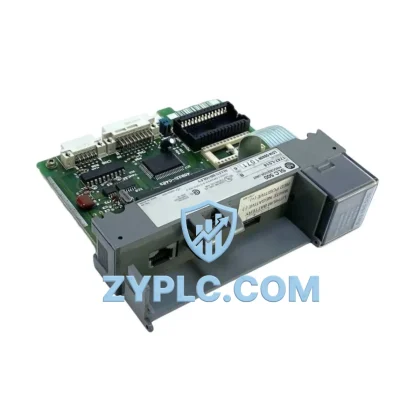
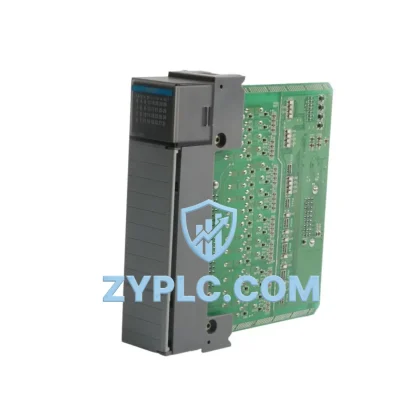
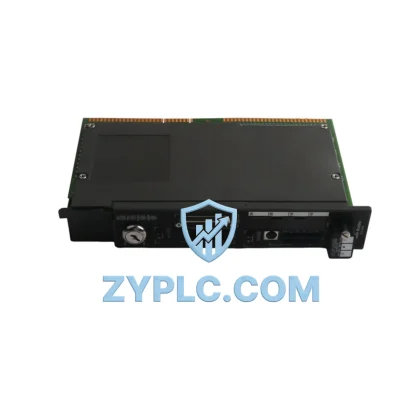
Siemens 6ES7315-2FJ14-0AB0 Energy-Saving PLC CPU for Optimized S7-300 Automation
The Siemens 6ES7315-2FJ14-0AB0 is a high-performance, energy-efficient CPU module designed for the SIMATIC S7-300 programmable logic controller platform. As a CPU315F-2 PN/DP variant, it integrates dual communication interfaces — PROFINET and PROFIBUS DP — into a single compact unit, enabling seamless data exchange between field devices, drive systems, and supervisory control layers without the overhead of additional gateway hardware. In modern manufacturing environments where energy costs and equipment utilization directly impact profitability, this CPU delivers the processing power and communication flexibility needed to run leaner, smarter production lines.
At its core, the 6ES7315-2FJ14-0AB0 is engineered to support fail-safe (F) automation architectures, making it suitable for safety-critical applications in automotive assembly, chemical processing, food and beverage production, and heavy industry. Its integrated PROFINET interface supports real-time IRT (Isochronous Real-Time) communication, enabling precise synchronization of motion control, I/O scanning, and drive feedback loops — all of which contribute directly to reducing cycle time waste and unnecessary energy draw from motors and actuators running outside their optimal operating windows.
Efficiency Performance Table
| Parameter |
Specification |
| SKU / Order Number |
6ES7315-2FJ14-0AB0 |
| CPU Type |
CPU315F-2 PN/DP (Fail-Safe) |
| Series |
SIMATIC S7-300 |
| Communication Interfaces |
PROFINET (IRT/RT), PROFIBUS DP (Master/Slave) |
| Working Memory |
512 KB (expandable via memory card) |
| Power Consumption |
Approx. 1.5 W (CPU module only) |
| Operating Voltage |
24 V DC (via PS307 or PS305 power supply) |
| Compatible Systems |
SIMATIC S7-300 rack, ET 200M, STEP 7 / TIA Portal |
| Application Environment |
Automotive, Chemical, Food & Beverage, Heavy Industry |
| Energy Optimization Value |
Precise motor/drive control via PROFINET IRT; reduces idle energy draw |
| Origin |
Germany |
| Warranty |
12-Month Warranty — Tested before shipment |
Energy-Aware Automation Architecture
Deploying the 6ES7315-2FJ14-0AB0 as the central controller in an S7-300 rack creates a highly efficient automation backbone. On the field side, distributed I/O stations such as the ET 200S and ET 200M remote I/O systems connect via PROFIBUS DP, collecting real-time signals from sensors, actuators, and process instruments without burdening the CPU with direct wiring overhead. This distributed architecture reduces cable runs, lowers installation energy losses, and allows the CPU to focus its processing cycles on control logic rather than I/O polling.
For drive control, the CPU communicates directly with Siemens SINAMICS G120 variable frequency drives via PROFINET, enabling dynamic speed regulation of three-phase motors based on actual load demand rather than fixed setpoints. When integrated with SINAMICS S120 servo drive systems for multi-axis motion, the CPU’s IRT communication capability ensures sub-millisecond synchronization, eliminating the energy waste caused by axis drift and re-positioning cycles. The result is a measurable reduction in motor energy consumption during partial-load production phases.
On the power monitoring side, the Siemens SENTRON PAC3200 power measurement unit can be integrated into the same PROFIBUS DP network, feeding real-time kWh, power factor, and harmonic distortion data back to the CPU. This data can be used within the STEP 7 or TIA Portal control program to trigger load-shedding routines, stagger motor start sequences, and flag abnormal energy consumption patterns before they escalate into equipment failures. Paired with a SIMATIC S7-300 SM 331 analog input module, the system can also monitor temperature, pressure, and flow sensors to correlate process variables with energy draw in real time.
At the HMI layer, a SIMATIC TP1200 Comfort Panel or KTP700 Basic Panel connected via PROFINET provides operators with live energy dashboards, motor runtime counters, and alarm histories — giving floor-level staff the visibility needed to make immediate adjustments to production pacing and equipment scheduling. For plant-wide SCADA integration, the CPU’s PROFINET port connects directly to SIMATIC WinCC or third-party SCADA platforms via OPC UA or S7 communication, enabling centralized energy reporting across multiple production cells.
The SIMATIC S7-300 CP 343-1 communication processor can be added to the rack for additional Ethernet connectivity, supporting parallel data paths to MES systems and cloud-based energy management platforms without disrupting the real-time control loop. This layered communication architecture ensures that energy optimization decisions made at the supervisory level are executed with precision at the field device level, closing the loop between energy data and control action.
Power Optimization in Real Production Lines
In a typical automotive body shop or stamping line, the 6ES7315-2FJ14-0AB0 manages dozens of pneumatic actuators, servo axes, and conveyor drives simultaneously. Without precise CPU-level control, these devices often run at full power regardless of whether the line is actively producing parts. By implementing energy-saving routines in STEP 7 or TIA Portal — such as automatic drive standby after a configurable idle timeout, staggered motor start sequences to reduce peak demand charges, and dynamic speed scaling based on upstream buffer levels — the CPU directly reduces the energy footprint of the production cell.
In process industries such as water treatment or chemical blending, the CPU’s fail-safe architecture (F designation) allows it to control safety-rated shutdown sequences without requiring a separate safety PLC. This consolidation eliminates redundant hardware, reduces panel space, and lowers the overall power draw of the control cabinet. The integrated PROFIBUS DP master port connects to field instruments and valve positioners, enabling the CPU to execute precise dosing and flow control routines that minimize pump and compressor runtime — two of the largest energy consumers in process plants.
Predictive maintenance is another key energy optimization lever enabled by this CPU. By logging motor current signatures, drive fault codes from connected SINAMICS units, and vibration data from smart sensors on the PROFIBUS network, the 6ES7315-2FJ14-0AB0 can detect early signs of bearing wear, belt slippage, or pump cavitation. Addressing these issues before they cause unplanned downtime prevents the energy spike associated with emergency restarts and extended catch-up production runs. Every hour of avoided downtime translates directly into avoided energy waste and avoided overtime costs.
All units supplied by ZYPLC are fully tested prior to shipment, with functional verification of PROFINET and PROFIBUS DP communication, CPU program execution, and I/O interface integrity. Stock is maintained for fast dispatch, and each unit is covered by a 12-month warranty from the date of delivery.
Energy Optimization FAQ
Q1: How does the 6ES7315-2FJ14-0AB0 contribute to measurable energy savings on a production line?
The CPU enables precise control of variable frequency drives and servo systems via PROFINET IRT, allowing motors to run at demand-matched speeds rather than fixed full-load setpoints. Combined with idle-state standby routines and staggered start logic programmed in TIA Portal or STEP 7, energy consumption during partial-load and changeover periods can be significantly reduced. Integration with power monitoring devices such as the SENTRON PAC3200 provides the data needed to quantify and report these savings.
Q2: Is this CPU compatible with both STEP 7 Classic and TIA Portal programming environments?
Yes. The 6ES7315-2FJ14-0AB0 is fully supported in SIMATIC STEP 7 V5.x and is also compatible with TIA Portal via the S7-300 hardware catalog. Existing STEP 7 projects can be migrated to TIA Portal using the built-in migration tool, preserving control logic while gaining access to TIA Portal’s energy reporting and diagnostics features.
Q3: Can this CPU replace an older S7-300 CPU module without hardware modifications?
In most cases, yes. The 6ES7315-2FJ14-0AB0 is form-factor compatible with the standard S7-300 rack and uses the same backplane bus interface. However, firmware version compatibility and memory card requirements should be verified against the existing project configuration before replacement. ZYPLC recommends testing the replacement unit in a staging environment prior to live deployment, and all units are pre-tested before shipment to confirm baseline functionality.
Q4: What does the 12-month warranty cover, and what is the testing process before shipment?
Every 6ES7315-2FJ14-0AB0 unit supplied by ZYPLC undergoes functional testing that includes CPU boot verification, PROFINET and PROFIBUS DP interface checks, and memory integrity validation. The 12-month warranty covers hardware defects and functional failures under normal operating conditions from the date of delivery. Warranty claims are processed directly through ZYPLC’s technical support team, with replacement or repair turnaround coordinated to minimize production impact.
© 2026 ZYPLC. All rights reserved.
Original Source: https://zyplc.com
Contact: +86 19859288691 | plc.sales@zyplc.com