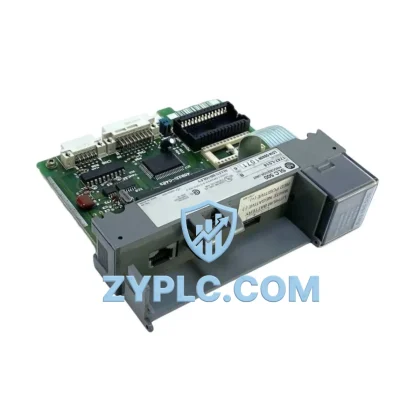
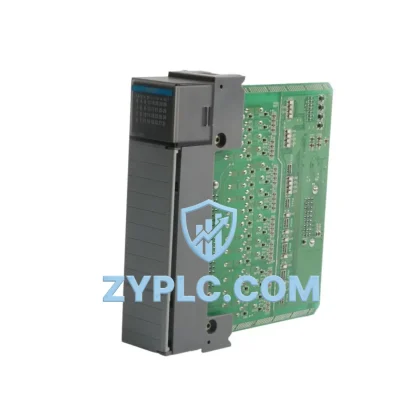
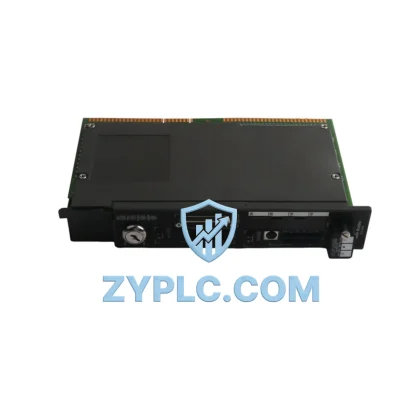
Siemens 6ES7317-2AJ10-0AB0 System-Ready CPU for S7-300 Architecture: Control System Architecture and Upstream–Downstream Coordination
The Siemens 6ES7317-2AJ10-0AB0 — designated CPU 317-2 DP within the SIMATIC S7-300 product family — is a high-performance central processing unit engineered for demanding, multi-layer industrial automation architectures. Rather than functioning as a standalone controller, this CPU is designed from the ground up to serve as the coordination nucleus of a complete, layered control system. Its dual-port communication capability, expansive program memory, and deterministic scan cycle make it the preferred choice for system architects who must balance control density, network reach, and long-term maintainability across manufacturing, energy, petrochemical, water treatment, mining, metallurgy, and process industries.
Understanding the 6ES7317-2AJ10-0AB0 requires viewing it not in isolation, but as the central node in a structured automation hierarchy — one that spans from field-level sensors and actuators through I/O distribution layers, communication backbones, power infrastructure, and human-machine interfaces up to supervisory SCADA or DCS platforms. Every architectural decision made around this CPU — from rack selection to network topology to redundancy strategy — directly affects system reliability, scalability, and total cost of ownership over the plant lifecycle.
Architecture Specification Table
| Parameter |
Specification |
| System Role |
Central Processing Unit — S7-300 Rack Controller |
| SKU / Order Number |
6ES7317-2AJ10-0AB0 |
| CPU Designation |
CPU 317-2 DP |
| Series / Platform |
SIMATIC S7-300 |
| Work Memory |
512 KB (expandable via memory card) |
| Load Memory |
Up to 8 MB via MMC (Micro Memory Card) |
| Processing Speed |
0.05 ms / 1000 binary instructions |
| Communication Port 1 |
MPI / DP (PROFIBUS DP Master/Slave, up to 12 Mbit/s) |
| Communication Port 2 |
PROFIBUS DP (Master/Slave, up to 12 Mbit/s) |
| Max. I/O Addresses |
8192 bytes input / 8192 bytes output |
| Max. Racks |
4 racks (central + 3 expansion) via IM 360/361/365 |
| Supply Voltage |
24 V DC (via PS 307 power supply module) |
| Operating Temperature |
0 °C to +60 °C |
| Protection Class |
IP20 |
| Mounting |
DIN Rail / S7-300 Profile Rail |
| Dimensions (W×H×D) |
80 × 125 × 130 mm |
| Weight |
Approx. 530 g |
| Certifications |
CE, UL, cULus, ATEX (Zone 2) |
| Warranty |
12-Month Warranty — covers manufacturing defects and functional failures |
Coordinated Control System Design
The 6ES7317-2AJ10-0AB0 achieves its full architectural value when integrated within a coherent system stack. At the power layer, the Siemens PS 307 10A (6ES7307-1KA02-0AA0) power supply module provides stable 24 V DC to the S7-300 rack, ensuring that voltage fluctuations at the plant distribution level do not propagate into the CPU’s logic execution cycle. Proper power layer design — including redundant power feeds where uptime requirements demand it — is the first prerequisite for deterministic CPU performance.
At the backplane and rack layer, the CPU slots into a standard S7-300 profile rail alongside signal modules. For distributed I/O expansion beyond the central rack, IM 360 / IM 361 interface modules extend the system across up to three additional expansion racks, allowing engineers to co-locate I/O with process equipment rather than running long signal cables back to a central cabinet. This architecture reduces wiring costs, improves signal integrity, and simplifies fault isolation during commissioning and maintenance.
The CPU’s dual PROFIBUS DP ports enable a two-tier network architecture. The first DP port typically connects to a supervisory network — linking the CPU to SCADA systems, engineering workstations, or higher-level S7-400 / S7-1500 controllers via PROFIBUS DP at up to 12 Mbit/s. The second DP port drives a field-level network, connecting to distributed I/O stations such as ET 200M (6ES7153-1AA03-0XB0) remote I/O heads, ET 200S modular field stations, or third-party PROFIBUS slaves including variable frequency drives, intelligent motor controllers, and process transmitters. This dual-network topology cleanly separates supervisory traffic from field-level polling, preventing network congestion from degrading scan cycle consistency.
For digital and analog signal acquisition within the central rack, the CPU coordinates directly with SM 321 digital input modules (6ES7321-1BH02-0AA0), SM 322 digital output modules (6ES7322-1BH01-0AA0), and SM 331 / SM 332 analog I/O modules. The CPU’s large I/O address space — 8192 bytes in each direction — means that even complex process plants with hundreds of field instruments can be accommodated within a single CPU domain without address mapping workarounds.
At the human-machine interface layer, the 6ES7317-2AJ10-0AB0 communicates natively with Siemens SIMATIC HMI panels — including the TP700 Comfort, KTP900 Basic, and MP377 series — via MPI or PROFIBUS DP. This direct CPU-to-HMI communication path eliminates the need for intermediate OPC servers in many applications, reducing latency and simplifying the software architecture. Operators gain real-time visibility into process variables, alarm states, and trend data directly from the CPU’s data blocks.
Where system availability requirements demand fault tolerance, the 6ES7317-2AJ10-0AB0 can be deployed in warm-standby configurations using Siemens S7-300 redundancy concepts or as a subordinate controller within a larger redundant architecture anchored by an S7-400H system. In such configurations, the CPU’s fast program execution and consistent cycle time make it a reliable participant in cross-controller synchronization schemes.
Application in Layered Automation Systems
Manufacturing and Discrete Production Lines: In automotive body-in-white lines, electronics assembly, and packaging machinery, the 6ES7317-2AJ10-0AB0 manages sequential logic across multiple production zones. Its PROFIBUS DP master capability allows it to coordinate servo drives, pneumatic valve terminals, and vision system triggers from a single program scan, ensuring that inter-zone handshaking occurs within deterministic timing windows. The CPU’s large work memory accommodates complex state machine programs with extensive diagnostic data logging without performance degradation.
Power Generation and Electrical Substation Automation: In power plant auxiliary systems and substation control applications, the CPU’s robust operating temperature range and ATEX Zone 2 certification allow deployment in environments where conventional office-grade hardware would fail. PROFIBUS DP connectivity to protection relays, transformer monitoring units, and switchgear control panels enables centralized supervision of distributed electrical assets. The 12-Month Warranty provides procurement teams with a defined support horizon for capital project planning.
Petrochemical and Refinery Process Control: Continuous process plants require controllers that maintain scan cycle consistency under high I/O load. The 6ES7317-2AJ10-0AB0’s 0.05 ms/1000-instruction processing speed ensures that PID control loops for temperature, pressure, and flow remain within acceptable deviation bands even when the CPU is simultaneously managing PROFIBUS DP polling, HMI data exchange, and diagnostic block execution. Integration with FM 355 closed-loop control modules further offloads PID computation from the main CPU, freeing scan time for supervisory logic.
Water and Wastewater Treatment: Municipal water treatment facilities benefit from the CPU’s multi-rack expansion capability, which allows a single controller to supervise intake screening, chemical dosing, filtration, and effluent monitoring from one engineering project. PROFIBUS DP connectivity to remote pump stations — potentially kilometers away via fiber-optic PROFIBUS repeaters — extends the CPU’s control reach without requiring additional PLCs at each remote site, reducing software maintenance overhead and spare parts inventory complexity.
Mining and Metallurgy: In ore processing, smelting, and materials handling applications, the CPU’s DIN rail mounting and IP20 enclosure (within a sealed control cabinet) withstand the vibration, dust, and thermal cycling typical of heavy industrial environments. The ability to connect to PROFIBUS PA field instruments via DP/PA segment couplers extends the CPU’s reach into hazardous area instrumentation loops, enabling unified control of both safe-area and hazardous-area process equipment from a single controller platform.
Architecture Engineering FAQ
Q1: Is the 6ES7317-2AJ10-0AB0 compatible with existing S7-300 racks and signal modules already installed in my plant?
Yes. The CPU 317-2 DP is fully compatible with the standard S7-300 profile rail and all S7-300 signal modules (SM 321, SM 322, SM 331, SM 332, SM 334, SM 338) as well as function modules (FM 350, FM 355) and communication processors (CP 342-5, CP 343-1). No rack replacement or module rewiring is required when upgrading from a lower-specification S7-300 CPU such as the CPU 315-2 DP or CPU 314. The engineering project can be adapted in STEP 7 with minimal hardware configuration changes, preserving existing I/O addressing and program structure.
Q2: How does the dual PROFIBUS DP port architecture affect network design and system scalability?
The two independent DP ports allow the CPU to operate simultaneously as a DP master on two separate PROFIBUS segments. A typical architecture assigns Port 1 (MPI/DP) to the supervisory network — connecting to SCADA, HMI panels, and engineering workstations — while Port 2 (DP) drives the field network with distributed I/O stations, drives, and intelligent field devices. This separation prevents supervisory polling traffic from consuming field-level bus bandwidth, maintaining consistent I/O update rates even during periods of high SCADA data exchange. Each DP port supports up to 125 slave addresses, providing substantial headroom for system expansion without requiring additional communication processors.
Q3: What does the 12-Month Warranty cover, and how does it support long-term maintenance planning?
The 12-Month Warranty covers manufacturing defects and functional failures under normal operating conditions as defined in the product datasheet. For maintenance engineers, this warranty period provides a defined baseline for spare parts budgeting and replacement scheduling. In practice, S7-300 CPUs in well-maintained control cabinets — with proper thermal management, clean power supply, and periodic firmware review — routinely operate for 10–15 years beyond the warranty period. The warranty serves as a quality assurance baseline rather than an operational lifetime limit. For critical applications, maintaining one or two spare 6ES7317-2AJ10-0AB0 units in inventory is recommended practice, as the consistent S7-300 hardware platform means spares sourced today will remain directly interchangeable with installed units for the foreseeable future.
© 2026 ZYPLC. All rights reserved.
Original Source: https://zyplc.com
Contact: +86 19859288691 | plc.sales@zyplc.com