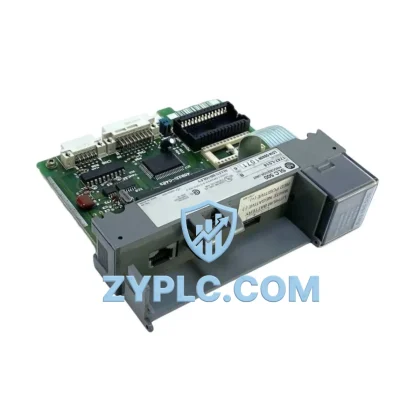
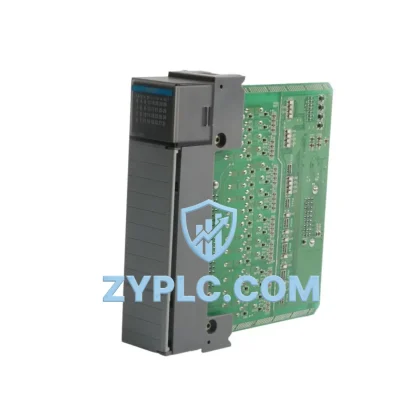
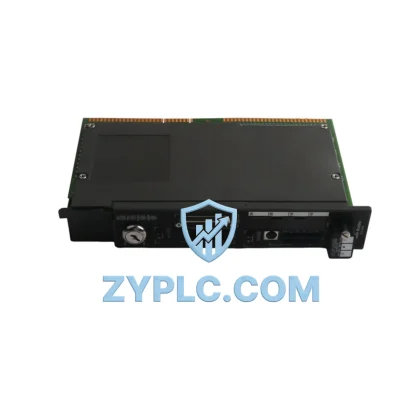
Siemens 6ES7318-3EL01-0AB0 System-Ready CPU for S7-300 Architecture: Control System Architecture and Upstream-Downstream Coordination
The Siemens 6ES7318-3EL01-0AB0, designated as the CPU 319-3 PN/DP, represents one of the most capable central processing units within the SIMATIC S7-300 programmable logic controller family. Designed for demanding industrial environments where system consistency, high-speed processing, and multi-network communication are non-negotiable, this CPU serves as the architectural backbone of layered automation systems across manufacturing, energy, petrochemical, water treatment, mining, metallurgy, and process control industries. Rather than functioning as a standalone controller, the 6ES7318-3EL01-0AB0 is engineered to operate as the central coordination node within a complete control system architecture — managing signal flow from field-level I/O modules, communicating across PROFINET and PROFIBUS DP networks, synchronizing with HMI panels, and interfacing with upstream SCADA or DCS platforms.
In a fully realized S7-300 control cabinet, the CPU 319-3 PN/DP is mounted on a standard S7-300 rail alongside power supply modules such as the PS 307 series, I/O modules from the SM 300 family, and communication processors from the CP 300 range. Its dual PROFIBUS DP interfaces allow simultaneous master and slave operation, enabling the CPU to coordinate distributed I/O racks, intelligent field devices, and remote ET 200 stations without additional communication hardware. The integrated PROFINET interface further extends the system’s reach into Ethernet-based plant networks, supporting real-time data exchange with SIMATIC WinCC SCADA systems, S7-400 controllers in peer-to-peer configurations, and third-party devices via open communication standards.
From a system architecture perspective, the 6ES7318-3EL01-0AB0 occupies the control layer — the tier responsible for executing the automation logic that governs all downstream process actions. Below it, the I/O layer consists of digital and analog signal modules (SM 321, SM 322, SM 331, SM 332) that interface directly with sensors, actuators, and field instruments. Above it, the network and supervisory layer connects to operator workstations, historian servers, and enterprise MES platforms. This vertical integration, managed through the CPU’s communication stack, ensures that real-time process data flows seamlessly from the field to the control room without latency or data loss.
The CPU 319-3 PN/DP’s large working memory — 2 MB for code and 2 MB for data — supports complex ladder logic, function block diagrams, and structured text programs that would exceed the capacity of smaller S7-300 CPUs such as the CPU 315-2 PN/DP or CPU 317-2 PN/DP. This makes it particularly well-suited for applications requiring extensive data logging, multi-axis motion coordination, or simultaneous management of hundreds of I/O points across multiple distributed racks. Engineers migrating from smaller CPUs within the S7-300 family will find the 6ES7318-3EL01-0AB0 a direct architectural upgrade, retaining full hardware and software compatibility while dramatically expanding processing headroom.
Redundancy and fault tolerance are critical considerations in high-availability automation systems. While the CPU 319-3 PN/DP itself operates in a standard (non-redundant) configuration, it supports hot-standby architectures when paired with appropriate redundancy modules and network switches configured for media redundancy protocol (MRP). In power-critical installations, the PS 307 power supply modules provide stable 24 VDC rail power, and the use of uninterruptible power supply (UPS) systems at the cabinet level ensures that the CPU retains its program state and communication links during brief power interruptions. The CPU’s integrated diagnostics and system fault detection capabilities further reduce unplanned downtime by providing early warning of module failures, communication errors, and program execution anomalies.
For engineering teams responsible for long-term system maintenance, the 6ES7318-3EL01-0AB0 offers significant advantages in terms of spare parts availability, firmware compatibility, and STEP 7 / TIA Portal programming continuity. Its position within the established S7-300 ecosystem means that replacement units, compatible I/O modules, and certified communication processors remain readily available through authorized distribution channels. ZYPLC maintains verified stock of the 6ES7318-3EL01-0AB0 with full functional testing, and all units are supplied with a 12-Month Warranty covering manufacturing defects and operational failures under normal industrial use conditions.
The CPU’s support for Contextual Integration — the ability to exchange structured data with upstream systems, adjacent controllers, and cloud-connected platforms — makes it a future-ready choice for facilities undergoing digital transformation. Whether integrated into a legacy S7-300 rack alongside IM 360/361 interface modules for multi-rack expansion, or deployed as the primary controller in a new greenfield installation, the 6ES7318-3EL01-0AB0 delivers the processing power, communication flexibility, and architectural compatibility required for modern industrial automation.
Architecture Specification Table
| Parameter |
Specification |
| System Role |
Central Processing Unit — S7-300 Control Layer |
| Full SKU / Order Number |
6ES7318-3EL01-0AB0 |
| Product Series |
SIMATIC S7-300 |
| CPU Designation |
CPU 319-3 PN/DP |
| Working Memory (Code) |
2 MB |
| Working Memory (Data) |
2 MB |
| Load Memory |
Expandable via MMC (up to 8 MB) |
| Processing Speed (Binary) |
0.004 µs per instruction |
| PROFIBUS DP Interfaces |
2 × DP (Master/Slave capable) |
| PROFINET Interface |
1 × RJ45, 10/100 Mbit/s |
| MPI Interface |
Integrated (via DP port) |
| Max. I/O Addresses (Digital) |
16,384 inputs / 16,384 outputs |
| Max. I/O Addresses (Analog) |
1,024 inputs / 1,024 outputs |
| Supply Voltage |
24 VDC (via backplane bus) |
| Operating Temperature |
0 °C to +60 °C |
| Protection Rating |
IP20 |
| Mounting |
DIN Rail (S7-300 standard rail) |
| Country of Origin |
Germany |
| Programming Software |
STEP 7 V5.x / TIA Portal (via migration) |
| Contextual Integration |
Supported via PROFINET / PROFIBUS DP / MPI |
| Warranty |
12-Month Warranty (ZYPLC) |
Coordinated Control System Design
The 6ES7318-3EL01-0AB0 achieves its full architectural potential when deployed within a coordinated S7-300 system. At the power layer, the PS 307 10A power supply module provides stable 24 VDC to the backplane, ensuring that the CPU and all co-mounted modules receive clean, regulated power even under variable load conditions. The CPU slots into the central rack alongside digital input modules such as the SM 321 DI 32×DC 24V and digital output modules such as the SM 322 DO 32×DC 24V/0.5A, which handle the bulk of field-level signal acquisition and actuation.
For analog process variables — temperature, pressure, flow, and level — the SM 331 AI 8×13Bit and SM 332 AO 4×12Bit modules integrate directly into the same rack, with the CPU managing all analog scaling, filtering, and PID control loops in real time. Where the physical rack reaches its module capacity, the IM 360 / IM 361 interface module pair extends the system to up to three additional expansion racks, each capable of hosting further I/O modules without any reduction in scan cycle performance.
On the network layer, the CPU’s dual PROFIBUS DP ports connect to remote I/O stations such as the ET 200M distributed I/O system, enabling field-level signal acquisition at distances of up to 1,200 meters from the central cabinet. The integrated PROFINET port connects the CPU to plant-level Ethernet infrastructure, supporting real-time data exchange with SIMATIC WinCC operator stations and enabling remote diagnostics via the SIMATIC NET communication stack. For installations requiring gateway functionality between PROFIBUS and PROFINET segments, the IE/PB Link PN IO communication module provides seamless protocol translation without burdening the CPU’s processing resources.
At the human-machine interface layer, SIMATIC TP700 Comfort or TP900 Comfort HMI panels connect via PROFINET, providing operators with real-time process visualization, alarm management, and parameter adjustment capabilities. The CPU’s large data memory ensures that all HMI tag values, trend buffers, and alarm histories are maintained without memory overflow, even in installations with hundreds of monitored process variables.
Application in Layered Automation Systems
In manufacturing and discrete production environments, the CPU 319-3 PN/DP manages multi-station assembly lines, robotic cell coordination, and quality inspection systems. Its high-speed binary processing and large I/O address space allow it to simultaneously control conveyor drives, pneumatic actuators, vision system triggers, and barcode readers within a single program execution cycle.
In power generation and electrical distribution facilities, the CPU serves as the primary automation controller for switchgear control, transformer monitoring, and load management systems. Its PROFIBUS DP master capability allows it to communicate with intelligent electronic devices (IEDs) and protection relays, while the PROFINET interface connects to substation automation systems compliant with IEC 61850 via appropriate gateway modules.
In petrochemical and refinery applications, the 6ES7318-3EL01-0AB0 handles continuous process control tasks including reactor temperature regulation, distillation column management, and pipeline pressure control. Its support for HART-capable analog modules and its robust operating temperature range make it suitable for installation in climate-controlled control rooms adjacent to hazardous process areas.
In water and wastewater treatment plants, the CPU coordinates pump station control, chemical dosing systems, and filtration process management across geographically distributed sites connected via PROFIBUS DP or PROFINET wide-area networks. Its diagnostic capabilities simplify preventive maintenance scheduling, reducing the risk of unplanned process interruptions in critical public infrastructure.
In mining, metallurgy, and heavy industry, the CPU 319-3 PN/DP manages ore processing conveyors, crusher control systems, and smelting furnace automation. Its industrial-grade design, combined with the inherent robustness of the S7-300 platform, ensures reliable operation in environments characterized by vibration, electrical noise, and wide ambient temperature fluctuations.
Architecture Engineering FAQ
Q1: Is the 6ES7318-3EL01-0AB0 compatible with existing S7-300 racks and I/O modules already installed in my system?
Yes. The CPU 319-3 PN/DP is fully compatible with all standard S7-300 mounting rails, backplanes, and signal modules. It can be installed as a direct replacement for lower-specification S7-300 CPUs such as the CPU 315-2 PN/DP or CPU 317-2 PN/DP without requiring changes to the physical rack, power supply, or I/O module configuration. Existing STEP 7 programs can be reloaded after hardware configuration updates in STEP 7 HW Config, and all PROFIBUS DP and PROFINET network addresses are reconfigurable to match the existing system topology.
Q2: How does the CPU 319-3 PN/DP support long-term system maintenance and spare parts availability?
The S7-300 platform has an extensive global installed base, and Siemens has maintained long-term product availability commitments for key components within this family. ZYPLC stocks the 6ES7318-3EL01-0AB0 as a verified, functionally tested unit with a 12-Month Warranty, ensuring that replacement units are available for emergency maintenance scenarios without extended lead times. All units are tested against Siemens factory specifications prior to dispatch, and full documentation including firmware version details is provided with each shipment.
Q3: What commissioning steps are required when integrating the 6ES7318-3EL01-0AB0 into an existing PROFINET/PROFIBUS DP architecture?
Commissioning begins with hardware configuration in STEP 7 HW Config or TIA Portal, where the CPU is assigned its MPI/PROFIBUS address and PROFINET device name. PROFIBUS DP master and slave configurations are defined within the same hardware configuration tool, and all I/O module addresses are assigned before the configuration is downloaded to the CPU via MPI, PROFIBUS, or Ethernet. Network topology verification using SIMATIC NET diagnostic tools confirms that all DP slaves and PROFINET IO devices are communicating correctly before the system is handed over for operational use. ZYPLC’s technical support team is available to assist with configuration queries throughout the commissioning process, backed by the 12-Month Warranty covering all supplied hardware.
© 2026 ZYPLC. All rights reserved.
Original Source: https://zyplc.com
Contact: +86 19859288691 | plc.sales@zyplc.com