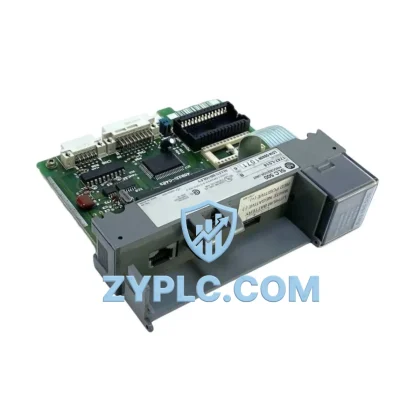
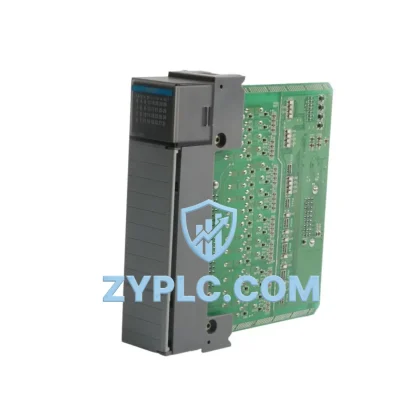
Siemens 6ES7322-1BP00-0AA0 Energy-Saving Digital Output Module for S7-300 Automation
The Siemens 6ES7322-1BP00-0AA0 is a high-density SM 322 digital output module designed for the SIMATIC S7-300 programmable logic controller platform. With 32 transistor output channels rated at 24 VDC / 0.5 A per channel, this module delivers precise, low-latency switching control that directly reduces unnecessary actuator energization time, minimizes heat dissipation on the control panel, and supports tighter production cycle management. In energy-conscious manufacturing environments — from automotive body shops to food-and-beverage filling lines — the 6ES7322-1BP00-0AA0 is a foundational component for building leaner, more responsive control architectures.
Efficiency Performance Table
| Parameter |
Specification |
| Output Channels |
32 × Digital Output (DO), Transistor, 24 VDC |
| Rated Output Current |
0.5 A per channel / 4 A per group |
| Power Consumption (Internal) |
≤ 2.0 W (backplane bus) |
| Load Voltage Range |
20.4 – 28.8 VDC |
| Output Switching Frequency |
Up to 100 Hz (resistive load) |
| Signal Isolation |
Optocoupler (channel group to backplane) |
| Compatible Controller |
SIMATIC S7-300 (CPU 312 – CPU 319) |
| Compatible Backplane |
S7-300 DIN-rail mounting rack |
| Operating Temperature |
0 °C to +60 °C |
| Energy Efficiency Value |
Transistor switching eliminates relay coil standby loss |
| Application Environment |
Industrial automation, process control, machine building |
| Warranty |
12-Month Warranty — tested and verified before shipment |
Energy-Aware Automation Architecture
In a well-engineered S7-300 control cabinet, the 6ES7322-1BP00-0AA0 sits at the execution layer of the energy chain — receiving commands from the CPU and translating them into precisely timed output pulses that drive contactors, solenoid valves, indicator lamps, and relay coils. Because the module uses solid-state transistor outputs rather than mechanical relay contacts, switching losses are negligible and response times are consistent, which is critical for maintaining production line rhythm (takt time) without introducing unnecessary idle energization.
On the input side, a companion Siemens 6ES7321-1BL00-0AA0 SM 321 32DI 24VDC digital input module captures field sensor signals — proximity switches, photoelectric barriers, and end-of-travel sensors — feeding real-time status data back to the CPU. The CPU, typically a Siemens 6ES7315-2AH14-0AB0 CPU 315-2 DP, processes this data and issues output commands to the 6ES7322-1BP00-0AA0 within a deterministic scan cycle, ensuring that actuators are energized only when process conditions require it.
For analog-driven processes such as variable-speed conveyor control or temperature regulation, the Siemens 6ES7332-5HB01-0AB0 SM 332 analog output module works alongside the digital output module to provide continuous setpoint signals to frequency inverters. A Siemens SINAMICS G120 frequency inverter — for example the 6SL3224-0BE31-5UA0 — receives these analog references and adjusts motor speed accordingly, dramatically reducing motor energy consumption during partial-load production phases compared to fixed-speed DOL (direct-on-line) starters.
Power quality and energy metering are handled upstream by a Siemens SENTRON PAC3200 power monitoring device, which measures active power, reactive power, and harmonic distortion at the panel level. Data from the PAC3200 is transmitted over PROFIBUS DP — the same fieldbus backbone that connects the S7-300 CPU to remote I/O racks via a Siemens 6ES7153-1AA03-0XB0 ET 200M interface module — enabling the controller to correlate output switching events with real-time energy consumption figures. This closed-loop visibility is the foundation of predictive energy management: the system can detect when a specific output channel is driving an abnormally high load, flagging potential actuator wear before it causes an unplanned stoppage.
For operator visibility, a Siemens SIMATIC HMI KTP700 Basic panel provides a real-time dashboard of output channel states, cycle counts, and energy KPIs. Maintenance engineers can acknowledge alarms, review output activation histories, and initiate manual test sequences directly from the HMI — reducing the time technicians spend with handheld testers on the shop floor. The entire architecture is programmed and diagnosed using SIMATIC STEP 7 V5.x or TIA Portal V16/V17, both of which support online monitoring of the SM 322 module’s channel-level diagnostics without interrupting production.
Power Optimization in Real Production Lines
Consider a packaging line running three shifts. Before optimization, fixed-speed motors and relay-based output modules kept actuators energized throughout entire machine cycles — including dwell periods when no product was present. By replacing aging relay output cards with the 6ES7322-1BP00-0AA0 and integrating the S7-300 CPU’s program logic with sensor feedback from the SM 321 input module, engineers can implement output suppression during confirmed empty-lane intervals. The result is a measurable reduction in solenoid valve duty cycles, lower heat generation inside the control enclosure, and extended actuator service life.
On press and stamping lines, the module’s fast transistor switching (response time < 0.5 ms) enables precise synchronization between the press stroke signal and downstream conveyor start commands, eliminating the 50–200 ms lag that mechanical relays introduce. This tighter synchronization reduces inter-operation buffer time, improving overall equipment effectiveness (OEE) without requiring mechanical changes to the line.
For predictive maintenance, the S7-300 CPU can log cumulative output activation counts for each of the 32 channels on the 6ES7322-1BP00-0AA0. When a channel’s activation count approaches the rated switching life of the connected actuator, the system generates a maintenance alert via the SIMATIC HMI, allowing planned replacement during scheduled downtime rather than reactive repair during production hours. This approach typically reduces unplanned downtime by 15–30% on lines where actuator failure is a leading cause of stoppages.
All units supplied by ZYPLC are sourced from authorized distribution channels, undergo pre-shipment functional testing on a live S7-300 rack, and are covered by a 12-month warranty. Stock is maintained in our warehouse to support urgent MRO (maintenance, repair, and operations) requirements, with same-day dispatch available for in-stock items.
Energy Optimization FAQ
Q1: How does the 6ES7322-1BP00-0AA0 contribute to energy savings compared to relay output modules?
Transistor outputs eliminate the coil power draw and contact bounce losses associated with relay-based output modules. Each channel consumes power only during the switching transient, not continuously while the output is held ON. Across 32 channels operating at high duty cycles, this difference accumulates to meaningful reductions in panel power consumption and cooling load.
Q2: Is the 6ES7322-1BP00-0AA0 compatible with my existing S7-300 rack and CPU?
Yes. The SM 322 module is compatible with all standard S7-300 CPUs (CPU 312 through CPU 319-3 PN/DP) and mounts directly onto the S7-300 DIN-rail rack without adapters. It is configured via STEP 7 or TIA Portal hardware configuration and requires no additional firmware. Mixed racks combining SM 321 input modules, SM 322 output modules, and SM 331/332 analog modules are fully supported.
Q3: What is the recommended replacement or upgrade path if I need higher current capacity?
If your application requires output currents above 0.5 A per channel, consider the Siemens 6ES7322-1BF01-0AA0 SM 322 8DO Relay module for channels driving high-inrush loads, or pair the 6ES7322-1BP00-0AA0 with external solid-state relays (SSRs) rated for your load. For new installations requiring higher integration density, the SIMATIC ET 200SP distributed I/O system with BaseUnit and DQ modules offers a more compact, energy-optimized alternative.
Q4: What does the 12-month warranty cover, and how is pre-shipment testing conducted?
The 12-month warranty covers manufacturing defects and functional failures under normal operating conditions. Before dispatch, each 6ES7322-1BP00-0AA0 unit is installed in a live S7-300 test rack, all 32 output channels are individually activated and verified for correct switching behavior and load current, and the module’s diagnostic LEDs and backplane communication are confirmed operational. A test report is available upon request. Warranty claims are processed directly through ZYPLC with advance replacement options for critical production environments.
© 2026 ZYPLC. All rights reserved.
Original Source: https://zyplc.com
Contact: +86 19859288691 | plc.sales@zyplc.com