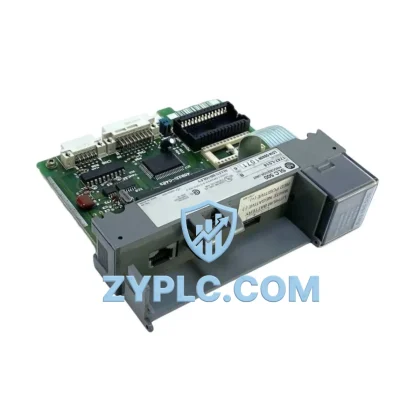
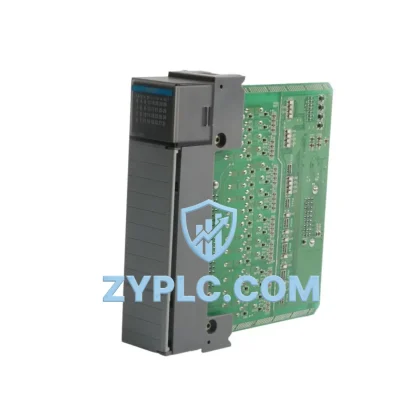
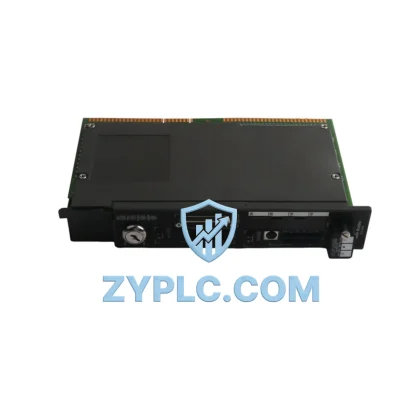
Siemens 6ES7410-5HX08-0AB0 System-Ready CPU Module for S7-400 Architecture
The Siemens 6ES7410-5HX08-0AB0 is a high-availability H-CPU designed for the SIMATIC S7-400H redundant control platform. Within a layered industrial automation architecture, this module occupies the critical control layer — coordinating signal acquisition from the I/O layer, executing deterministic ladder and structured-text programs, and synchronizing state data with its redundant partner CPU across a dedicated fiber-optic sync channel. Its role is not simply to process logic; it is to serve as the architectural backbone that ensures uninterrupted process continuity across the entire control hierarchy.
In modern distributed control environments, the 6ES7410-5HX08-0AB0 operates in close coordination with upstream and downstream system components. The control layer communicates downward to digital and analog I/O modules mounted on the same S7-400 rack or connected via PROFIBUS DP or PROFINET IO expansion. Upward, it interfaces with SCADA systems, historian servers, and HMI panels through Industrial Ethernet, enabling real-time visualization and operator intervention without disrupting the control loop. This Contextual Integration capability — the seamless exchange of process data across system layers — is a defining characteristic of the 6ES7410-5HX08-0AB0 in production-critical deployments.
System architects selecting this CPU benefit from its bumpless switchover mechanism. When a fault is detected in the active CPU, the standby unit assumes control within milliseconds, with no process interruption and no loss of output state. This redundancy model is essential in applications where downtime carries significant operational or safety consequences, including continuous chemical processing, power generation, water treatment, and high-throughput manufacturing lines.
Architecture Specification Table
| Parameter |
Specification |
| Model |
6ES7410-5HX08-0AB0 |
| System Role |
H-CPU (Redundant CPU) — Active/Standby Pair |
| Compatible Platform |
SIMATIC S7-400H / S7-400F/FH |
| Working Memory |
16 MB (code + data) |
| Processing Speed |
0.1 ms / 1000 binary instructions |
| Communication Interfaces |
MPI, PROFIBUS DP (integrated), Industrial Ethernet (via CP) |
| Sync Interface |
Fiber-optic sync module port (6ES7960-1AA04-0XA0 compatible) |
| Supply Voltage |
DC 24 V (via backplane bus) |
| Operating Temperature |
0 °C to +60 °C |
| Protection Class |
IP20 |
| Mounting |
S7-400 rack (UR1, UR2, CR2, CR3 compatible) |
| Firmware |
V8.0 or higher recommended |
| Warranty |
12-Month Warranty — covers manufacturing defects and functional failure under normal operating conditions |
Coordinated Control System Design
The 6ES7410-5HX08-0AB0 does not operate in isolation. Its performance and reliability are realized through careful integration with complementary components across the S7-400H platform. A complete redundant control cabinet typically includes the following coordinated elements:
The 6ES7400-1TA11-0AA0 universal rack provides the physical backplane for mounting the H-CPU pair alongside I/O and communication modules. Power is supplied by a redundant pair of 6ES7407-0KA02-0AA0 power supply modules, each independently capable of sustaining the full rack load, ensuring that a power supply failure does not propagate to the control layer. The 6ES7960-1AA04-0XA0 sync module connects the two H-CPUs via fiber-optic cable, enabling the high-speed state synchronization that makes bumpless switchover possible.
On the I/O layer, digital input modules such as the 6ES7421-1BL01-0AA0 and digital output modules such as the 6ES7422-1BL00-0AA0 handle field-level signal acquisition and actuation. For process measurement applications, analog input modules like the 6ES7431-7KF10-0AB0 and analog output modules such as the 6ES7432-1HF00-0AB0 provide the precision signal conditioning required in temperature, pressure, and flow control loops. These I/O modules communicate with the H-CPU via the S7-400 backplane bus at deterministic cycle times, ensuring that the control program always operates on current field data.
Network connectivity is extended through the CP 443-1 communication processor, which provides Industrial Ethernet access for PROFINET IO device integration, OPC UA data publishing, and remote engineering access via STEP 7 or TIA Portal. For applications requiring PROFIBUS DP master functionality beyond the integrated port, additional CP modules can be inserted into available rack slots. Expansion to remote I/O stations is handled through interface modules such as the 6ES7460-1BA01-0AB0, which extends the S7-400 I/O bus to distributed racks over distances up to 100 meters, maintaining the same deterministic communication characteristics as local I/O.
Memory retention across power cycles is ensured by the 6ES7952-1KY00-0AA0 SIMATIC Micro Memory Card, which stores the user program, data blocks, and system configuration. This non-volatile storage approach eliminates battery dependency for program retention, reducing long-term maintenance overhead in remote or unmanned installations.
Application in Layered Automation Systems
The 6ES7410-5HX08-0AB0 is deployed across a wide range of industries where process continuity and system integrity are non-negotiable requirements. In power generation and distribution, the H-CPU manages turbine control sequences, excitation system interlocks, and grid synchronization logic, where a control interruption could trigger cascading protection trips across the entire generation unit. The redundant architecture ensures that planned maintenance on one CPU does not require a process shutdown.
In petrochemical and refinery applications, the 6ES7410-5HX08-0AB0 controls reactor temperature profiles, feed ratio calculations, and emergency shutdown sequences. Its ability to execute safety-instrumented functions in conjunction with F-I/O modules — when configured as part of an S7-400F/FH system — allows a single platform to address both standard process control and functional safety requirements under IEC 61511.
For water and wastewater treatment facilities, the H-CPU coordinates pump sequencing, chemical dosing, filtration backwash cycles, and effluent quality monitoring across geographically distributed pump stations connected via PROFIBUS DP or PROFINET IO. The long-distance I/O expansion capability, combined with the redundant CPU architecture, makes this platform well-suited for infrastructure applications where field technicians may not be immediately available to respond to a control system fault.
In mining and metallurgical processing, the 6ES7410-5HX08-0AB0 manages conveyor sequencing, crusher control, flotation cell regulation, and smelter process loops. The high ambient temperature tolerance and robust backplane design allow installation in control rooms adjacent to process areas, reducing signal cable runs and improving system response times. Packaging and discrete manufacturing lines also benefit from the H-CPU’s fast program cycle times and deterministic I/O response, enabling precise motion coordination and quality inspection integration within the same control platform.
Architecture Engineering FAQ
Q1: Is the 6ES7410-5HX08-0AB0 compatible with existing S7-400 racks and I/O modules already installed in my plant?
The 6ES7410-5HX08-0AB0 is mechanically and electrically compatible with standard S7-400 universal racks including the UR1 and UR2 configurations. Existing S7-400 digital and analog I/O modules, communication processors, and interface modules can be retained without modification. The H-CPU requires a dedicated sync module slot pair and fiber-optic cabling between the two CPU units, but does not require replacement of field-side I/O infrastructure. Engineering migration from a standard S7-400 CPU to the H-CPU pair can typically be completed with configuration changes in STEP 7 HW Config without rewriting the user program.
Q2: What are the engineering and commissioning requirements for activating the redundancy function?
Commissioning the redundant pair requires both H-CPUs to be loaded with identical user programs and hardware configurations. The sync modules must be connected via fiber-optic cables of matched length to minimize synchronization latency. Initial startup involves a master-slave negotiation sequence during which the active CPU performs a full memory comparison with the standby unit before declaring the system ready. STEP 7 or TIA Portal provides diagnostic tools for monitoring sync status, switchover history, and CPU health in real time. ZYPLC recommends performing a controlled switchover test during commissioning to verify bumpless operation before handing the system over to operations.
Q3: What does the 12-Month Warranty cover, and what support is available for long-term maintenance?
The 12-Month Warranty provided by ZYPLC covers manufacturing defects and functional failures under normal operating conditions from the date of shipment. Warranty service includes replacement or repair of the defective unit at no additional cost. For long-term maintenance planning, ZYPLC maintains stock of the 6ES7410-5HX08-0AB0 and associated S7-400H components including sync modules, power supplies, and memory cards, enabling rapid response to unplanned failures. Customers with critical infrastructure applications are encouraged to discuss spare parts stocking strategies and extended support agreements directly with the ZYPLC technical team.
© 2026 ZYPLC. All rights reserved.
Original Source: https://zyplc.com
Contact: +86 19859288691 | plc.sales@zyplc.com