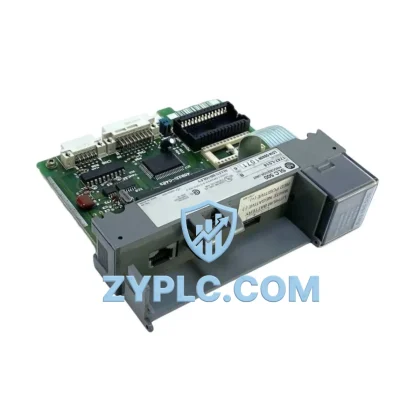
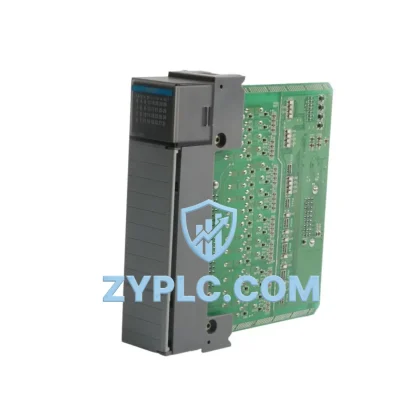
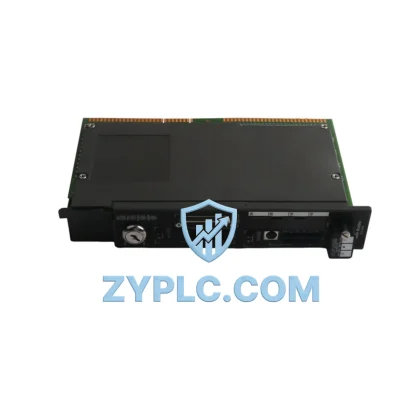
Siemens 6ES7414-3EM07-0AB0 System-Ready CPU for S7-400 Control Architecture
The Siemens 6ES7414-3EM07-0AB0, designated as the CPU414-3 PN/DP, is a high-performance central processing unit engineered for integration within the SIMATIC S7-400 programmable logic controller platform. Rather than functioning as a standalone component, this CPU module is designed to serve as the command nucleus of a layered industrial automation architecture — coordinating signal acquisition, logic execution, network communication, and process output across every tier of the control system. Its deployment is most effective when evaluated in the context of the full S7-400 rack ecosystem, where upstream and downstream modules operate in synchronized harmony to deliver deterministic, fault-tolerant automation.
In a complete S7-400 control architecture, the 6ES7414-3EM07-0AB0 occupies the central rack alongside power supply modules such as the PS407 10A (6ES7407-0KA02-0AA0), which provides the regulated 24 VDC and 5 VDC bus voltages required for stable CPU and I/O module operation. The CPU communicates with distributed I/O stations via its integrated PROFIBUS DP and PROFINET interfaces, enabling seamless data exchange with remote ET 200M or ET 200S I/O stations deployed across the plant floor. This dual-network capability allows engineers to design hybrid communication topologies that bridge legacy PROFIBUS installations with modern PROFINET-based field devices — a critical advantage in brownfield modernization projects.
At the I/O layer, the CPU414-3 PN/DP manages digital and analog signal modules mounted within the same S7-400 rack or connected via expansion racks using the IM460/IM461 interface module pairs. Typical configurations include SM421 digital input modules, SM422 digital output modules, SM431 analog input modules, and SM432 analog output modules, all of which are addressed through the CPU’s process image and updated cyclically within the configured scan time. The CPU’s large working memory and extended address space support complex process programs with thousands of I/O points — making it well-suited for large-scale manufacturing lines, power distribution substations, and continuous process plants.
From a network architecture perspective, the integrated PROFINET IO controller interface of the 6ES7414-3EM07-0AB0 supports real-time communication with PROFINET IO devices, including intelligent field instruments, variable frequency drives, and remote I/O clusters. Simultaneously, the MPI/PROFIBUS DP interface enables programming access via STEP 7 or TIA Portal and peer-to-peer communication with other S7-400 or S7-300 CPUs in multi-controller architectures. This multi-protocol capability ensures that the CPU can serve as both a primary controller and a network participant in distributed control system (DCS) topologies.
Redundancy and system availability are central considerations in the deployment of the CPU414-3 PN/DP. For applications requiring high availability — such as power generation, petrochemical processing, or water treatment — the S7-400 platform supports hot-standby redundancy configurations using paired CPUs and synchronized memory images. The 6ES7414-3EM07-0AB0 can be paired with compatible redundancy modules and synchronized via fiber-optic or copper sync cables, ensuring bumpless switchover in the event of a primary CPU fault. This architecture eliminates single points of failure at the controller level and supports continuous operation during planned maintenance windows.
At the human-machine interface layer, the CPU communicates with SIMATIC HMI panels — such as the TP1500 Comfort or MP377 — via PROFINET or MPI, providing operators with real-time process visualization, alarm management, and recipe control. The structured data exchange between the CPU and HMI is facilitated through optimized data blocks and communication function blocks within the STEP 7 or TIA Portal programming environment, ensuring low-latency screen updates and reliable alarm acknowledgment even under high network load conditions.
For engineering teams responsible for system commissioning and long-term maintenance, the 6ES7414-3EM07-0AB0 supports online diagnostics, module replacement without rack power-down (hot-swap capability on supported configurations), and comprehensive fault logging through the CPU’s diagnostic buffer. These features reduce mean time to repair (MTTR) and support predictive maintenance strategies by providing early warning of module degradation or communication faults. Spare module availability is a critical factor in lifecycle planning, and ZYPLC maintains verified stock of the 6ES7414-3EM07-0AB0 with full functional testing and a 12-Month Warranty covering all hardware defects.
Architecture Specification Table
| Parameter |
Specification |
| System Role |
Central Processing Unit — S7-400 Rack Controller |
| CPU Designation |
CPU414-3 PN/DP |
| Full SKU |
6ES7414-3EM07-0AB0 |
| Working Memory |
4 MB (code + data) |
| Processing Speed |
0.1 ms / 1000 binary instructions |
| Communication Interfaces |
1× MPI/PROFIBUS DP (12 Mbit/s), 1× PROFIBUS DP (12 Mbit/s), 1× PROFINET IO (100 Mbit/s) |
| PROFINET IO Controller |
Yes — supports RT and IRT communication |
| Max. I/O Addresses |
8192 bytes inputs / 8192 bytes outputs |
| Supply Voltage |
24 VDC (via backplane bus from PS407) |
| Operating Temperature |
0 °C to +60 °C |
| Mounting |
S7-400 rack (UR1, UR2, CR2, CR3) |
| Protection Class |
IP20 |
| Programming Environment |
SIMATIC STEP 7 V5.x / TIA Portal V13+ |
| Firmware Version |
V7.0 |
| Origin |
Germany |
| Warranty |
12-Month Warranty (ZYPLC) |
Coordinated Control System Design
The 6ES7414-3EM07-0AB0 achieves its full operational potential when integrated within a coordinated S7-400 system architecture. A typical high-availability control cabinet configuration begins with the PS407 10A power supply module, which feeds the backplane bus and ensures stable voltage delivery to all rack-mounted modules. The CPU itself occupies slot 2 or 3 of the UR2 universal rack, with adjacent slots populated by SM421 32-channel digital input modules and SM422 32-channel digital output modules for local I/O processing.
For analog process control loops — common in temperature regulation, pressure management, and flow control — SM431 8-channel analog input modules and SM432 8-channel analog output modules are integrated into the same rack or expansion racks connected via IM460-0 and IM461-0 interface modules. These expansion interfaces extend the I/O capacity of the system without increasing CPU scan time, as the CPU processes all rack-mounted modules within a single backplane communication cycle.
At the network layer, the CPU’s PROFIBUS DP master interface connects to distributed ET 200M remote I/O stations, each housing additional SM modules for field-level signal acquisition. Simultaneously, the PROFINET IO controller interface manages communication with intelligent field devices, including SINAMICS G120 variable frequency drives for motor control applications and SITOP PSU8600 power supply systems with diagnostic capabilities. The CP443-1 communication processor can be added to the same rack to provide additional Industrial Ethernet connectivity for SCADA integration or historian data logging.
For applications requiring inter-controller communication, the CPU414-3 PN/DP supports S7 communication function blocks (PUT/GET) for peer-to-peer data exchange with other SIMATIC S7-400 or S7-300 CPUs across the PROFIBUS or PROFINET network. This capability is essential in large plant architectures where multiple controllers manage different process areas but require coordinated data sharing for interlocking, sequencing, or supervisory control functions.
Application in Layered Automation Systems
The Siemens 6ES7414-3EM07-0AB0 is deployed across a broad range of industrial sectors where deterministic control, high I/O density, and network flexibility are essential requirements. In power generation and distribution substations, the CPU414-3 PN/DP manages protection relay coordination, transformer tap changer control, and busbar switching sequences — applications where scan time consistency and fault logging are critical for grid stability and regulatory compliance.
In petrochemical and refinery environments, the CPU serves as the primary controller for distillation column automation, heat exchanger control, and emergency shutdown (ESD) logic. Its large working memory accommodates complex cause-and-effect matrices and safety instrumented function (SIF) programs, while the PROFIBUS DP interface connects to HART-enabled field transmitters and positioners for valve control and process measurement.
Water treatment and wastewater management facilities utilize the 6ES7414-3EM07-0AB0 for pump station sequencing, chemical dosing control, and SCADA integration. The CPU’s PROFINET interface enables direct communication with flow meters, level sensors, and variable speed drives, while the MPI interface provides local programming access for field engineers during commissioning and maintenance activities.
In mining and metallurgical applications — including ore processing, conveyor belt management, and smelting furnace control — the CPU414-3 PN/DP handles high-speed digital I/O for crusher interlock sequences and analog control for temperature and pressure regulation in high-temperature process environments. Its robust operating temperature range and IP20 protection class, combined with appropriate enclosure design, support reliable operation in harsh industrial conditions.
Packaging and discrete manufacturing lines benefit from the CPU’s fast cycle time and large I/O address space, enabling precise coordination of servo drives, vision systems, and robotic end-of-arm tooling within a single controller platform. The PROFINET IRT (Isochronous Real-Time) capability supports motion control applications requiring sub-millisecond synchronization between the CPU and drive systems.
Architecture Engineering FAQ
Q1: Is the 6ES7414-3EM07-0AB0 compatible with both STEP 7 Classic and TIA Portal programming environments?
Yes. The CPU414-3 PN/DP is fully supported by SIMATIC STEP 7 V5.5 and later versions, as well as TIA Portal V13 SP1 and above with the appropriate HSP (Hardware Support Package) installed. Engineers migrating from STEP 7 Classic to TIA Portal can import existing S7-400 projects using the TIA Portal migration tool, preserving program blocks, hardware configurations, and symbol tables. Both environments support online diagnostics, force tables, and variable monitoring for commissioning and fault-finding activities.
Q2: Can this CPU be used in a redundant S7-400H configuration for high-availability applications?
The 6ES7414-3EM07-0AB0 (CPU414-3 PN/DP) is not a dedicated H-series CPU and is not designed for the S7-400H hot-standby redundancy architecture, which requires specific CPU41x-5H variants. However, it can be deployed in standard S7-400 systems with redundant power supplies and redundant PROFIBUS/PROFINET network paths to improve system availability. For applications requiring full CPU-level redundancy, ZYPLC can advise on compatible S7-400H CPU options within the same S7-400 platform family.
Q3: What does the 12-Month Warranty from ZYPLC cover, and what is the process for warranty claims?
The 12-Month Warranty provided by ZYPLC covers all hardware defects in the 6ES7414-3EM07-0AB0 arising from manufacturing faults or component failure under normal operating conditions. Each unit undergoes functional testing prior to shipment, including power-on verification, communication interface checks, and memory diagnostics. In the event of a warranty claim, customers contact ZYPLC via +86 19859288691 or [email protected] to initiate the return merchandise authorization (RMA) process. Replacement units are dispatched from verified stock to minimize system downtime, and all warranty repairs or replacements are completed within the agreed service timeline.
© 2026 ZYPLC. All rights reserved.
Original Source: https://zyplc.com
Contact: +86 19859288691 | [email protected]