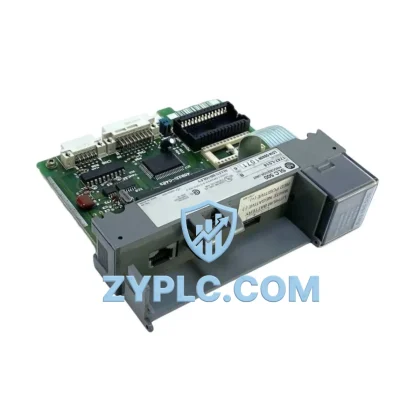
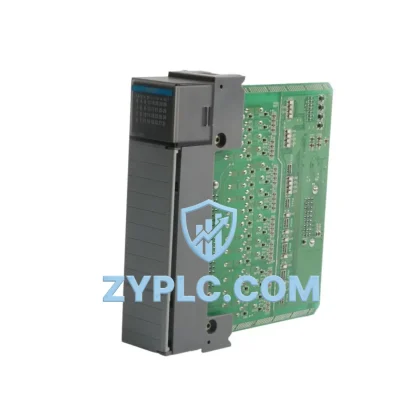
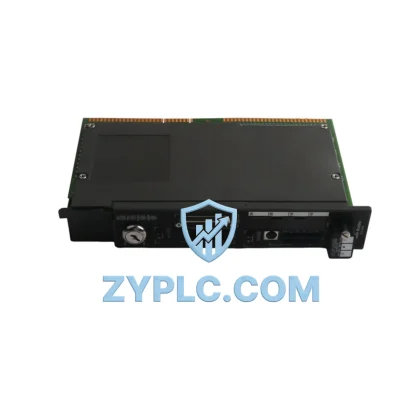
Siemens 6ES7421-1FH20-0AA0 SM 421 System-Ready Digital Input for S7-400 Architecture: Control System Architecture and Upstream-Downstream Coordination
The Siemens 6ES7421-1FH20-0AA0 is a 32-channel 24 VDC digital input module (SM 421) engineered for seamless integration within the SIMATIC S7-400 programmable logic controller platform. Rather than functioning as a standalone component, this module is designed from the ground up to serve as a critical signal acquisition node within a layered industrial automation architecture — connecting field-level sensors and actuators to the central processing layer with deterministic, high-integrity data transfer. Its role spans the I/O layer, feeding real-time discrete signal states upward to the CPU layer, while coordinating with the network layer, power supply layer, human-machine interface layer, and execution layer to ensure system-wide consistency, scalability, redundancy, and long-term maintainability.
In a fully realized S7-400 control system, the 6ES7421-1FH20-0AA0 occupies a defined slot within the UR1 or UR2 universal rack, sharing the backplane bus with the central processing unit and other signal modules. This physical and logical integration means that the module’s 32 digital input channels are directly accessible to the CPU via the internal S7-400 backplane bus without the latency or protocol overhead associated with distributed I/O solutions. The result is a tightly coupled, low-jitter signal path that is essential for time-critical process control applications.
Architecture Specification Table
| Parameter |
Specification |
| System Role |
32-Channel Digital Input Module (SM 421), I/O Layer — SIMATIC S7-400 |
| Input Channels |
32 × 24 VDC digital inputs, isolated in groups of 16 |
| Input Voltage Range |
24 VDC (rated); 20.4–28.8 VDC (permissible) |
| Input Current (per channel) |
Approx. 7 mA at 24 VDC |
| Signal Delay |
Configurable: 0.1 ms / 0.5 ms / 3 ms / 15 ms |
| Isolation |
Optocoupler isolation between field and backplane bus |
| Backplane Bus Interface |
S7-400 internal backplane bus (UR1/UR2/UR2-H rack compatible) |
| Communication Capability |
Integrated via S7-400 backplane; compatible with PROFIBUS DP and PROFINET architectures through CPU coordination |
| Power Consumption |
Approx. 0.5 W from backplane bus (5 VDC); field supply 24 VDC external |
| Installation Environment |
DIN rail / rack-mounted; IP20; -25°C to +70°C storage; 0°C to +60°C operation |
| Dimensions (W × H × D) |
25 mm × 290 mm × 210 mm |
| Weight |
Approx. 0.35 kg |
| Certifications |
CE, UL, cULus, ATEX (zone 2) |
| Warranty |
12-Month Warranty — all units tested prior to dispatch |
Coordinated Control System Design
The 6ES7421-1FH20-0AA0 achieves its full potential when deployed as part of a coordinated S7-400 system architecture. At the processing core, a CPU such as the 6ES7414-2XK05-0AB0 (CPU 414-2 DP) or the high-availability 6ES7417-4HT14-0AB0 (CPU 417H) reads the 32 input channels cyclically, integrating their states into the control program’s process image. For applications demanding fault tolerance, the H-series CPU paired with a redundant rack configuration ensures that a single module or rack failure does not interrupt process control — the 6ES7421-1FH20-0AA0 can be mirrored across redundant racks to maintain continuous signal acquisition.
Power integrity is foundational to reliable digital input operation. The 6ES7407-0KA02-0AA0 PS 407 10A power supply module provides the regulated 24 VDC and 5 VDC rails required by the rack and its installed modules. In high-availability configurations, dual power supply modules are deployed in parallel, with automatic switchover ensuring uninterrupted operation even during a supply failure. The 6ES7421-1FH20-0AA0’s low backplane bus current draw (approximately 0.5 W) makes it straightforward to budget power across densely populated racks.
For applications requiring analog signal acquisition alongside discrete inputs, the 6ES7431-1KF10-0AB0 SM 431 analog input module can be installed in adjacent slots within the same UR2 rack, sharing the backplane bus and CPU scan cycle. This co-location minimizes wiring complexity and ensures that analog and digital process values are synchronized within the same program cycle. Similarly, digital output modules such as the 6ES7422-1BL00-0AA0 SM 422 32-channel digital output module are commonly paired with the 6ES7421-1FH20-0AA0 to form complete input/output subsystems within a single rack segment.
Network connectivity is managed at the CPU level, with PROFIBUS DP or PROFINET interfaces enabling the S7-400 rack to communicate with distributed I/O stations, drives, and remote HMI panels. The 6GK7443-1EX30-0XE0 CP 443-1 Advanced Ethernet communication processor can be added to the rack to provide high-bandwidth PROFINET connectivity, supporting integration with SCADA systems and plant-level MES platforms. For legacy PROFIBUS networks, the 6GK7443-5DX05-0XE0 CP 443-5 Extended module provides DP master/slave functionality, allowing the S7-400 rack to serve as the network master for distributed field devices.
At the human-machine interface layer, SIMATIC Panel PCs or TP/MP series HMI panels communicate with the S7-400 CPU via PROFINET or MPI, displaying the real-time states of the 32 channels acquired by the 6ES7421-1FH20-0AA0. Operators can monitor individual input channel states, configure signal filtering delays, and acknowledge process alarms — all without interrupting the control program’s execution. Terminal modules and front connectors, such as the 6ES7492-1AL00-0AA0 front connector, provide the field wiring interface for the SM 421, supporting both screw-type and spring-type termination to accommodate diverse installation preferences and cable cross-sections.
Application in Layered Automation Systems
The 6ES7421-1FH20-0AA0 is deployed across a broad spectrum of industrial sectors where reliable discrete signal acquisition is non-negotiable. In power generation and distribution facilities, the module monitors breaker status, relay feedback, and protection relay trip signals, providing the S7-400 CPU with the real-time discrete data required for substation automation and load management. Its optocoupler isolation and wide input voltage tolerance make it well-suited to the electrically noisy environments typical of switchgear rooms and transformer substations.
In petrochemical and refinery applications, the module acquires status signals from pressure switches, level switches, flow switches, and emergency shutdown (ESD) system contacts. The configurable input delay (0.1 ms to 15 ms) allows engineers to filter contact bounce from mechanical switches without masking genuine process events, ensuring that the ESD logic receives clean, debounced signals. ATEX Zone 2 certification supports deployment in areas where flammable atmospheres may be present, provided appropriate field barriers are used.
In automotive manufacturing and packaging line automation, the 6ES7421-1FH20-0AA0 handles high-density discrete signal acquisition from proximity sensors, photoelectric sensors, and end-of-travel switches. The 32-channel density per module minimizes rack space consumption and reduces the number of modules required for large-scale I/O configurations, directly lowering system cost and simplifying cabinet layout. For water and wastewater treatment plants, the module monitors pump run/fault status, valve open/closed feedback, and level switch states across multiple treatment stages, with the S7-400 CPU coordinating sequential control logic based on the acquired input states.
In mining and metallurgical operations, where conveyor systems, crushers, and smelting equipment generate dense discrete I/O requirements, the module’s robust construction and wide operating temperature range support reliable operation in harsh industrial environments. Long-term availability of the 6ES7421-1FH20-0AA0 through established supply channels ensures that maintenance teams can source replacement modules without redesigning the control system architecture — a critical consideration for facilities with 20+ year operational lifespans.
Architecture Engineering FAQ
Q1: Is the 6ES7421-1FH20-0AA0 compatible with all S7-400 CPU variants, and can it be used in a redundant H-system configuration?
The SM 421 6ES7421-1FH20-0AA0 is compatible with all SIMATIC S7-400 CPUs that support the standard S7-400 backplane bus, including the CPU 412, CPU 414, CPU 416, and CPU 417 families. In H-system (high-availability) configurations using the CPU 417H or CPU 414H, the module can be installed in both the active and standby racks, with the H-CPU managing synchronization between the two racks. This ensures that input signal states are continuously available to the standby CPU, enabling bumpless switchover in the event of a rack or CPU failure. Engineers should verify rack slot assignments and H-system configuration rules in the S7-400 Hardware and Installation Manual (A5E00850746) before commissioning.
Q2: What are the wiring and installation requirements for the 6ES7421-1FH20-0AA0, and how does the front connector interface with field cables?
The module uses a 40-pin front connector (order reference 6ES7492-1AL00-0AA0 for screw-type or 6ES7492-1BL00-0AA0 for spring-type) that plugs into the module face after field wiring is complete. Channels are organized in two groups of 16, each group sharing a common reference potential (M). Field cables should be routed in shielded cable ducts, with shields grounded at the cabinet entry point to minimize electromagnetic interference. Maximum cable length depends on the field device type and signal level; for 24 VDC sensors, cable runs of up to 600 m are typically achievable with appropriate cable cross-section selection. All units supplied by ZYPLC carry a 12-Month Warranty and are tested for channel continuity and isolation integrity prior to dispatch.
Q3: How does the 6ES7421-1FH20-0AA0 support long-term maintenance and Contextual Integration within an evolving control system architecture?
The module’s standardized S7-400 backplane bus interface ensures that it can be replaced in the field without CPU reprogramming, provided the replacement module is configured identically in the hardware configuration (HW Config) within SIMATIC STEP 7 or TIA Portal (via legacy S7-400 support). Contextual Integration — the ability of the module to operate within a broader system context that includes PROFIBUS DP networks, PROFINET infrastructure, HMI panels, and redundant power supplies — means that a module swap does not require reconfiguration of upstream or downstream system components. Spare module inventory management is simplified by the module’s long production lifecycle and broad distributor availability. ZYPLC maintains stock of the 6ES7421-1FH20-0AA0 to support emergency replacement requirements, with same-day dispatch available for in-stock units covered under the 12-Month Warranty program.
© 2026 ZYPLC. All rights reserved.
Original Source: https://zyplc.com
Contact: +86 19859288691 | plc.sales@zyplc.com