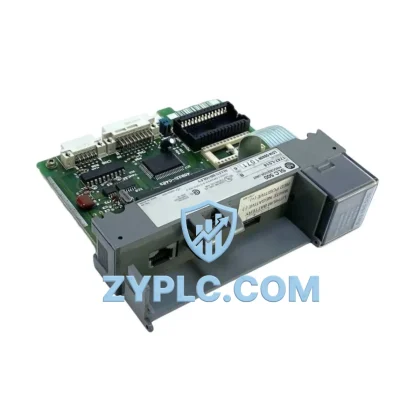
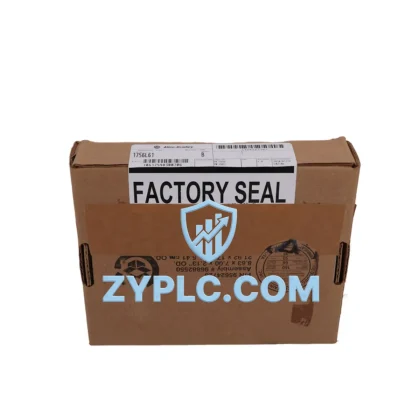
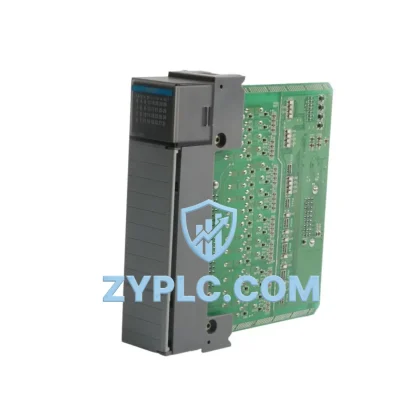
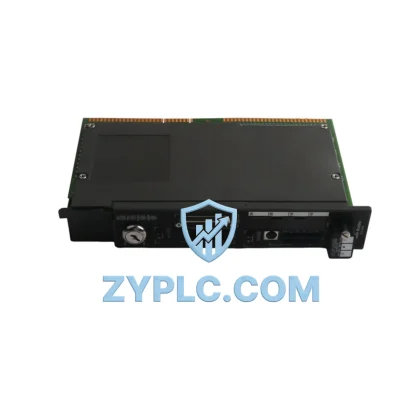
Siemens 6ES7653-2BB00-0XB5 System-Ready Engineering Tool for SIMATIC S7 Architecture
The Siemens 6ES7653-2BB00-0XB5 is a professional-grade engineering software module designed to operate as a fully integrated component within the SIMATIC S7 control system architecture. Rather than functioning as a standalone utility, this module is engineered to serve as the configuration, programming, and diagnostic backbone of a layered automation system — bridging the control layer, I/O layer, communication layer, and human-machine interface layer into a coherent, maintainable, and scalable platform. In modern industrial environments where system consistency, uptime, and long-term maintainability are non-negotiable, the 6ES7653-2BB00-0XB5 delivers the Contextual Integration capability that engineers and system architects depend on across manufacturing, energy, petrochemical, and process control applications.
Deployed within a SIMATIC S7 architecture, this engineering tool enables seamless project configuration across CPU modules such as the S7-300 and S7-400 series, including units like the CPU 315-2 DP and CPU 416-3 PN/DP. It supports hardware configuration, symbol table management, ladder logic and function block programming, and online diagnostics — all within a unified engineering environment. The software’s Contextual Integration framework ensures that every module in the rack, from digital input cards like the SM 321 to analog output modules like the SM 332, is correctly parameterized and communicating within the defined system topology. This eliminates configuration drift and reduces commissioning time significantly on complex multi-rack installations.
From a system architecture perspective, the 6ES7653-2BB00-0XB5 plays a critical role in maintaining signal flow integrity across the entire control hierarchy. Engineers can define and verify the data exchange between the CPU backplane, distributed I/O nodes connected via PROFIBUS DP or PROFINET, and remote I/O stations using ET 200M or ET 200S distributed peripherals. The software’s network configuration tools allow precise definition of bus parameters, station addresses, and watchdog timers — ensuring deterministic communication performance even in high-cycle-rate process environments. When paired with CP 343-1 or CP 443-1 communication processors, the engineering environment extends its reach to Ethernet-based SCADA and MES integration layers.
Redundancy design is another area where this engineering tool demonstrates its system-level value. For applications requiring high availability — such as power generation, chemical processing, or water treatment — the software supports the configuration of S7-400H redundant CPU pairs, including the CPU 414H and CPU 417H. Engineers can define synchronization parameters, switchover conditions, and fault response logic directly within the project tree, ensuring that the redundant architecture behaves predictably under all fault scenarios. The ability to simulate and test redundancy switchover events within the engineering environment before deployment significantly reduces commissioning risk on safety-critical installations.
Power layer coordination is equally important in a well-designed control cabinet. The 6ES7653-2BB00-0XB5 engineering environment supports hardware configuration of PS 307 power supply modules, allowing engineers to document and verify the power budget across each rack segment. When combined with structured cabinet layouts using S7-300 or S7-400 mounting rails and IM 360/IM 361 interface modules for multi-rack expansion, the software ensures that every hardware component is accounted for in the system documentation — a critical requirement for IEC 62443 compliance and long-term maintenance audits.
At the HMI layer, the engineering tool supports integration with SIMATIC HMI panels such as the TP700 Comfort and MP377 series via WinCC flexible or TIA Portal-compatible project structures. Tag mapping, alarm configuration, and trend data routing between the S7 CPU and the HMI panel can be validated within the engineering environment, ensuring that the operator interface accurately reflects the real-time state of the process. This end-to-end visibility from field device to operator screen is the hallmark of a well-integrated SIMATIC S7 system, and the 6ES7653-2BB00-0XB5 is the engineering instrument that makes it possible.
For long-term maintenance and inventory management, the 6ES7653-2BB00-0XB5 supports project archiving, version comparison, and module replacement workflows that allow maintenance engineers to swap failed hardware — such as a defective SM 323 digital I/O module or a failed IM 153 interface module — with minimal downtime. The software’s diagnostic buffer and online monitoring tools provide real-time fault localization, reducing mean time to repair across distributed installations. All units supplied are covered by a 12-Month Warranty, ensuring that your system architecture investment is protected from the moment of commissioning through the first year of production operation.
Architecture Specification Table
| Parameter |
Specification |
| SKU / Part Number |
6ES7653-2BB00-0XB5 |
| Brand |
Siemens |
| Series |
SIMATIC S7 |
| System Role |
Engineering & Configuration Software |
| Compatible Platforms |
SIMATIC S7-300, S7-400, S7-400H |
| Programming Languages |
LAD, FBD, STL, SCL, GRAPH |
| Communication Protocols |
PROFIBUS DP, PROFINET, MPI, Industrial Ethernet |
| Network Configuration |
Supported (NetPro / HW Config) |
| Redundancy Support |
S7-400H High-Availability Architecture |
| Installation Environment |
Windows-based Engineering Workstation |
| Origin |
Germany |
| Contextual Integration |
Supported |
| Warranty |
12-Month Warranty |
Coordinated Control System Design
The 6ES7653-2BB00-0XB5 engineering software is most effective when deployed as the central configuration tool for a complete SIMATIC S7 control system. A typical coordinated architecture built around this software includes the following components working in concert:
At the control layer, the CPU 315-2 DP or CPU 416-3 PN/DP serves as the central processing unit, executing the control program and managing all I/O communication cycles. The engineering software configures the CPU’s memory areas, cycle time parameters, and interrupt organization blocks. For high-availability applications, the CPU 417H redundant pair is configured through the same engineering environment, with synchronization modules and switchover logic defined in the hardware configuration tree.
At the I/O layer, digital and analog signal modules including the SM 321 digital input module, SM 331 analog input module, and SM 332 analog output module are parameterized within the rack configuration. The software validates slot assignments, address ranges, and diagnostic interrupt settings for each module, ensuring that the process image is correctly mapped to the CPU’s data areas. For distributed I/O, ET 200M and ET 200S remote stations are configured as PROFIBUS DP slaves, with the engineering tool managing station addresses, module lists, and communication watchdog parameters.
At the network layer, CP 343-1 Lean and CP 443-1 communication processors are configured within the engineering environment to enable Industrial Ethernet connectivity to SCADA systems, historian servers, and MES platforms. PROFIBUS DP network segments are defined with precise bus parameters, including baud rate, slot time, and retry limits, ensuring deterministic communication across all field devices.
At the power layer, PS 307 5A and PS 307 10A power supply modules are documented in the hardware configuration, with the engineering tool providing a clear record of the power budget for each rack segment. This documentation is essential for cabinet design reviews and long-term maintenance planning.
At the HMI layer, SIMATIC TP700 Comfort and MP377 15″ panels are integrated via tag communication links defined in the engineering project, ensuring that operator screens display accurate real-time process data sourced directly from the S7 CPU data blocks.
Application in Layered Automation Systems
The Siemens 6ES7653-2BB00-0XB5 finds application across a broad range of industrial sectors where layered automation architecture is the standard approach to process control:
Manufacturing & Assembly Lines: In automotive and electronics manufacturing, the engineering software configures multi-station PLC networks where each S7-300 CPU controls a specific production cell. The Contextual Integration capability ensures that inter-cell communication via PROFIBUS DP is correctly parameterized, enabling synchronized production flow and centralized fault monitoring from a single engineering project.
Power Generation & Electrical Utilities: In power plant control systems, the S7-400H redundancy architecture configured through this software ensures continuous operation of turbine control, generator excitation, and switchgear automation systems. The 12-Month Warranty provides operators with confidence in the reliability of the engineering platform throughout the initial operational period.
Petrochemical & Refinery Process Control: In continuous process environments, the engineering tool’s support for PROFINET and PROFIBUS DP enables precise configuration of distributed I/O networks spanning large physical distances across refinery units. Analog signal integrity from field transmitters through SM 331 input modules to the CPU is validated within the engineering environment before commissioning.
Water Treatment & Municipal Infrastructure: For water and wastewater treatment plants, the software supports the configuration of geographically distributed S7-300 stations connected via Industrial Ethernet, with centralized SCADA integration through CP 343-1 communication processors. The engineering tool’s archiving and version management features support the long-term documentation requirements of municipal infrastructure projects.
Mining & Metallurgy: In heavy industry applications, the engineering software configures robust S7-400 systems controlling conveyor drives, crusher automation, and smelting process control. The ability to configure redundant CPU pairs and define fault-tolerant I/O architectures is critical in environments where unplanned downtime carries significant financial and safety consequences.
Architecture Engineering FAQ
Q1: Is the 6ES7653-2BB00-0XB5 compatible with both S7-300 and S7-400 hardware platforms?
Yes. This engineering software supports hardware configuration, programming, and online diagnostics for both the SIMATIC S7-300 and S7-400 product families, including standard, failsafe, and high-availability CPU variants. It is compatible with all standard rack configurations, including multi-rack expansions using IM 360/IM 361 interface modules, making it suitable for both compact machine-level controllers and large-scale process control systems.
Q2: How does this software support long-term maintenance and module replacement in installed systems?
The 6ES7653-2BB00-0XB5 includes project archiving, hardware comparison, and online diagnostic tools that allow maintenance engineers to identify failed modules, verify replacement hardware compatibility, and restore system configuration after a module swap — all without requiring a full system restart. The software’s diagnostic buffer provides a timestamped fault history that supports root cause analysis and preventive maintenance planning. Combined with the 12-Month Warranty on all supplied units, this ensures a low total cost of ownership over the system lifecycle.
Q3: What communication protocols are supported for integration with SCADA and MES systems?
The engineering environment supports configuration of PROFIBUS DP, PROFINET IO, MPI, and Industrial Ethernet communication interfaces. When paired with CP 343-1 or CP 443-1 communication processors, the S7 system can exchange data with SCADA platforms, OPC servers, and MES systems using standard industrial protocols. The Contextual Integration framework ensures that all communication parameters — including network addresses, data block mappings, and update cycles — are consistently defined across the engineering project, reducing integration errors during system commissioning.
© 2026 ZYPLC. All rights reserved.
Original Source: https://zyplc.com
Contact: +86 19859288691 | plc.sales@zyplc.com