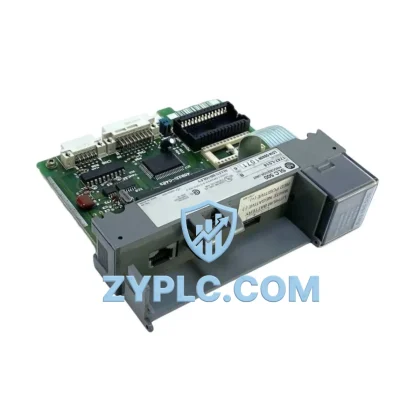
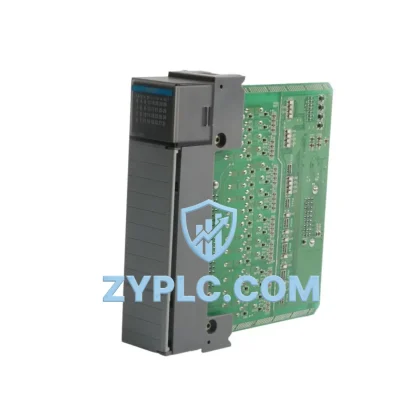
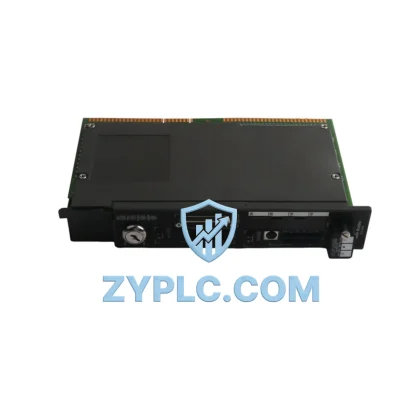
Siemens 6ES7658-2GG00-0XB0 System-Ready RTX Controller for S7-400 Architecture
The Siemens 6ES7658-2GG00-0XB0 WinAC RTX software controller represents a pivotal component within the SIMATIC S7-400 control system architecture, enabling PC-based automation that integrates seamlessly into Siemens’ established control hierarchy. Rather than functioning as a standalone software license, this module defines the computational core of a distributed control platform — one that bridges the gap between traditional rack-mounted PLCs and modern PC-based runtime environments. In large-scale industrial deployments, the 6ES7658-2GG00-0XB0 operates as the central processing engine, coordinating signal acquisition from field-level I/O modules, executing deterministic control logic, and maintaining real-time communication across the automation network. Its role within the system architecture is not peripheral — it is the runtime intelligence that governs the entire control loop from sensor input to actuator output.
In a fully configured S7-400 system, the WinAC RTX runtime hosted by the 6ES7658-2GG00-0XB0 communicates directly with SIMATIC ET 200M distributed I/O stations via PROFIBUS DP, enabling high-speed, cycle-consistent data exchange across geographically distributed field panels. The software controller shares the same programming environment as hardware CPUs such as the CPU 414-3 PN/DP and CPU 416-3 PN/DP, meaning that existing STEP 7 or TIA Portal project structures can be migrated or extended without rewriting control logic. This architectural consistency reduces engineering overhead and accelerates commissioning timelines on brownfield expansion projects.
Within the PCS 7 process control framework, the 6ES7658-2GG00-0XB0 functions as an AS (Automation Station) node, receiving configuration downloads from the ES (Engineering Station) and reporting runtime diagnostics to the OS (Operator Station). The WinAC RTX runtime supports the full CFC (Continuous Function Chart) and SFC (Sequential Function Chart) block libraries used in PCS 7, ensuring that process objects, interlocks, and alarm management structures remain consistent across the control hierarchy. Integration with the SIMATIC NET CP 443-1 communication processor further extends the controller’s reach into Industrial Ethernet backbones, supporting PROFINET IO, S7 communication, and OPC DA/UA data publishing to SCADA and MES layers.
From a system redundancy perspective, the 6ES7658-2GG00-0XB0 can be deployed in conjunction with hardware redundancy solutions at the I/O level, including the IM 153-2 interface module for redundant PROFIBUS connections to ET 200M stations. While the WinAC RTX itself operates on a single PC platform, the surrounding architecture — including redundant power supply modules such as the PS 407 10A and PS 405 10A — ensures that the control environment remains energized and stable during partial hardware failures. Proper UPS integration at the PC host level further reinforces system availability in continuous-process applications.
For human-machine interface integration, the 6ES7658-2GG00-0XB0 communicates with SIMATIC WinCC Runtime systems via internal PC bus or Ethernet, enabling operators to monitor process variables, acknowledge alarms, and execute manual overrides without interrupting the real-time control cycle. In multi-panel control room configurations, WinCC server-client architectures distribute visualization across multiple operator workstations while the WinAC RTX runtime maintains deterministic scan cycle execution independent of HMI load. This separation of control and visualization layers is a fundamental principle of robust industrial system design.
In layered automation architectures spanning manufacturing, power generation, petrochemical processing, water treatment, mining, metallurgy, and packaging lines, the 6ES7658-2GG00-0XB0 provides the flexibility of software-defined control with the reliability expectations of hardware PLC platforms. Its real-time Windows extension (RTX) kernel guarantees microsecond-level task preemption, ensuring that time-critical control tasks are never delayed by background operating system processes. This makes it suitable for high-speed closed-loop control applications where scan cycle jitter must be minimized.
Maintenance engineers benefit from the 6ES7658-2GG00-0XB0’s compatibility with SIMATIC PDM (Process Device Manager) for field device parameterization, and with SIMATIC BATCH for recipe-driven production management in regulated industries. Spare parts planning is simplified by the software-based architecture — firmware updates and license transfers can be managed centrally without physical module replacement, reducing mean time to repair (MTTR) in the event of host PC failure. ZYPLC maintains verified stock of the 6ES7658-2GG00-0XB0 with full 12-Month Warranty coverage, supporting long-term project lifecycle requirements for both new installations and system expansions.
Architecture Specification Table
| Parameter |
Specification |
| System Role |
PC-Based Software Controller (Automation Station) |
| Compatible Platform |
SIMATIC S7-400 / PCS 7 Architecture |
| Runtime Environment |
WinAC RTX (Real-Time Extension for Windows) |
| Programming Standard |
IEC 61131-3 (LAD, FBD, STL, CFC, SFC) |
| Communication Interfaces |
PROFIBUS DP, PROFINET IO, Industrial Ethernet, OPC DA/UA |
| S7 Communication |
Supported (S7-300/400/1200/1500 compatible) |
| PCS 7 Integration |
Full AS node support with CFC/SFC block libraries |
| Real-Time Kernel |
RTX (Interval Zero) — deterministic microsecond preemption |
| Operating Temperature |
0°C to +50°C (host PC dependent) |
| Power Supply |
Via host PC (UPS recommended for continuous process) |
| Country of Origin |
Germany |
| Warranty |
12-Month Warranty (ZYPLC verified stock) |
Coordinated Control System Design
The 6ES7658-2GG00-0XB0 achieves its full architectural value when deployed within a coordinated system that includes complementary Siemens components. At the field I/O level, SIMATIC ET 200M distributed I/O stations equipped with SM 321 digital input modules and SM 322 digital output modules provide the physical interface between the WinAC RTX controller and field instrumentation. Analog signal conditioning is handled by SM 331 and SM 332 analog I/O modules, which feed process variable data directly into the controller’s real-time scan cycle.
Network connectivity between the WinAC RTX host and remote I/O stations is established through the CP 5613 PROFIBUS master card installed in the PC, or alternatively via the CP 443-1 Advanced Ethernet module for PROFINET IO topologies. In larger system architectures, the IM 460-0 and IM 461-0 interface modules extend the S7-400 rack configuration, allowing additional signal modules to be connected without modifying the core controller setup. Power distribution within the control cabinet is managed by PS 407 10A regulated power supply modules, which provide stable 24 VDC bus voltage to all rack-mounted components.
For process visualization and operator interaction, the WinAC RTX runtime interfaces with SIMATIC WinCC V7 or WinCC Unified Runtime, enabling real-time trend displays, alarm management, and production reporting. In redundant communication architectures, the OSM (Optical Switch Module) and SCALANCE X series managed switches provide ring topology Ethernet networks with sub-50ms recovery times, ensuring that controller-to-HMI communication is maintained even during network segment failures. Terminal block assemblies using SIMATIC S7-400 backplane connectors and WAGO 750-series I/O terminals complete the field wiring layer, providing reliable signal termination across the full operating temperature range.
Application in Layered Automation Systems
In continuous manufacturing environments such as automotive body-in-white lines and food and beverage processing plants, the 6ES7658-2GG00-0XB0 manages multi-axis sequencing, recipe parameter downloads, and production count tracking within a unified PCS 7 project structure. The software controller’s ability to execute multiple OB (Organization Block) priority classes simultaneously allows time-critical motion interlocks to run at 1ms cycle times while lower-priority diagnostic routines execute at 100ms intervals — all within the same runtime instance.
In power generation and electrical substation automation, the WinAC RTX platform supports IEC 61850 data modeling through OPC UA server interfaces, enabling integration with protection relay systems and energy management platforms. Water treatment facilities benefit from the controller’s long-term stability in 24/7 continuous operation scenarios, where the RTX kernel’s deterministic scheduling prevents process upsets caused by operating system interruptions. In mining and metallurgical applications, the 6ES7658-2GG00-0XB0 coordinates crusher sequencing, conveyor interlocking, and dust suppression control within a single automation station, reducing the number of discrete PLC nodes required in the control architecture.
Petrochemical and refinery applications leverage the controller’s compatibility with SIMATIC BATCH and PCS 7 Advanced Process Library (APL) function blocks, enabling SIL-rated interlock logic to be implemented within the same engineering environment as standard process control. Packaging line integrators use the WinAC RTX platform to synchronize servo drive commands — issued via PROFINET IRT to SINAMICS S120 drive systems — with upstream filling and labeling station signals, achieving line speeds that require sub-millisecond control cycle consistency.
Architecture Engineering FAQ
Q1: Is the 6ES7658-2GG00-0XB0 compatible with TIA Portal V17/V18 engineering environments?
The WinAC RTX software controller is primarily engineered for the STEP 7 V5.x and SIMATIC PCS 7 V8.x/V9.x engineering environments. While TIA Portal supports PC-based controllers through the WinAC ODK and PLCSIM Advanced platforms, the 6ES7658-2GG00-0XB0 specifically targets the classic STEP 7 toolchain. Customers migrating to TIA Portal-based architectures should evaluate the SIMATIC S7-1500 Software Controller (6ES7672 series) as the forward-compatible alternative. ZYPLC technical support can assist with architecture compatibility assessment prior to procurement.
Q2: Can the 6ES7658-2GG00-0XB0 be used in a redundant controller configuration?
The WinAC RTX runtime does not natively support hot-standby CPU redundancy in the same manner as the SIMATIC S7-400H hardware redundancy system using CPU 414-5H or CPU 417-5H paired modules. However, system-level redundancy can be achieved through redundant I/O configurations using IM 153-2 interface modules on ET 200M stations, combined with UPS-protected PC hosting and RAID storage for the runtime environment. For applications requiring IEC 61511 SIL 2/3 redundancy, a hybrid architecture combining the WinAC RTX with dedicated F-CPU hardware modules is recommended. ZYPLC engineers can provide system architecture consultation for redundancy-critical projects.
Q3: What does the 12-Month Warranty cover for the 6ES7658-2GG00-0XB0, and what is the replacement lead time?
ZYPLC’s 12-Month Warranty covers verified functionality of the software license activation, media integrity, and license key validity from the date of shipment. In the event of a license activation failure or media defect, ZYPLC will provide a replacement unit or re-issuance of the license key within the warranty period at no additional cost. For time-sensitive production environments, ZYPLC maintains buffer stock of the 6ES7658-2GG00-0XB0 to support expedited replacement within standard lead times. Customers are advised to register their license activation details with ZYPLC at the time of commissioning to streamline any future warranty claims.
© 2026 ZYPLC. All rights reserved.
Original Source: https://zyplc.com
Contact: +86 19859288691 | [email protected]