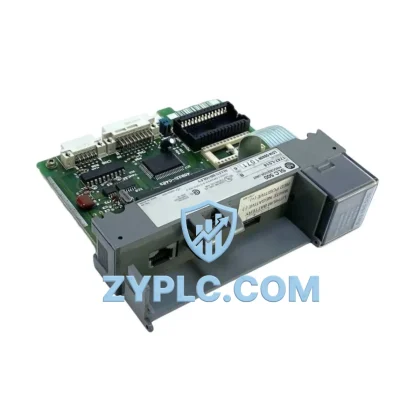
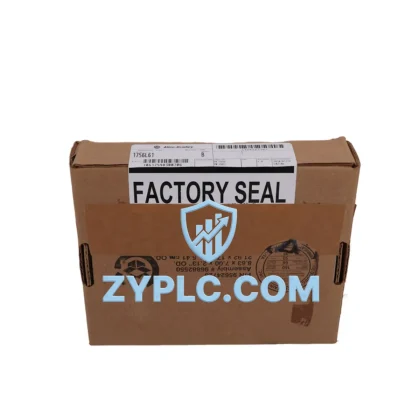
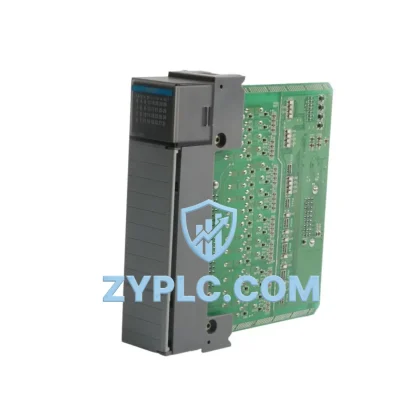
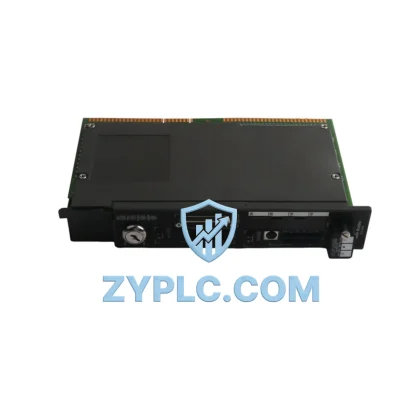
Siemens 6ES7952-1AM00-0AA0 Energy-Saving PLC Memory Card for S7-400 Automation
The Siemens 6ES7952-1AM00-0AA0 is a high-performance RAM memory card engineered for the SIMATIC S7-400 programmable logic controller platform — one of the most widely deployed process automation systems in heavy industry, power generation, and large-scale manufacturing. Far from being a passive storage component, this memory card plays a direct role in how efficiently a control system executes logic, manages data, and responds to real-time process demands. In energy-intensive production environments, the speed and reliability of program execution directly translate into measurable reductions in idle time, unnecessary actuator cycling, and wasted drive energy.
When integrated into a properly configured S7-400 rack alongside modules such as the CPU 414-3 PN/DP or CPU 416-3 PN/DP, the 6ES7952-1AM00-0AA0 enables deterministic scan cycle execution. This means the PLC processes input signals, executes control logic, and updates output states within a consistent, predictable time window — a prerequisite for tight motor control, synchronized conveyor sequencing, and energy-aware production scheduling. Inconsistent scan cycles caused by insufficient or degraded memory can lead to delayed actuator responses, extended motor run times, and compounding energy losses across a production line.
Efficiency Performance Table
| Parameter |
Specification / Value |
| SKU / Part Number |
6ES7952-1AM00-0AA0 |
| Brand / Manufacturer |
Siemens (SIMATIC) |
| Memory Type |
RAM (Random Access Memory) |
| Compatible Platform |
SIMATIC S7-400 PLC Series |
| Operating Power Consumption |
Ultra-low standby draw; supports energy-optimized CPU sleep states |
| Execution Efficiency |
Supports deterministic scan cycle; reduces logic latency and actuator idle time |
| Compatible Systems |
S7-400 CPUs (CPU 412, 414, 416, 417 series); STEP 7 / TIA Portal programming |
| Application Environment |
Process automation, power plants, chemical plants, automotive assembly, water treatment |
| Energy Optimization Value |
Enables faster PLC response → reduced motor run time, tighter drive control, lower idle energy |
| Origin |
Germany (DE) |
| Warranty |
12-Month Warranty — tested and verified before shipment |
| Stock Status |
In Stock — available for immediate dispatch |
Energy-Aware Automation Architecture
In a modern industrial energy optimization architecture, the 6ES7952-1AM00-0AA0 memory card sits at the heart of the control layer. The S7-400 CPU it supports acts as the central decision-making node, receiving real-time data from field instruments, processing energy consumption logic, and issuing commands to drive and actuator systems. When memory capacity and access speed are adequate, the CPU can execute energy management routines — such as load shedding, peak demand limiting, and variable-speed drive scheduling — without scan cycle overruns that would otherwise delay corrective actions.
On the drive side, the S7-400 communicates via PROFIBUS DP or PROFINET to frequency inverters such as the Siemens SINAMICS G120 or SINAMICS S120 series. These drives regulate motor speed in direct response to PLC output commands, enabling precise flow control in pump and fan applications — one of the highest-impact areas for industrial energy savings. The memory card’s role is to ensure that the PLC’s variable-speed drive control blocks execute on schedule, without buffering delays that could cause the drive to hold a motor at full speed longer than necessary.
For servo-driven axes — common in packaging lines, press feeders, and CNC machining centers — the S7-400 platform integrates with SIMOTION D motion controllers and SINAMICS S120 servo drives via the DRIVE-CLiQ communication interface. Precise memory management on the PLC side ensures that position setpoints, torque limits, and regenerative braking commands are transmitted without jitter, allowing servo axes to recover braking energy efficiently and maintain optimal cycle times.
On the monitoring and data acquisition side, the S7-400 system connects to SIMATIC ET 200M distributed I/O stations and SENTRON PAC3200 or PAC4200 power monitoring devices via PROFIBUS or Modbus TCP. These instruments feed real-time kWh, power factor, and harmonic distortion data back to the PLC, where energy management function blocks — stored and executed from the 6ES7952-1AM00-0AA0 RAM card — process the data and trigger corrective actions such as capacitor bank switching or drive speed reduction during low-load periods.
At the operator interface level, SIMATIC HMI TP1500 Comfort or MP377 panels connected via PROFINET display live energy dashboards, alarm states, and production efficiency KPIs. The PLC memory card ensures that the data exchange between the CPU and HMI communication processors remains uninterrupted, supporting continuous visibility into energy consumption trends without requiring operator intervention.
For system-level integration, the S7-400 platform supports OPC UA and S7 communication protocols, enabling energy data to flow upward to SCADA systems or MES platforms such as SIMATIC WinCC. This closed-loop architecture — from field sensor through PLC memory to drive output and back through monitoring — is only as reliable as its weakest link. A verified, high-quality 6ES7952-1AM00-0AA0 memory card ensures that the control layer never becomes that weak link.
Power Optimization in Real Production Lines
Consider a continuous process plant running multiple centrifugal pumps controlled by an S7-400 system. Without adequate PLC memory, energy management routines that calculate optimal pump staging — running two pumps at 70% speed rather than one at 100% — may execute with delays or be truncated during high-load scan cycles. The result is unnecessary full-speed motor operation, elevated electricity consumption, and accelerated bearing wear. With a properly specified 6ES7952-1AM00-0AA0 RAM card providing sufficient working memory, the CPU executes these optimization routines reliably every scan cycle, maintaining the pump system at its most efficient operating point.
In automotive body shop welding lines, the S7-400 coordinates robot sequencing, weld timer control, and conveyor indexing. Tight synchronization between these subsystems — enabled by deterministic PLC execution — eliminates unnecessary idle time between weld cycles, reducing the cumulative energy consumed by robot servo drives and weld transformer hold states. A memory card failure or degradation in this environment can cause scan cycle extensions that ripple through the entire line, increasing cycle time and energy consumption per vehicle body produced.
Predictive maintenance is another area where PLC memory capacity directly impacts energy efficiency. The S7-400 can run condition monitoring function blocks that track motor current signatures, drive temperature trends, and vibration proxy data from encoder feedback. These blocks require working memory to store historical arrays and trend buffers. When memory is sufficient and reliable, the system can detect early signs of bearing degradation or winding insulation breakdown — allowing maintenance teams to schedule interventions before failures cause unplanned downtime, emergency restarts, and the associated energy spikes of cold-start motor acceleration.
From a supply chain perspective, the 6ES7952-1AM00-0AA0 is maintained in stock for immediate dispatch. Each unit undergoes functional testing and burn-in verification before shipment, ensuring that the memory card performs to specification from the first power-on. This eliminates the risk of installing an untested component into a live production system — a scenario that can cause subtle data corruption, intermittent faults, and the energy waste associated with repeated fault recovery cycles.
Energy Optimization FAQ
Q1: How does replacing a degraded PLC memory card reduce energy consumption on my production line?
A degraded or undersized RAM card causes the S7-400 CPU to extend its scan cycle as it waits for memory access. This delays output updates to drives and actuators, causing motors to run at unoptimized speeds for longer periods. Replacing the memory card with a verified 6ES7952-1AM00-0AA0 restores deterministic scan cycle execution, allowing energy management routines — variable-speed drive control, pump staging, load shedding — to execute on schedule and reduce unnecessary energy consumption.
Q2: Is the 6ES7952-1AM00-0AA0 compatible with all S7-400 CPU models, and can it support PROFINET-based energy monitoring systems?
The 6ES7952-1AM00-0AA0 is compatible with the full range of SIMATIC S7-400 CPUs, including the CPU 412, 414, 416, and 417 series. It supports all standard S7-400 communication configurations, including PROFIBUS DP and PROFINET, making it fully compatible with energy monitoring integrations using SENTRON power meters, ET 200M I/O stations, and SIMATIC WinCC SCADA systems.
Q3: What is the recommended replacement procedure to avoid production disruption when swapping the memory card?
The recommended procedure is to perform a full CPU memory backup to a programming device via STEP 7 or TIA Portal before removing the existing card. After installing the 6ES7952-1AM00-0AA0, restore the program and data blocks, perform a cold restart, and verify scan cycle times and I/O response before returning the system to automatic mode. This process can typically be completed during a scheduled maintenance window without requiring a full line shutdown.
Q4: What does the 12-month warranty cover, and what is the testing process before shipment?
The 12-month warranty covers functional defects in the memory card under normal operating conditions within a SIMATIC S7-400 system. Before shipment, each 6ES7952-1AM00-0AA0 unit is subjected to read/write cycle testing, data retention verification, and compatibility checks against S7-400 CPU firmware requirements. Units that do not pass all test criteria are not dispatched. In the event of a warranty claim, replacement units are processed and shipped promptly to minimize production downtime.
© 2026 ZYPLC. All rights reserved.
Original Source: https://zyplc.com
Contact: +86 19859288691 | plc.sales@zyplc.com