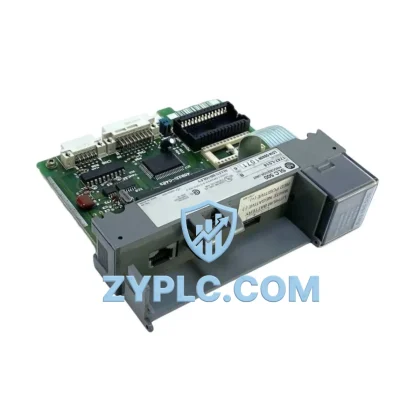
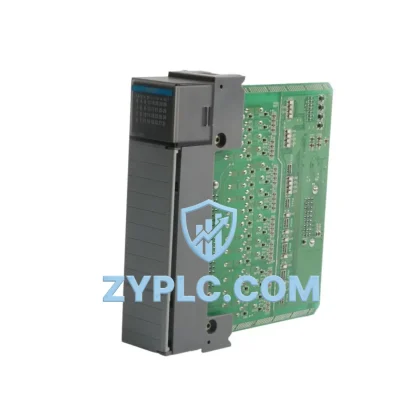
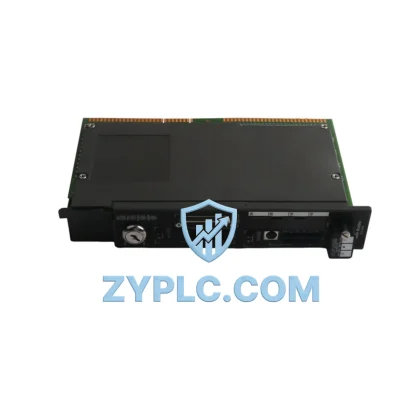
Siemens 6GF6221-2CA11 System-Ready Vision Sensor for SIMATIC Architecture: Control-Layer Optical Intelligence and Contextual Integration
In modern industrial automation, machine vision is no longer a standalone inspection tool — it is a deeply integrated layer within the broader control system architecture. The Siemens 6GF6221-2CA11, part of the SIMATIC VS720 Vision Sensor family, is engineered to function as a contextually aware optical intelligence node within layered automation environments. Whether deployed on a high-speed packaging line, a precision assembly station in automotive manufacturing, or a quality gate in pharmaceutical production, this vision sensor delivers deterministic image acquisition and result output that feeds directly into the control logic of the surrounding system.
The 6GF6221-2CA11 is designed to operate in close coordination with Siemens SIMATIC S7-300 and S7-400 series PLCs, as well as the newer S7-1500 platform, enabling seamless signal exchange between the vision layer and the control layer without the need for complex middleware or proprietary gateways. Its digital I/O interface allows direct connection to the I/O layer, where modules such as the SM 321 digital input module and SM 322 digital output module handle signal routing to downstream actuators and interlocks. This tight coupling between vision output and I/O response reduces latency and improves system determinism — a critical requirement in high-throughput production environments.
From a network architecture perspective, the 6GF6221-2CA11 supports integration into PROFINET-based communication topologies, allowing the vision sensor to participate in the same industrial Ethernet backbone that connects the CPU, distributed I/O, and HMI layers. This eliminates the need for isolated serial communication links and allows the vision system to be monitored, parameterized, and diagnosed from a central engineering station running Siemens TIA Portal. Engineers can configure inspection tasks, adjust detection thresholds, and retrieve diagnostic data without leaving the unified automation engineering environment.
At the power layer, the sensor operates within standard 24 VDC supply ranges compatible with Siemens SITOP PSU100S and SITOP PSU200M power supply units, ensuring stable operation even in environments with fluctuating supply conditions. The low power consumption profile of the 6GF6221-2CA11 makes it suitable for integration into compact control cabinet designs where thermal management and power budgeting are engineering constraints.
For human-machine interface integration, the vision sensor’s result data — pass/fail signals, object presence flags, and measurement outputs — can be mapped directly to SIMATIC HMI panels such as the KTP700 Basic or TP1200 Comfort, providing operators with real-time visual feedback on inspection outcomes without requiring dedicated vision software on the HMI device. This contextual integration between the vision layer and the HMI layer supports faster operator response to quality deviations and reduces the cognitive load on line personnel.
At the execution layer, the 6GF6221-2CA11 interfaces with downstream actuators through relay output modules and motor starters, enabling automated rejection of non-conforming parts, diversion of product streams, or triggering of alarm sequences based on vision-derived decisions. This closed-loop architecture — from optical acquisition through control logic to physical actuation — is the foundation of intelligent, self-correcting production systems.
Architecture Specification Table
| Parameter |
Specification |
| System Role |
Vision Sensor / Optical Reader — Control-Layer Integration Node |
| Product Family |
SIMATIC VS720 |
| Full SKU |
6GF6221-2CA11 |
| Brand / Manufacturer |
Siemens AG, Germany |
| Supply Voltage |
24 VDC (±10%) |
| Digital I/O Interface |
Digital inputs/outputs for direct PLC signal exchange |
| Communication |
PROFINET / Industrial Ethernet compatible |
| Engineering Tool |
Siemens TIA Portal / STEP 7 |
| Operating Temperature |
0 °C to +50 °C |
| Protection Class |
IP67 (dust-tight and water-resistant) |
| Installation |
Panel mount / machine frame integration |
| Country of Origin |
Germany (DE) |
| Warranty |
12-Month Warranty — covered by ZYPLC quality assurance program |
Coordinated Control System Design
The 6GF6221-2CA11 achieves its full architectural value when deployed as part of a coordinated Siemens control system rather than as an isolated inspection device. In a typical S7-1500-based architecture, the vision sensor connects to the CPU 1516-3 PN/DP via PROFINET, sharing the same network segment as distributed I/O stations built on ET 200SP or ET 200MP platforms. The ET 200SP’s compact I/O modules — including digital input/output slices and analog signal modules — handle the physical signal layer, while the vision sensor contributes object-level intelligence to the control decision.
Power distribution for the control cabinet is typically managed by a SITOP PSU200M 20A stabilized power supply, which provides the regulated 24 VDC rail that feeds both the vision sensor and the I/O modules. For applications requiring redundant power, a SITOP UPS1600 uninterruptible power supply can be integrated to maintain sensor operation during brief supply interruptions, preventing false rejection events caused by power transients.
On the HMI side, a SIMATIC TP1200 Comfort Panel running WinCC Comfort displays live inspection status, trend data, and alarm logs derived from the vision sensor’s output signals. Operators can acknowledge quality alerts, review inspection history, and adjust production parameters from a single touchscreen interface without requiring access to the engineering workstation.
For applications involving motion coordination — such as vision-guided pick-and-place or conveyor synchronization — the 6GF6221-2CA11 can be paired with a SINAMICS G120 variable frequency drive, where the vision trigger signal is synchronized with the drive’s speed reference to ensure consistent image acquisition at varying line speeds. This integration is managed through the S7-1500 CPU’s motion control function blocks, creating a tightly coupled vision-motion architecture.
In larger system designs, a SCALANCE X208 industrial Ethernet switch provides the network infrastructure that connects the vision sensor, PLC CPU, HMI panel, and remote I/O stations within a single managed network segment, supporting PROFINET real-time communication with deterministic cycle times.
Application in Layered Automation Systems
In automotive body-in-white manufacturing, the 6GF6221-2CA11 is deployed at weld inspection stations where it verifies weld bead presence, position, and geometry before the assembly advances to the next stage. The sensor’s output is consumed by the S7-1500 PLC, which gates the conveyor advance signal based on inspection results, ensuring that only conforming assemblies proceed through the production flow.
In pharmaceutical packaging lines, the vision sensor performs label verification, cap presence detection, and fill-level inspection at speeds compatible with high-throughput blister and bottle packaging equipment. Its IP67 protection rating ensures reliable operation in environments where cleaning agents and moisture are present, while its PROFINET connectivity allows the quality management system to log inspection results in real time for regulatory traceability.
In power generation and electrical switchgear manufacturing, the 6GF6221-2CA11 supports component verification tasks — confirming correct relay installation, terminal block population, and cable routing before panel doors are closed and systems are energized. This application reduces commissioning errors and supports the quality documentation requirements of IEC 61439 switchgear standards.
In food and beverage processing, the sensor’s compact form factor and hygienic-compatible housing allow integration into filling and capping stations where space is constrained and washdown cycles are frequent. The deterministic I/O response ensures that rejection actuators respond within the required time window to divert non-conforming containers without disrupting line flow.
Architecture Engineering FAQ
Q1: Is the Siemens 6GF6221-2CA11 compatible with both S7-300/400 and S7-1500 PLC platforms?
A: Yes. The 6GF6221-2CA11 communicates via digital I/O and PROFINET interfaces that are supported across the S7-300, S7-400, and S7-1500 CPU families. Configuration is performed through TIA Portal or STEP 7, and the sensor’s result outputs can be mapped to standard PLC data blocks without requiring platform-specific firmware modifications. This cross-platform compatibility protects your investment when migrating legacy S7-300 systems to the S7-1500 architecture.
Q2: How does the 6GF6221-2CA11 support long-term maintenance and spare parts management in a multi-site automation environment?
A: The sensor’s standardized SIMATIC VS720 form factor and connector interface allow hot-swap replacement without mechanical re-engineering of the machine frame. Inspection parameters are stored in the PLC data block, so a replacement unit can be brought online by restoring the parameter set from the controller — eliminating the need for on-site vision system expertise during maintenance events. ZYPLC maintains verified stock of the 6GF6221-2CA11 with a 12-Month Warranty, supporting planned maintenance schedules and emergency replacement requirements across distributed plant networks.
Q3: What are the key considerations for integrating the 6GF6221-2CA11 into a PROFINET network with existing motion control and HMI devices?
A: The primary consideration is PROFINET device name assignment and IP address management, which should be configured through TIA Portal’s device configuration view to avoid address conflicts with existing network participants. The sensor should be assigned a dedicated PROFINET device name consistent with your plant naming convention, and its cycle time should be aligned with the PLC’s PROFINET update rate — typically 1 ms to 4 ms for motion-critical applications. Network topology should route the sensor through a managed switch such as the SCALANCE X208 to ensure Quality of Service prioritization for real-time PROFINET frames alongside standard TCP/IP traffic from HMI and SCADA systems.
© 2026 ZYPLC. All rights reserved.
Original Source: https://zyplc.com
Contact: +86 19859288691 | [email protected]