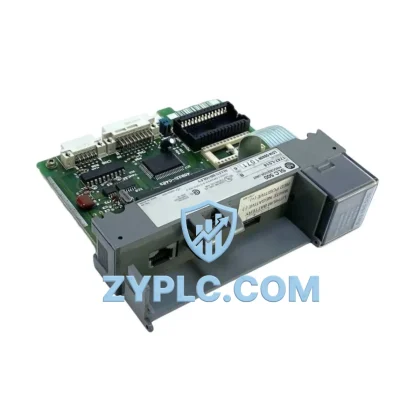
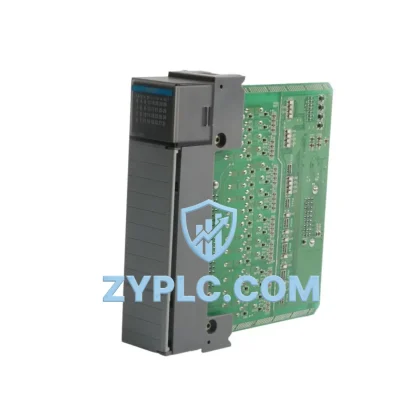
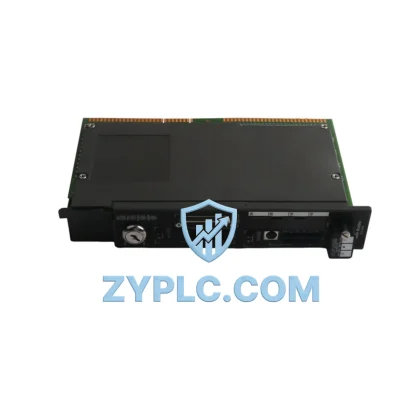
Siemens 6GK7243-1EX01-0XE0 CP243-1 System-Ready Ethernet CP for S7-200 Architecture
The Siemens 6GK7243-1EX01-0XE0, commercially designated as the CP 243-1, is a dedicated Ethernet communications processor engineered for seamless integration within the SIMATIC S7-200 Micro PLC control architecture. In modern industrial automation, no component operates in isolation — every module must contribute to a coherent, layered control system that spans the control layer, I/O layer, network layer, power supply layer, human-machine interface layer, and execution layer. The CP 243-1 occupies a critical position in this hierarchy: it serves as the network gateway that connects the S7-200 CPU to Industrial Ethernet, enabling real-time data exchange, remote diagnostics, and cross-system communication across the entire automation pyramid.
Within a typical S7-200-based control cabinet, the 6GK7243-1EX01-0XE0 is mounted directly on the S7-200 expansion bus alongside the CPU 224, CPU 226, or CPU 226XM, sharing the same backplane power rail and communicating via the internal I/O bus. This tight physical and electrical integration ensures minimal latency between the CPU’s program execution cycle and the Ethernet communication stack, which is essential for time-sensitive process control applications. The module supports the S7 communication protocol natively, allowing it to exchange data with SIMATIC S7-300 and S7-400 controllers, SCADA systems, and OPC servers without requiring additional protocol converters or middleware.
From a network architecture perspective, the CP 243-1 supports both TCP/IP and ISO-on-TCP transport protocols, enabling flexible integration into existing plant networks. It can establish up to eight simultaneous S7 connections, making it suitable for distributed architectures where multiple supervisory systems — such as a WinCC SCADA station or a SIMATIC HMI TP series panel — need concurrent access to the S7-200 data. The module also supports the FETCH/WRITE services, which allow higher-level controllers such as the S7-400 CPU 414 or CPU 416 to read and write S7-200 data areas directly, facilitating master-slave architectures in large-scale process plants.
In the context of system redundancy and fault tolerance, the 6GK7243-1EX01-0XE0 plays a supporting role by enabling remote monitoring and rapid fault detection. When paired with a SIMATIC S7-200 CPU and a SITOP PSU100S 24V power supply module, the control node can be monitored continuously from a central engineering station running STEP 7-Micro/WIN, allowing maintenance engineers to detect communication faults, CPU errors, or I/O module failures — such as those in the EM 221 digital input module or EM 231 analog input module — before they escalate into unplanned downtime. This capability is particularly valuable in geographically distributed installations such as water treatment pump stations, remote oil pipeline monitoring nodes, or distributed building automation systems.
The module’s compatibility with the SIMATIC NET industrial Ethernet infrastructure means it can be integrated into ring topologies using SCALANCE X switches, providing network-level redundancy through the Media Redundancy Protocol (MRP). In such configurations, the CP 243-1 acts as a standard Ethernet node within the ring, and the SCALANCE X208 or SCALANCE X216 switch manages ring reconfiguration in the event of a cable fault, ensuring continuous communication between the S7-200 node and the central control room. This architecture is commonly deployed in power distribution substations, chemical dosing systems, and conveyor line control panels where network availability is a contractual requirement.
For engineering and commissioning teams, the 6GK7243-1EX01-0XE0 simplifies system integration through its web-based diagnostic interface, which provides real-time visibility into connection status, data transfer rates, and error counters without requiring a dedicated engineering laptop connected to the CPU’s PPI port. This reduces commissioning time significantly, particularly in multi-node installations where the alternative would be physically accessing each control cabinet. The module’s configuration is managed entirely through the STEP 7-Micro/WIN Ethernet Wizard, which generates the necessary communication blocks and integrates them directly into the S7-200 user program, ensuring that the communication logic is tightly coupled with the control logic and fully documented within the project file.
In layered automation systems serving industries such as manufacturing assembly lines, petrochemical process units, municipal water treatment facilities, mining conveyor systems, metallurgical furnace controls, and food and beverage packaging lines, the CP 243-1 provides the Ethernet backbone connectivity that allows the S7-200 to participate as a fully networked node rather than an isolated local controller. This transforms the S7-200 from a standalone micro-PLC into an integrated component of a plant-wide MES or SCADA architecture, extending its operational lifespan and maximizing the return on existing hardware investments.
All units supplied by ZYPLC are sourced from verified industrial channels, fully tested for communication functionality, and covered by a 12-Month Warranty. Contextual Integration support is available to assist engineers with system architecture planning, module configuration, and compatibility verification across the S7-200 platform and associated SIMATIC NET components.
Architecture Specification Table
| Parameter |
Specification |
| System Role |
Ethernet Communications Processor for S7-200 Micro PLC |
| Order Number |
6GK7243-1EX01-0XE0 |
| Commercial Designation |
CP 243-1 |
| Compatible CPUs |
S7-200 CPU 221, CPU 222, CPU 224, CPU 226, CPU 226XM |
| Network Protocol |
TCP/IP, ISO-on-TCP, S7 Communication, FETCH/WRITE |
| Max. S7 Connections |
8 simultaneous connections |
| Physical Interface |
RJ45, 10/100 Mbit/s Industrial Ethernet |
| Supply Voltage |
5 VDC via S7-200 expansion bus |
| Power Consumption |
Approx. 160 mA from 5 VDC bus |
| Communication Services |
S7 PUT/GET, FETCH/WRITE, TCP/IP socket, ISO transport |
| Installation |
DIN rail, S7-200 expansion bus connector |
| Operating Temperature |
0 °C to +55 °C |
| Protection Class |
IP20 |
| Dimensions (W×H×D) |
71.2 × 80 × 62 mm |
| Country of Origin |
Germany |
| Warranty |
12-Month Warranty — all units tested prior to dispatch |
Coordinated Control System Design
The 6GK7243-1EX01-0XE0 achieves its full architectural value when deployed as part of a coordinated S7-200 control system. At the CPU layer, it connects directly to the S7-200 CPU 226 or CPU 224XP, sharing the expansion bus and operating within the same program execution environment. Power integrity for the entire expansion assembly — including the CP 243-1, digital I/O modules, and analog modules — is maintained by the SITOP PSU100S 24V/10A power supply, which provides regulated DC power with overload protection suitable for industrial cabinet environments.
On the I/O layer, the CP 243-1 coexists with expansion modules such as the EM 221 8-channel digital input module, the EM 222 8-channel digital output module, and the EM 231 4-channel analog input module, all of which connect to the CPU via the S7-200 expansion bus. The Ethernet CP does not interfere with the I/O bus timing, ensuring that scan cycle performance is maintained even during active Ethernet communication sessions. At the network layer, the CP 243-1 connects to a SCALANCE X208 or SCALANCE X005 industrial Ethernet switch, which aggregates traffic from multiple S7-200 nodes and upstream S7-300 or S7-400 controllers. For HMI integration, the SIMATIC HMI KTP600 Basic or TP177B panel communicates with the S7-200 CPU via the CP 243-1’s Ethernet port using the S7 protocol, eliminating the need for a dedicated MPI or PPI cable connection to the HMI. At the execution layer, the control outputs from the S7-200 drive field devices — including variable frequency drives, solenoid valves, and relay modules such as the SIRIUS 3RH2 contactor relay — through the digital output expansion modules, completing the signal flow from sensor input through CPU logic to actuator output.
Application in Layered Automation Systems
In manufacturing and assembly line automation, the CP 243-1 enables S7-200 nodes controlling individual workstations to report production counts, fault codes, and cycle times to a central WinCC SCADA system in real time, supporting OEE monitoring and predictive maintenance programs without requiring a controller upgrade.
In power distribution and electrical substation applications, the module allows S7-200 PLCs managing local switchgear, motor protection relays, and capacitor bank controllers to communicate status data to a substation automation system over Industrial Ethernet, supporting IEC 61850-compatible architectures when used with appropriate protocol gateways.
In water and wastewater treatment facilities, distributed S7-200 pump station controllers equipped with the 6GK7243-1EX01-0XE0 can be monitored and controlled remotely from a central SCADA station, reducing the need for on-site operator presence and enabling alarm management across geographically dispersed pump nodes.
In petrochemical and process industries, the CP 243-1 supports integration of S7-200 local controllers into DCS-adjacent architectures, where the S7-200 handles discrete safety interlocks and the Ethernet CP provides data visibility to the process historian and operator workstation.
In mining and metallurgical applications, the module’s robust industrial design and wide operating temperature range make it suitable for conveyor control panels, crusher monitoring systems, and furnace temperature regulation nodes where environmental conditions are demanding and communication reliability is non-negotiable.
Architecture Engineering FAQ
Q1: Is the 6GK7243-1EX01-0XE0 compatible with all S7-200 CPU variants, and does it affect the CPU’s scan cycle performance?
The CP 243-1 is compatible with all S7-200 CPU models including the CPU 221, CPU 222, CPU 224, CPU 224XP, CPU 226, and CPU 226XM. It connects via the standard S7-200 expansion bus and operates asynchronously to the CPU scan cycle, meaning Ethernet communication tasks are handled by the CP’s onboard processor independently of the PLC scan. This design ensures that active Ethernet sessions — including simultaneous S7 connections to SCADA systems or upstream S7-300/S7-400 controllers — do not introduce measurable latency into the CPU’s I/O scan or program execution cycle.
Q2: Can the CP 243-1 be used in a system where both an HMI panel and a SCADA server need simultaneous access to the S7-200 data?
Yes. The 6GK7243-1EX01-0XE0 supports up to eight simultaneous S7 connections, which is sufficient to accommodate concurrent access from an HMI panel (such as the SIMATIC KTP600 or TP177B), a WinCC SCADA server, an OPC server, and an engineering station running STEP 7-Micro/WIN — all over the same Industrial Ethernet network. Connection allocation is managed by the CP’s internal connection table, configured during commissioning via the Ethernet Wizard in STEP 7-Micro/WIN. No additional hardware or protocol converters are required for this multi-client architecture.
Q3: What does the 12-Month Warranty cover, and what Contextual Integration support is available for system commissioning?
All 6GK7243-1EX01-0XE0 units supplied by ZYPLC are covered by a 12-Month Warranty against manufacturing defects and functional failures under normal industrial operating conditions. Each unit undergoes functional testing — including Ethernet link establishment, S7 connection handshake verification, and bus communication checks — prior to dispatch. Contextual Integration support includes pre-sales architecture consultation to verify compatibility with your existing S7-200 CPU version, expansion module count, and network topology; commissioning guidance for STEP 7-Micro/WIN Ethernet Wizard configuration; and post-installation technical support for connection troubleshooting and firmware compatibility questions. Contact our engineering team at [email protected] or +86 19859288691 for project-specific support.
© 2026 ZYPLC. All rights reserved. | Original Source: https://zyplc.com | Contact: +86 19859288691 | [email protected]