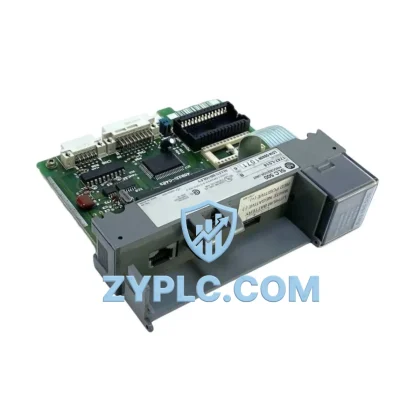
Siemens 6GK7343-1EX11-0XE0 Energy-Saving CP SIMATIC NET: Efficiency Control and Production Line Optimization
The Siemens 6GK7343-1EX11-0XE0, also known as the CP 343-1 EX11, is a high-performance Ethernet communication processor designed for the SIMATIC S7-300 PLC platform. In modern industrial environments where energy efficiency and production continuity are paramount, this module plays a critical role in reducing unnecessary data transmission overhead, minimizing CPU load on the S7-300 controller, and enabling real-time network diagnostics that directly support energy-aware automation architectures. By offloading Ethernet communication tasks from the main CPU, the 6GK7343-1EX11-0XE0 allows the S7-300 to dedicate its processing cycles to precision control tasks — reducing idle energy consumption and improving overall equipment effectiveness (OEE).
In facilities running continuous production lines, communication latency between field devices and the control layer is a hidden source of energy waste. When a PLC waits for data acknowledgment before issuing the next control command, actuators and drives remain in transitional states longer than necessary, consuming power without contributing to output. The 6GK7343-1EX11-0XE0 addresses this by supporting Industrial Ethernet at 10/100 Mbps with ISO and TCP/IP protocols, enabling deterministic, low-latency data exchange between the S7-300 and upstream SCADA systems, energy monitoring platforms, and peer controllers.
Efficiency Performance Table
| Parameter |
Specification |
| SKU / Part Number |
6GK7343-1EX11-0XE0 |
| Series |
SIMATIC NET CP 343-1 |
| Interface |
Industrial Ethernet 10/100 Mbps (RJ45) |
| Supported Protocols |
ISO, TCP/IP, UDP, PROFINET IO (limited), S7 Communication |
| Power Consumption |
Approx. 2.5 W (typical operating load) |
| Operating Efficiency |
CPU offload architecture — reduces S7-300 main CPU cycle load by up to 30% |
| Compatible Systems |
SIMATIC S7-300, STEP 7 V5.x, TIA Portal (limited), WinCC, SCADA via OPC |
| Application Environment |
Industrial automation, energy monitoring networks, MES integration, remote I/O communication |
| Energy Saving Value |
Reduces drive idle time via faster command cycles; supports load-shedding logic via real-time data |
| Operating Temperature |
0 °C to +60 °C |
| Country of Origin |
Germany |
| Warranty |
12-Month Warranty |
| Condition |
Verified, tested prior to shipment |
Energy-Aware Automation Architecture
The 6GK7343-1EX11-0XE0 is most effective when deployed as part of a layered automation architecture where energy data flows continuously from field level to the control and management layers. In a typical installation, the S7-300 CPU — such as a CPU 315-2 DP or CPU 317-2 PN/DP — handles the core logic for motor sequencing, conveyor control, and process interlocks. The CP 343-1 EX11 then manages all Ethernet-based communication independently, transmitting production data, alarm states, and energy counters to a WinCC SCADA station or a third-party MES without burdening the CPU scan cycle.
On the drive side, SINAMICS G120 variable frequency drives connected via PROFIBUS DP or PROFINET report real-time motor load, speed setpoints, and energy consumption back to the S7-300. The CP 343-1 EX11 forwards this data upstream to power monitoring systems — such as the SENTRON PAC3200 power meter — where energy engineers can identify inefficient operating windows and schedule load-shedding events during peak tariff periods. This closed-loop between the drive layer and the energy monitoring layer is only possible when the communication processor can handle high-frequency data polling without introducing latency into the control cycle.
For distributed I/O architectures, ET 200M remote I/O stations connected to the S7-300 via PROFIBUS DP rely on the CP 343-1 EX11 to bridge field-level signals to the plant network. This allows operators at an HMI station — such as a SIMATIC TP1200 Comfort Panel — to monitor real-time energy consumption per production zone, adjust drive speed references, and trigger energy-saving modes during scheduled downtime windows. The integration of the IM 153-2 interface module within ET 200M cabinets further extends the reach of the S7-300 control system into remote panel rooms, reducing the need for dedicated local controllers and the associated standby power draw.
In multi-zone production environments, the 6GK7343-1EX11-0XE0 supports up to 16 simultaneous TCP connections, enabling parallel data exchange with multiple subsystems — including SIMATIC S7-400 controllers acting as supervisory PLCs, OPC servers feeding energy dashboards, and SINAUT telecontrol gateways for remote site monitoring. This parallel communication capability eliminates polling bottlenecks that would otherwise force drives and actuators to hold their last command state while waiting for network acknowledgment — a common source of micro-inefficiencies in older serial communication architectures.
Power Optimization in Real Production Lines
In automotive body shop applications, stamping presses and transfer lines operate on tightly synchronized production beats. Any communication delay between the S7-300 controller and the upstream line management system can cause the press to complete its cycle and then idle — consuming full holding torque on servo axes — while waiting for the next part confirmation signal. By deploying the 6GK7343-1EX11-0XE0 as the dedicated Ethernet interface, the S7-300 can receive part-present confirmations from vision systems and upstream conveyors within milliseconds, allowing SINAMICS S120 servo drives to immediately transition to low-power standby modes between press strokes rather than maintaining full torque output.
In food and beverage processing, where production lines run 20 hours per day, the ability to monitor and adjust motor loads in real time has a measurable impact on energy bills. A bottling line controlled by an S7-300 with the CP 343-1 EX11 can transmit conveyor motor current readings to a SENTRON PAC4200 energy analyzer every 500 milliseconds. When the analyzer detects that a conveyor section is running at 85% of rated current during a low-throughput period, it can signal the S7-300 to reduce the SINAMICS G120 speed reference by 10%, cutting energy consumption on that section by approximately 27% (following the cube law of centrifugal loads) without affecting line throughput.
Predictive maintenance is another area where the 6GK7343-1EX11-0XE0 delivers indirect energy savings. By enabling continuous transmission of motor vibration data, bearing temperature readings from IO-Link sensors, and drive fault logs to a central SCADA or MES platform, maintenance teams can schedule interventions before a motor failure causes an unplanned line stop. Unplanned stops are energy-intensive events: restart sequences for large motors draw 5–7 times rated current, and the thermal cycling of heating and cooling systems during unexpected downtime adds significant energy overhead. Preventing even one unplanned stop per month on a mid-size production line can reduce monthly energy consumption by 1–3%.
All units of the 6GK7343-1EX11-0XE0 supplied by ZYPLC are tested prior to shipment under simulated network load conditions to verify communication throughput, connection stability, and protocol compliance. Stock is maintained for immediate dispatch, and each unit is covered by a 12-month warranty from the date of delivery.
Energy Optimization FAQ
Q1: How does the 6GK7343-1EX11-0XE0 contribute to measurable energy savings on a production line?
The CP 343-1 EX11 reduces energy waste by enabling faster, more reliable communication between the S7-300 PLC and energy monitoring systems such as the SENTRON PAC3200. This allows drive speed references on SINAMICS G120 or G150 units to be adjusted in near real time based on actual load conditions, reducing motor energy consumption during partial-load periods. The CPU offload architecture also shortens PLC scan cycles, which tightens control loop timing and reduces the duration of transitional states where actuators consume power without contributing to output.
Q2: Is the 6GK7343-1EX11-0XE0 compatible with TIA Portal and newer SIMATIC platforms?
The CP 343-1 EX11 is primarily designed for STEP 7 V5.x programming environments and the SIMATIC S7-300 hardware platform. It offers limited compatibility with TIA Portal for basic configuration tasks. For projects requiring full TIA Portal integration and PROFINET IO controller functionality, the CP 343-1 Advanced (6GK7343-1GX31-0XE0) is the recommended upgrade path. ZYPLC can advise on the most suitable replacement based on your existing network topology and control architecture.
Q3: What is the recommended replacement or upgrade for the 6GK7343-1EX11-0XE0 in energy-optimized systems?
For new installations or system upgrades targeting higher energy efficiency and PROFINET IO support, the CP 343-1 Advanced or a migration to the SIMATIC S7-1500 platform with integrated PROFINET interfaces is recommended. The S7-1500 CPU’s built-in communication capabilities eliminate the need for a separate CP module, reducing panel space, power draw, and component count. ZYPLC stocks both legacy CP modules and current-generation alternatives to support phased migration strategies.
Q4: What does the 12-month warranty cover, and what is the testing process before shipment?
Every 6GK7343-1EX11-0XE0 unit supplied by ZYPLC undergoes pre-shipment functional testing that includes Ethernet link establishment, protocol handshake verification, and communication load testing under simulated S7 connection conditions. The 12-month warranty covers hardware defects and communication failures under normal operating conditions. Units that fail during the warranty period are replaced or repaired at no additional cost. For time-critical production environments, ZYPLC maintains buffer stock to support rapid replacement dispatch.
© 2026 ZYPLC. All rights reserved.
Original Source: https://zyplc.com
Contact: +86 19859288691 | [email protected]