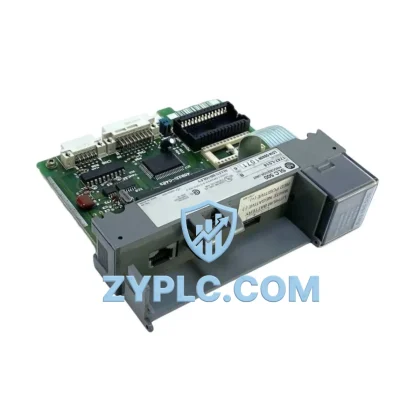
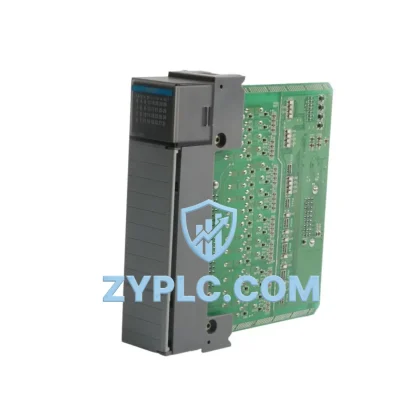
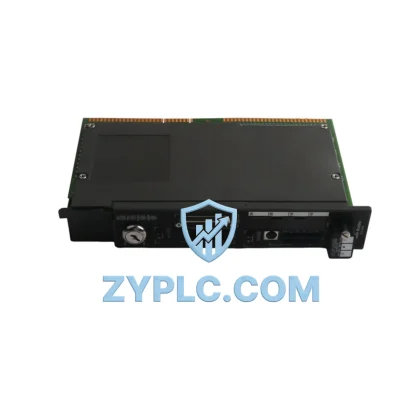
Siemens 6GK7343-5FA01-0XE0 System-Ready PROFIBUS CP for S7-300 Architecture: Control System Coordination and Upstream-Downstream Synergy
The Siemens 6GK7343-5FA01-0XE0, commercially designated as the CP 343-5, is a dedicated PROFIBUS communication processor engineered for seamless integration within the SIMATIC S7-300 modular PLC platform. In modern industrial automation, no component operates in isolation — every module must fulfill a defined role within a layered control hierarchy. The CP 343-5 occupies a critical position in the communication layer, bridging the S7-300 CPU with field-level devices, distributed I/O stations, drives, and peer controllers across the PROFIBUS DP network. Its deployment directly enhances system consistency, scalability, redundancy capability, and long-term maintenance efficiency across the full automation stack.
From the control layer down through I/O, network, power, HMI, and actuation layers, the 6GK7343-5FA01-0XE0 serves as the communication backbone that ensures deterministic data exchange. Whether coordinating with a CPU 315-2 DP or a CPU 317-2 PN/DP in a multi-rack S7-300 configuration, or interfacing with ET 200M and ET 200S distributed I/O stations on the PROFIBUS segment, this module delivers the network stability that complex process environments demand. Its ability to offload communication tasks from the CPU ensures that scan cycle times remain predictable even as the network topology scales.
Architecture Specification Table
| Parameter |
Specification |
| Part Number / SKU |
6GK7343-5FA01-0XE0 |
| Module Designation |
CP 343-5 |
| System Role |
PROFIBUS DP/FMS Communication Processor for S7-300 |
| Compatible Platform |
SIMATIC S7-300 (all standard CPU variants) |
| Communication Protocol |
PROFIBUS DP (Master/Slave), PROFIBUS FMS |
| Max PROFIBUS Baud Rate |
Up to 12 Mbit/s |
| Max DP Slaves Supported |
Up to 125 DP slaves per segment |
| Interface |
9-pin Sub-D PROFIBUS connector |
| Supply Voltage |
DC 5 V via S7-300 backplane bus |
| Power Consumption |
Approx. 1.2 W (from backplane) |
| Operating Temperature |
0 °C to +60 °C |
| Mounting |
S7-300 DIN rail, standard module slot |
| Dimensions (W×H×D) |
40 × 125 × 120 mm |
| Country of Origin |
Germany |
| Configuration Tool |
STEP 7 / SIMATIC Manager / TIA Portal (legacy mode) |
| Warranty |
12-Month Warranty (ZYPLC) |
Coordinated Control System Design
The 6GK7343-5FA01-0XE0 achieves its full value when considered within the broader S7-300 system architecture. At the CPU level, it works alongside processors such as the CPU 315-2 DP (6ES7315-2AH14-0AB0) and CPU 317-2 PN/DP (6ES7317-2EK14-0AB0), offloading PROFIBUS master communication so the CPU can dedicate its cycle to logic execution and data processing. This division of labor is fundamental to maintaining deterministic control in high-throughput applications.
On the power supply layer, the PS 307 5A (6ES7307-1EA01-0AA0) and PS 307 10A (6ES7307-1KA02-0AA0) provide the regulated 24 VDC rail that powers the S7-300 rack, ensuring the CP 343-5 and all co-installed modules receive stable electrical supply even under transient load conditions. Proper power architecture is a prerequisite for reliable PROFIBUS communication, as voltage fluctuations can introduce framing errors on the bus.
At the distributed I/O layer, the CP 343-5 acts as PROFIBUS DP master to remote stations including ET 200M (6ES7153-1AA03-0XB0) interface modules and ET 200S (6ES7151-1AA06-0AB0) head stations. These distributed racks can be located up to 1,200 meters from the master station (with repeaters), enabling field-level signal acquisition across large plant footprints without running individual signal cables back to the central cabinet. The CP 343-5 manages cyclic DP data exchange with these stations autonomously, freeing the CPU from polling overhead.
For network segmentation and segment extension, PROFIBUS RS485 repeaters (6ES7972-0AA02-0XA0) are commonly deployed alongside the CP 343-5 to extend bus length or electrically isolate segments in environments with high electromagnetic interference — typical in motor control centers, variable frequency drive (VFD) panels, and high-voltage switchgear rooms. The CP 343-5’s robust RS485 physical layer interface ensures reliable framing at all supported baud rates.
At the HMI layer, SIMATIC TP700 Comfort (6AV2124-0GC01-0AX0) and KTP900 Basic (6AV2123-2JB03-0AX0) panels connect to the S7-300 system via MPI or PROFIBUS, with the CP 343-5 facilitating transparent data visibility from field devices to operator screens. Alarm management, trend displays, and recipe control all depend on the integrity of the PROFIBUS data path that the CP 343-5 maintains.
In drive coordination applications, the CP 343-5 communicates with SINAMICS G120 drives (6SL3210-1KE21-3AF1) and MICROMASTER 440 (6SE6440-2UD27-5CA1) inverters via PROFIBUS DP, enabling speed reference, torque setpoint, and status feedback exchange within a single bus cycle. This tight integration between the PLC communication layer and the drive execution layer is essential for coordinated multi-axis motion and process speed regulation in conveyor, pump, and compressor applications.
Application in Layered Automation Systems
Manufacturing & Assembly Lines: In automotive body shop and general manufacturing environments, the CP 343-5 manages PROFIBUS DP communication between the S7-300 line controller and distributed I/O stations mounted at each workstation. Cyclic data exchange ensures that robot trigger signals, conveyor interlocks, and quality inspection gate statuses are synchronized within millisecond tolerances. The module’s ability to support up to 125 DP slaves per segment makes it suitable for long transfer lines with dense I/O requirements.
Power Generation & Electrical Substations: In power plant auxiliary systems and substation automation, the CP 343-5 integrates S7-300 controllers with protection relays, motor control centers, and bay controllers over PROFIBUS. Its deterministic communication behavior supports the strict timing requirements of protection coordination schemes, while its industrial temperature rating ensures reliable operation in substation environments subject to wide ambient temperature swings.
Petrochemical & Refinery Process Control: In continuous process plants, the CP 343-5 connects S7-300 PLCs to PROFIBUS PA field instruments — pressure transmitters, flow meters, and control valve positioners — via DP/PA segment couplers. This architecture enables HART-equivalent diagnostic data to be retrieved from field instruments through the PROFIBUS backbone, supporting predictive maintenance programs without additional wiring infrastructure.
Water & Wastewater Treatment: Municipal water treatment facilities deploy the CP 343-5 to coordinate pump station PLCs with SCADA systems via PROFIBUS, enabling remote monitoring of flow rates, tank levels, and chemical dosing parameters. The module’s low power consumption and wide operating temperature range make it suitable for outdoor pump station enclosures with passive thermal management.
Mining & Metallurgy: In ore processing and smelting operations, the CP 343-5 provides the communication link between S7-300 controllers and high-power drive systems controlling crushers, mills, and conveyor belts. Its robust RS485 interface withstands the high electromagnetic noise levels generated by large motor drives and thyristor rectifiers common in metallurgical plants.
Architecture Engineering FAQ
Q1: Can the 6GK7343-5FA01-0XE0 operate as both PROFIBUS DP master and FMS master simultaneously on the same network segment?
The CP 343-5 supports both PROFIBUS DP and PROFIBUS FMS protocols, but the operational mode is configured at project engineering time via STEP 7. In most S7-300 system architectures, the module is deployed as a DP master for cyclic I/O exchange with distributed stations. FMS services are available for acyclic peer-to-peer communication with other FMS-capable devices. Both modes can be active on the same physical PROFIBUS segment, provided all devices are configured with compatible baud rates and bus parameters. Consult the CP 343-5 manual (A5E00271039) for multi-protocol configuration guidelines.
Q2: How does the CP 343-5 support system redundancy and what are the architecture implications for high-availability S7-300 installations?
The 6GK7343-5FA01-0XE0 itself does not implement hardware redundancy natively; high-availability PROFIBUS architectures for S7-300 typically employ dual CP modules in a redundant master configuration, or migrate to S7-400H with CP 443-5 Extended for hot-standby redundancy. For S7-300 applications requiring improved availability, a common approach is to deploy two independent PROFIBUS segments with separate CP 343-5 modules, each serving a subset of field devices, so that a single communication failure does not halt the entire process. This segmentation strategy also improves diagnostic isolation and simplifies fault localization during maintenance windows.
Q3: What does the 12-Month Warranty cover for the 6GK7343-5FA01-0XE0, and what is the recommended commissioning procedure to validate module integrity before installation?
All 6GK7343-5FA01-0XE0 units supplied by ZYPLC are covered by a 12-Month Warranty against manufacturing defects and functional failures under normal operating conditions. Prior to installation, the recommended commissioning procedure includes: (1) visual inspection of the module housing, backplane connector, and Sub-D PROFIBUS port for physical damage; (2) insertion into a powered S7-300 rack and verification of the BF (Bus Fault) and SF (System Fault) LEDs — both should be off after successful STEP 7 configuration download; (3) PROFIBUS bus diagnostic using STEP 7 Hardware Diagnostics or a PROFIBUS analyzer to confirm correct baud rate negotiation and absence of framing errors; (4) cyclic data exchange verification with at least one DP slave to confirm master functionality. Any module exhibiting persistent BF LED activation after correct configuration should be returned under warranty for evaluation. Contact ZYPLC technical support at plc.sales@zyplc.com for RMA procedures.
© 2026 ZYPLC. All rights reserved.
Original Source: https://zyplc.com
Contact: +86 19859288691 | plc.sales@zyplc.com