Siemens 6SL3120-1TE23-0AA3 System-Ready Motor Drive for S120 Architecture: Control System Architecture and Upstream-Downstream Coordination
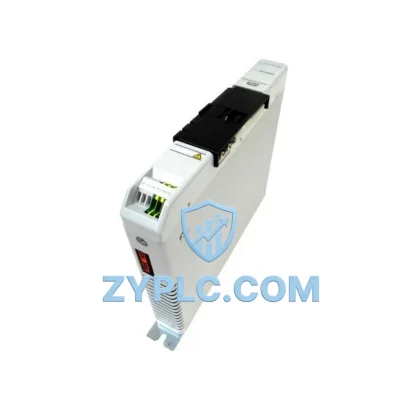
The Siemens 6SL3120-1TE23-0AA3 is a Single Motor Module designed for seamless integration within the SINAMICS S120 modular drive architecture. Rather than functioning as a standalone inverter, this module is engineered to operate as a coordinated node within a layered automation system — receiving DC bus power from a shared Line Module, executing velocity and torque commands from a CU320-2 Control Unit, and delivering precisely regulated three-phase output to servo or induction motors across demanding industrial environments. Its role within the S120 booksize format makes it a foundational component for engineers designing scalable, redundancy-capable, and maintainable drive systems in manufacturing, process control, and energy-critical applications.
Understanding the 6SL3120-1TE23-0AA3 requires viewing it through the lens of the complete S120 control hierarchy. At the control layer, the CU320-2 DP or CU320-2 PN Control Unit manages all drive objects, distributes setpoints via DRIVE-CLiQ, and coordinates fault response across the entire axis group. The 6SL3120-1TE23-0AA3 connects directly to this control backbone, registering as a drive object and receiving real-time torque and speed references with sub-millisecond cycle synchronization. This tight integration eliminates the latency and configuration overhead associated with standalone inverter deployments, enabling deterministic motion control across multi-axis systems.
At the power layer, the module draws from a shared DC bus supplied by an Active Line Module (ALM) or Basic Line Module (BLM) — such as the 6SL3130 series — which rectifies incoming AC supply and maintains a stable intermediate circuit voltage. This shared bus topology reduces total harmonic distortion, enables regenerative braking energy to be redistributed across axes, and simplifies cabinet wiring by eliminating per-axis AC input fusing. The 6SL3120-1TE23-0AA3 is rated for the booksize power range appropriate to its output current class, making it compatible with standard S120 booksize chassis and 300mm cabinet mounting arrangements.
At the I/O and signal layer, the module interfaces with the broader system through DRIVE-CLiQ daisy-chain topology, connecting encoder feedback from SMC30 Sensor Module Cabinet-Mounted units or SME20/SME25 external encoder modules. This allows the CU320-2 to close the position loop using high-resolution encoder data without additional signal conditioning hardware. For safety-critical applications, the 6SL3120-1TE23-0AA3 supports Safe Torque Off (STO) and Safe Stop 1 (SS1) functions in coordination with the CU320-2 and TM54F Terminal Module, enabling IEC 62061 SIL2 / EN ISO 13849-1 PLd compliance without external safety relays.
At the network and communication layer, the S120 system communicates with higher-level controllers — such as a Simatic S7-1500 PLC or S7-300 with PROFIBUS DP — via the Control Unit’s onboard PROFINET IRT or PROFIBUS DP interface. The 6SL3120-1TE23-0AA3 participates in this communication architecture transparently, with its drive object parameters accessible through the PLC’s drive control chart (DCC) or via STARTER / Startdrive commissioning software. This enables centralized parameterization, diagnostics, and firmware management across all axes from a single engineering workstation.
At the HMI layer, operators interact with the drive system through Simatic HMI panels connected via PROFINET, with drive status, fault codes, and process values mapped directly from the CU320-2 to the visualization layer. The 6SL3120-1TE23-0AA3 contributes real-time current, speed, and temperature data to this layer, supporting predictive maintenance workflows and reducing unplanned downtime. Supplementary components such as the BOP20 Basic Operator Panel mounted on the Control Unit provide local parameter access during commissioning and fault diagnosis without requiring a laptop connection.
At the execution layer, the module drives servo motors or induction motors with vector control or servo control modes, depending on the application. In coordinated multi-axis systems — such as those using a CX32-2 Controller Extension for axis expansion — multiple 6SL3120-1TE23-0AA3 modules share a common DC bus and synchronization clock, enabling electronic gearing, cam profiling, and cross-axis torque coordination. This makes the module suitable for packaging lines, winding machines, printing presses, and CNC machining centers where axis synchronization is critical to product quality.
From a maintenance and lifecycle perspective, the 6SL3120-1TE23-0AA3 benefits from Siemens’ standardized S120 spare parts ecosystem. Its booksize form factor is interchangeable with other modules of the same current class, reducing the number of unique spare parts required in a plant’s inventory. All units supplied by ZYPLC are covered by a 12-Month Warranty and undergo functional testing prior to dispatch, ensuring that replacement modules can be installed and commissioned with minimal downtime. Contextual Integration support is available to assist engineers with parameter migration, DRIVE-CLiQ topology verification, and safety function re-validation after module replacement.
Architecture Specification Table
| Parameter |
Specification |
| Part Number / SKU |
6SL3120-1TE23-0AA3 |
| Brand |
Siemens |
| Series |
SINAMICS S120 |
| Module Type |
Single Motor Module (Booksize) |
| System Role |
Axis inverter node on shared DC bus; drive object under CU320-2 control |
| Output Current (Rated) |
30 A (continuous), 45 A (60s overload) |
| DC Bus Voltage |
510–720 V DC (nominal 600 V DC) |
| Output Phases |
3-phase PWM, variable frequency |
| Control Interface |
DRIVE-CLiQ (daisy-chain topology) |
| Safety Functions |
STO (Safe Torque Off), SS1 (Safe Stop 1) — SIL2 / PLd capable |
| Encoder Interface |
Via SMC30 / SME20 / SME25 Sensor Modules |
| Mounting Format |
Booksize, 300mm cabinet depth |
| Cooling Method |
Forced air (internal fan) |
| Ambient Temperature |
0°C to +40°C (derated to +55°C) |
| Protection Class |
IP20 |
| Origin |
Germany |
| Warranty |
12-Month Warranty (ZYPLC) |
| Contextual Integration |
Supported — parameter migration, topology verification, safety re-validation |
Coordinated Control System Design
The 6SL3120-1TE23-0AA3 achieves its full performance potential only when deployed within a correctly specified S120 system architecture. A typical coordinated system begins with a 6SL3130-series Active Line Module providing regulated DC bus voltage to a shared booksize chassis. The CU320-2 PN Control Unit (or CU320-2 DP for PROFIBUS environments) serves as the central intelligence, managing all drive objects — including the 6SL3120-1TE23-0AA3 — via DRIVE-CLiQ. Where axis count exceeds the CU320-2’s native capacity, a CX32-2 Controller Extension expands the system without adding a second Control Unit, preserving synchronization integrity.
Encoder feedback is routed through SMC30 Sensor Module Cabinet-Mounted units for motors without onboard DRIVE-CLiQ interfaces, or through SME25 External Encoder Modules for linear scale or external resolver inputs. Safety functions are coordinated via the TM54F Terminal Module, which aggregates STO and SS1 signals from the safety PLC and distributes them to each Motor Module — including the 6SL3120-1TE23-0AA3 — without requiring individual hardwired connections to each axis. For I/O expansion at the drive level, TM31 Terminal Modules provide additional digital and analog I/O points accessible through the DRIVE-CLiQ network.
Power distribution within the cabinet is managed through 6SL3162-series DC bus connectors and shield connection kits, ensuring low-impedance bus connections and EMC-compliant cable routing. At the motor side, 6FX series power cables with pre-assembled connectors reduce installation time and ensure correct shielding continuity. For applications requiring local operator access, a BOP20 Basic Operator Panel mounted on the CU320-2 provides parameter navigation and fault acknowledgment without a PC connection. This complete ecosystem — from Line Module to Motor Module to sensor and safety infrastructure — ensures that the 6SL3120-1TE23-0AA3 operates within a validated, fully coordinated drive architecture.
Application in Layered Automation Systems
In automotive and general manufacturing environments, the 6SL3120-1TE23-0AA3 is deployed in multi-axis servo systems controlling conveyor positioning, robotic joint drives, and press feed axes. Its ability to participate in isochronous PROFINET IRT communication ensures that axis setpoints are updated within 1ms cycle times, meeting the synchronization requirements of high-speed assembly lines.
In power generation and energy infrastructure applications, the module is used in auxiliary drive systems for turbine cooling fans, pump drives, and valve actuators. Its STO safety function allows integration with emergency shutdown systems without additional safety relays, simplifying SIL2 certification for the overall installation.
In petrochemical and process industries, the 6SL3120-1TE23-0AA3 drives compressor auxiliaries, agitator motors, and extruder feed drives in hazardous-area-adjacent control rooms. Its compatibility with the S120 redundancy concepts — including dual-channel safety and hot-standby Control Unit configurations — supports the high-availability requirements of continuous process plants.
In water and wastewater treatment facilities, the module controls pump and blower drives within variable-speed pumping stations, where energy efficiency and remote diagnostics via PROFINET reduce operational costs and maintenance visits. In mining and metallurgy, it is applied in conveyor drive systems and mill auxiliary drives, where its robust DC bus sharing capability handles the regenerative energy spikes characteristic of heavy-load deceleration cycles.
In packaging and printing applications, the 6SL3120-1TE23-0AA3 enables electronic line shafting across multiple axes, replacing mechanical gearboxes with software-defined cam profiles and electronic gearing ratios. This reduces mechanical complexity, improves format changeover speed, and allows recipe-based axis configuration from the HMI layer.
Architecture Engineering FAQ
Q1: Is the 6SL3120-1TE23-0AA3 compatible with both CU320-2 DP and CU320-2 PN Control Units, and can it be added to an existing S120 system without replacing the Control Unit?
Yes. The 6SL3120-1TE23-0AA3 connects to the Control Unit exclusively via DRIVE-CLiQ, which is independent of the fieldbus interface (PROFIBUS DP or PROFINET) used by the CU320-2. Adding this module to an existing system requires only a DRIVE-CLiQ port on the Control Unit or an available position in the daisy-chain topology, followed by an automatic topology recognition cycle in STARTER or Startdrive. No Control Unit replacement is necessary provided the total drive object count remains within the CU320-2’s licensed capacity.
Q2: What commissioning steps are required after installing a replacement 6SL3120-1TE23-0AA3, and how does the 12-Month Warranty apply to replacement units?
After physical installation and DRIVE-CLiQ connection, the replacement module must be recognized by the Control Unit via a topology scan in STARTER or Startdrive. Drive object parameters — including motor data, encoder configuration, and safety function settings — must be downloaded from the project file or transferred from a backed-up parameter set. Safety functions (STO/SS1) require re-validation per IEC 62061 / EN ISO 13849-1 after any Motor Module replacement. All replacement units supplied by ZYPLC carry a full 12-Month Warranty from the date of dispatch, and our Contextual Integration support team can assist with parameter migration and safety re-validation documentation.
Q3: Can the 6SL3120-1TE23-0AA3 operate in a redundant architecture, and what is the recommended spare parts strategy for minimizing drive system downtime?
The S120 architecture supports Control Unit redundancy through hot-standby CU320-2 configurations in conjunction with appropriate firmware and licensing. While the Motor Module itself does not operate in a redundant pair, the booksize form factor standardization means that a single spare 6SL3120-1TE23-0AA3 of the correct current class can serve as a replacement for any axis in the system, reducing the number of unique spare parts required. ZYPLC recommends maintaining at least one spare module per current class tier in critical installations, supported by our in-stock availability and 12-Month Warranty coverage to ensure rapid replacement without extended lead times.
© 2026 ZYPLC. All rights reserved.
Original Source: https://zyplc.com
Contact: +86 19859288691 | [email protected]