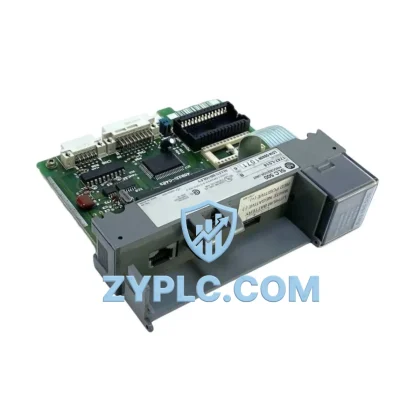
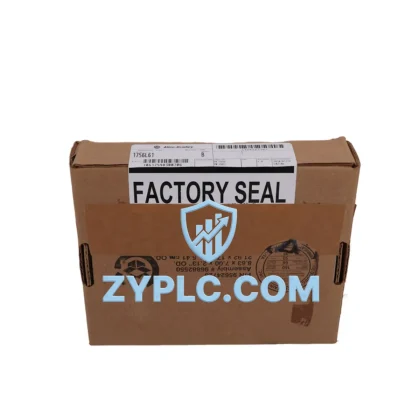
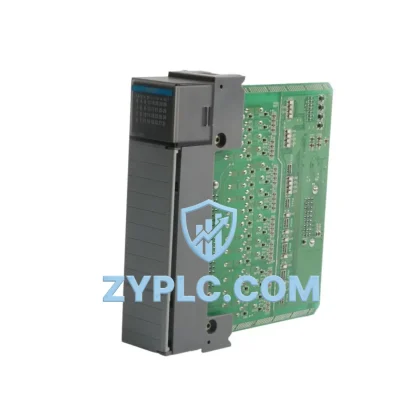
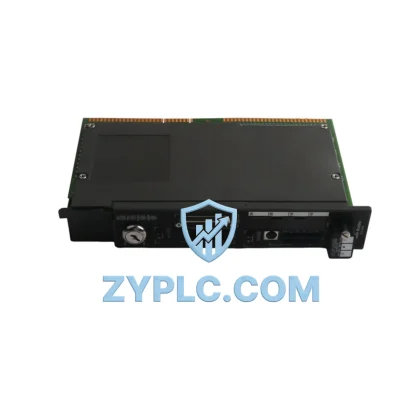
Siemens 9AC9100-0AA10 Energy-Saving PLC for SIMATIC S5: Precision Control for Production Line Efficiency
The Siemens 9AC9100-0AA10 is a high-performance main CPU module designed for the SIMATIC S5 programmable logic controller platform. In modern industrial environments where energy costs and equipment utilization directly impact profitability, this module delivers the deterministic cycle execution and low-overhead processing that production engineers rely on to eliminate idle energy consumption, reduce unplanned downtime, and maintain consistent line throughput. Whether deployed in discrete manufacturing, process control, or mixed-mode automation, the 9AC9100-0AA10 provides the stable control foundation that energy-aware factories demand.
Efficiency Performance Table
| Parameter |
Specification / Value |
| SKU / Part Number |
9AC9100-0AA10 |
| Brand / Manufacturer |
Siemens |
| Series / Platform |
SIMATIC S5 |
| Module Type |
PLC Main CPU Module |
| Typical Power Consumption |
Low-standby design; optimized for continuous 24/7 industrial duty cycles |
| Processing Efficiency |
High-speed instruction execution; minimizes scan-cycle overhead to reduce idle energy draw |
| Compatible Systems |
SIMATIC S5 series racks; compatible with S5-115U, S5-135U, S5-155U configurations |
| Application Environment |
Industrial automation, motor drive control, process monitoring, energy management panels |
| Energy Optimization Value |
Enables precise load scheduling, demand-side motor control, and real-time feedback loops to cut unnecessary energy draw |
| Origin |
Germany (DE) |
| Inventory Status |
In Stock — Ships after outgoing quality inspection |
| Warranty |
12-Month Warranty — Covers functional defects under normal industrial operating conditions |
Energy-Aware Automation Architecture
Achieving meaningful energy savings on a production line requires more than a single efficient component — it demands a coordinated architecture where every layer of the control system contributes to reducing waste. The Siemens 9AC9100-0AA10 sits at the heart of this architecture as the central processing unit, orchestrating data flow between field devices, drive systems, and supervisory layers.
At the drive level, the 9AC9100-0AA10 interfaces with Siemens SINAMICS G120 variable frequency drives to implement speed-proportional motor control. Rather than running motors at fixed full speed, the PLC issues dynamic setpoint commands based on real-time production demand, allowing the VFD to reduce motor speed during low-load periods — a strategy that can cut motor energy consumption by 30–50% in conveyor, pump, and fan applications. Paired with SINAMICS S120 servo drive modules for precision axis control, the system ensures that positioning moves consume only the energy required for the actual load profile, with regenerative braking energy fed back into the DC bus.
On the I/O side, Siemens SIMATIC S5 digital input/output modules — such as the 6ES5 series DI/DO cards — connect the CPU to field sensors and actuators. Accurate, low-latency I/O scanning means the controller reacts immediately to process deviations, preventing the energy-wasting overruns that occur when control loops respond slowly to load changes. Analog input modules reading 4–20 mA signals from current transformers and power transducers feed real-time energy consumption data directly into the PLC program, enabling closed-loop power management without a separate energy monitoring gateway.
For energy metering and power quality monitoring, the architecture integrates Siemens SENTRON PAC3200 power monitoring devices on the MCC bus. These meters provide per-circuit active power, reactive power, and harmonic distortion data that the S5 CPU can use to trigger load-shedding routines during peak demand windows, protecting the facility from demand-charge penalties. Communication between the PAC3200 and the SIMATIC S5 rack is handled via Siemens CP 5431 FMS/DP communication processors, which support PROFIBUS DP — the fieldbus protocol native to the S5 platform — ensuring deterministic data exchange without adding Ethernet latency to time-critical control loops.
At the HMI layer, a Siemens SIMATIC OP17 or compatible operator panel provides line operators with real-time visibility into energy KPIs — current draw per zone, cumulative shift consumption, and drive efficiency trends — without requiring a SCADA server. This decentralized visibility empowers operators to make immediate adjustments, such as staggering motor starts to avoid inrush current spikes that inflate peak demand readings. For facilities requiring higher-level data aggregation, the Siemens SIMATIC S7-300 series can serve as a gateway controller, collecting data from multiple S5 racks via MPI or PROFIBUS and forwarding consolidated energy reports to plant-level systems.
Power supply stability is maintained by Siemens SITOP PSU100S regulated DC power supplies, which deliver clean 24 VDC to the S5 rack backplane and field devices. Stable supply voltage prevents the micro-interruptions that cause spurious I/O faults and unnecessary restart cycles — each of which wastes energy and erodes OEE. Together, this layered architecture transforms the 9AC9100-0AA10 from a standalone CPU into the nerve center of a genuinely energy-optimized production cell.
Power Optimization in Real Production Lines
In practice, the energy savings delivered by a well-programmed Siemens 9AC9100-0AA10-based control system manifest across three operational dimensions: demand reduction, downtime elimination, and maintenance cost control.
Demand Reduction: By implementing time-of-use scheduling directly in the S5 CPU program, production managers can automatically shift energy-intensive operations — such as large motor starts, heating cycles, or compressor loading — away from peak tariff windows. The PLC’s real-time clock and interrupt-driven task structure make it straightforward to build demand-management routines that respond to both scheduled production plans and live power meter feedback. Facilities running three-shift operations have reported measurable reductions in monthly demand charges simply by staggering conveyor and pump motor starts under PLC control rather than relying on manual operator sequencing.
Downtime Elimination: Unplanned stops are among the largest hidden energy costs in manufacturing — not because of the energy consumed during the stop, but because of the energy wasted in restart transients, scrap generation, and the extended run time needed to recover lost production. The 9AC9100-0AA10’s robust program execution and diagnostic capabilities allow maintenance teams to implement predictive monitoring routines that track motor current signatures, cycle time drift, and I/O fault frequency. When these indicators trend toward failure thresholds, the PLC can trigger maintenance alerts before a breakdown occurs, keeping OEE high and energy-per-unit-produced low.
Maintenance Cost Control: Every unit shipped from our warehouse undergoes a full functional test under load conditions before dispatch. The 9AC9100-0AA10 is verified for correct program execution, I/O response, and communication integrity. This pre-shipment testing protocol, combined with our 12-month warranty, means customers receive a module that is ready to install and operate — reducing the commissioning time and associated labor costs that inflate the total cost of ownership. Spare parts availability is maintained to support rapid replacement in the event of field failures, minimizing the mean time to repair and keeping production lines running at their designed energy efficiency point.
Energy Optimization FAQ
Q1: How does the 9AC9100-0AA10 contribute to measurable energy savings on a production line?
The module enables closed-loop energy management by processing real-time signals from power meters, current sensors, and drive feedback devices within a single deterministic scan cycle. This allows the control program to continuously adjust motor setpoints, sequence loads to avoid demand peaks, and shut down idle equipment automatically — all without operator intervention. The result is a reduction in both base load consumption and peak demand charges.
Q2: Is the 9AC9100-0AA10 compatible with modern PROFIBUS DP networks and current Siemens drive systems?
Yes. The SIMATIC S5 platform supports PROFIBUS DP via CP 5431 or CP 5412 communication processors, allowing the S5 CPU to exchange data with SINAMICS G120 and SINAMICS S120 drives, SENTRON power monitors, and other DP-compatible field devices. This makes it possible to integrate the 9AC9100-0AA10 into hybrid automation architectures that combine legacy S5 hardware with current-generation Siemens drive and monitoring equipment.
Q3: Can this module replace a failed S5 CPU without reprogramming the existing application?
In most cases, yes. The 9AC9100-0AA10 is a direct form-fit-function replacement for compatible SIMATIC S5 CPU positions. Existing STEP 5 programs stored on memory submodules or EPROMs can be loaded directly into the replacement module. We recommend verifying the firmware revision and memory submodule compatibility before installation. Our technical team can assist with compatibility confirmation prior to shipment.
Q4: What does the 12-month warranty cover, and what is the testing process before shipment?
Every 9AC9100-0AA10 unit is tested under operational conditions prior to dispatch — including program execution verification, I/O channel integrity checks, and communication port validation. The 12-month warranty covers functional defects arising under normal industrial operating conditions, including CPU processing failures, memory errors, and communication faults. Physical damage resulting from incorrect installation, overvoltage events, or environmental exposure outside the module’s rated specifications is excluded. Warranty claims are processed promptly to minimize production impact.
© 2026 ZYPLC. All rights reserved.
Original Source: https://zyplc.com
Contact: +86 19859288691 | [email protected]