Siemens A1A363628.00M Industrial Network Interface for Robicon Perfect Harmony Systems: Enabling Seamless Data Links Across Smart Factory Architectures
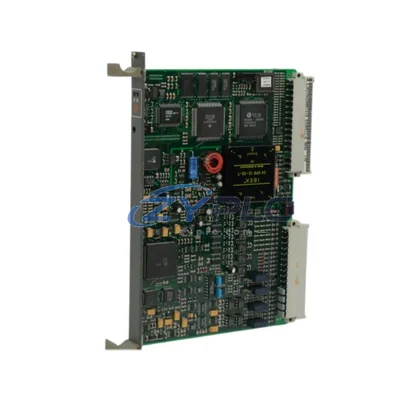
The Siemens A1A363628.00M is a precision-engineered cell control board designed for the Robicon Perfect Harmony medium-voltage variable frequency drive (VFD) platform. As a core communication and control component within the Perfect Harmony CHM and GH180 series, this board governs the real-time data exchange between individual power cells and the central drive controller, forming the backbone of a reliable industrial network interface in high-demand manufacturing and process automation environments.
In modern smart factory deployments, the integrity of the data link between field-level devices and supervisory systems is non-negotiable. The A1A363628.00M fulfills this role by maintaining synchronized cell-level feedback, fault diagnostics, and control signal routing across the entire drive stack — enabling plant engineers to achieve full transparency from the motor shaft to the SCADA dashboard.
Compatibility & Integration Notes
| Attribute |
Specification |
| SKU / Part Number |
A1A363628.00M |
| Brand |
Siemens |
| Series |
Robicon Perfect Harmony (CHM / GH180) |
| Product Type |
Cell Control Board |
| Communication Protocol |
Fiber Optic Ring Bus (internal cell communication), PROFIBUS DP, PROFINET (via drive controller integration) |
| Interface Type |
Fiber Optic, Digital I/O, Backplane Bus |
| Transmission Capability |
Real-time cell voltage, current, temperature, and fault status feedback |
| Network Compatibility |
Siemens SIMATIC S7 PLC networks, PROFIBUS, PROFINET, Modbus TCP (via gateway) |
| System Application |
Medium-voltage VFD control, SCADA integration, HMI monitoring, predictive maintenance |
| Origin |
Germany |
| Warranty |
warranty terms confirmed during quotation |
| Availability |
RFQ Available — Global Shipping |
Connected Automation Data Flow
Understanding the A1A363628.00M requires viewing it not as an isolated component, but as a critical node in a layered industrial data architecture. In a typical medium-voltage drive installation, the signal chain begins at the motor and works upward through multiple layers of automation hardware.
At the field level, process sensors — including temperature transmitters, pressure transducers, and vibration monitors — feed analog and digital signals into remote I/O modules such as the Siemens ET 200SP or ET 200M distributed I/O systems. These signals are aggregated and passed via PROFIBUS DP or PROFINET to the Siemens SIMATIC S7-400 or S7-1500 PLC controllers, which serve as the primary logic engines for the drive system.
Within the Perfect Harmony drive cabinet, the A1A363628.00M cell control board communicates with the master drive controller — typically the Siemens Perfect Harmony NXG controller or its successor platforms — via a high-speed fiber optic ring bus. This architecture ensures that each power cell’s switching state, DC bus voltage, output current, and thermal status are continuously reported back to the central controller with microsecond-level latency, enabling precise PWM modulation and immediate fault isolation.
The drive controller then interfaces with plant-level SCADA systems such as Siemens WinCC or third-party platforms via PROFINET or Modbus TCP gateways. Operators at the HMI panel — whether a Siemens SIMATIC HMI TP1200 Comfort or a remote web-based dashboard — can monitor real-time drive parameters, acknowledge alarms, and initiate controlled shutdowns without physical access to the drive room.
For facilities integrating edge computing, an industrial edge gateway such as the Siemens SIMATIC IPC427E can be deployed to buffer drive telemetry, run local analytics, and push aggregated data to cloud-based MES or ERP platforms. This enables predictive maintenance algorithms to correlate cell control board diagnostics with historical failure patterns, reducing unplanned downtime across the production line.
In multi-drive installations — common in mining, oil and gas, water treatment, and cement manufacturing — the A1A363628.00M boards across multiple drive cabinets are coordinated through a common PROFIBUS DP segment or PROFINET ring topology, ensuring synchronized speed references and load sharing between parallel motor drives. The Siemens SCALANCE X series industrial Ethernet switches provide the managed switching infrastructure that keeps this network deterministic and fault-tolerant.
Solving Data Isolation in Industrial Sites
One of the most persistent challenges in industrial automation is the fragmentation of data across incompatible systems. Legacy medium-voltage drives often operate as isolated islands — their internal diagnostics locked behind proprietary protocols, inaccessible to modern SCADA or MES platforms. The result is reactive maintenance, blind spots in production reporting, and costly unplanned shutdowns.
The Siemens A1A363628.00M addresses this at the hardware level. By maintaining a live, bidirectional data link between each power cell and the drive controller, it ensures that no fault event, thermal excursion, or voltage anomaly goes undetected. When integrated with a PROFIBUS or PROFINET-capable PLC network, the drive’s internal state becomes fully visible to the plant’s supervisory layer — eliminating the data isolation that plagues older drive architectures.
For sites undergoing digital transformation, replacing a failed or degraded A1A363628.00M cell control board is often the first step toward restoring full network transparency. Once the board is operational, engineers can re-enable real-time monitoring, configure alarm thresholds in WinCC, and establish automated fault-response routines in the S7 PLC — all without modifying the drive’s power stage or reengineering the control cabinet.
Protocol unification is another key benefit. Through the NXG controller’s gateway capabilities, the Perfect Harmony drive can bridge between its internal fiber optic cell bus and external PROFIBUS, PROFINET, or Modbus TCP networks — allowing a single A1A363628.00M replacement to restore connectivity across the entire automation stack. This is particularly valuable in brownfield installations where multiple generations of control hardware coexist on the same plant floor.
System scalability is preserved as well. The modular cell-based architecture of the Perfect Harmony platform means that additional power cells — each governed by its own A1A363628.00M board — can be added to increase drive output voltage without redesigning the control network. The fiber optic ring bus automatically accommodates new nodes, and the SCADA system receives updated topology data without manual reconfiguration.
Every A1A363628.00M unit supplied by ZYPLC undergoes pre-shipment functional testing to verify communication integrity, I/O response, and firmware compatibility with the target drive platform. Stock is maintained for rapid dispatch, and all units are covered by a warranty terms confirmed during quotation from the date of shipment.
Industrial Connectivity FAQ
Q1: What communication protocols does the Siemens A1A363628.00M support in a SCADA-integrated environment?
The A1A363628.00M operates on the internal fiber optic ring bus of the Robicon Perfect Harmony drive. At the system level, the drive controller supports PROFIBUS DP and PROFINET for integration with Siemens SIMATIC PLC networks and SCADA platforms such as WinCC. Modbus TCP connectivity is achievable via protocol gateway modules, enabling compatibility with third-party HMI and MES systems.
Q2: How does this cell control board affect network stability and communication latency in multi-cell drive systems?
The fiber optic ring bus architecture used by the Perfect Harmony platform provides deterministic, low-latency communication between the A1A363628.00M boards and the master controller. Each cell reports its status within a fixed scan cycle, ensuring that the controller can respond to fault conditions in real time. A degraded or failed cell control board will disrupt this cycle, causing drive faults and potential production stops — making prompt replacement critical for network stability.
Q3: Is the A1A363628.00M compatible with both CHM and GH180 variants of the Perfect Harmony platform?
The A1A363628.00M is designed for the Robicon Perfect Harmony series. Compatibility with specific CHM or GH180 cabinet configurations depends on the firmware revision and cell voltage rating of the target installation. ZYPLC recommends providing your drive nameplate data and existing cell board part numbers when placing an RFQ to ensure exact cross-compatibility.
Q4: What does the warranty terms confirmed during quotation cover, and how is pre-shipment testing conducted?
All A1A363628.00M units supplied by ZYPLC are covered by a warranty terms confirmed during quotation against manufacturing defects and functional failures under normal operating conditions. Pre-shipment testing includes communication interface verification, power supply rail checks, and firmware version confirmation. Units that do not pass functional testing are not dispatched. Warranty claims are supported by our technical team at plc.sales@zyplc.com.