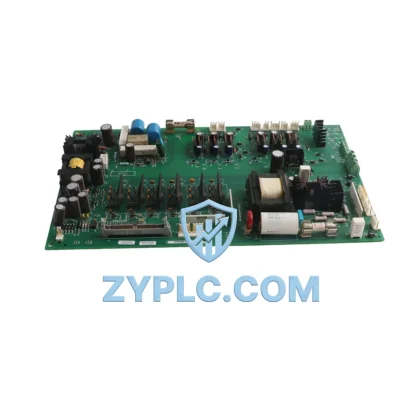
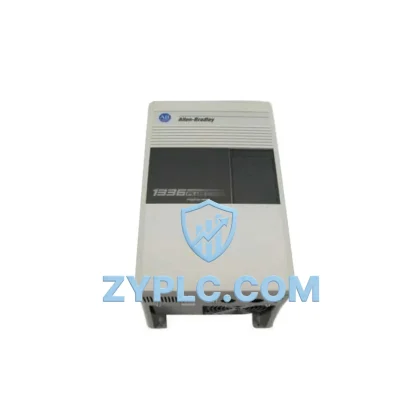
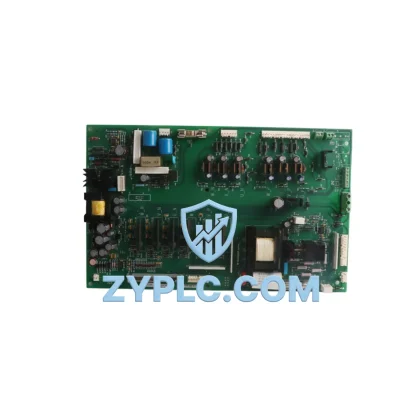
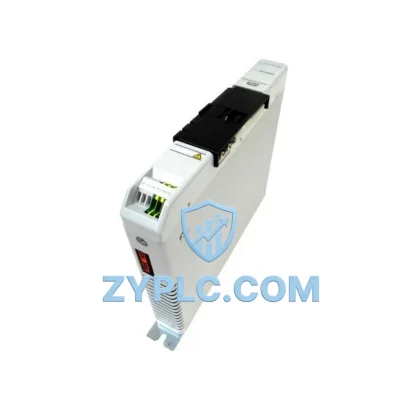
Siemens A5E01014229 Energy-Saving Motor Control Module for Optimized SINAMICS Automation
The Siemens A5E01014229 is a high-performance motor control module engineered for the SINAMICS G130, G150, and S120 drive platforms — three of Siemens’ most widely deployed variable-speed drive families in heavy industrial and process automation environments. Designed to operate at the intersection of precision motor control and energy efficiency, this module plays a critical role in reducing unnecessary power consumption across production lines where motor-driven loads account for the majority of facility energy expenditure.
In modern manufacturing, energy waste is rarely caused by a single point of failure — it accumulates through inefficient motor ramp-up sequences, unregulated torque delivery, poor load matching, and the absence of real-time feedback between the drive system and the control layer. The A5E01014229 addresses these issues directly by providing stable, low-latency control signals that allow the SINAMICS drive to respond dynamically to load changes, maintain optimal slip compensation, and reduce reactive power draw during partial-load operation.
Whether integrated into a SINAMICS G130 cabinet drive for high-power pump and fan applications, a SINAMICS G150 for large compressor or extruder control, or a SINAMICS S120 multi-axis servo system for coordinated motion, this module ensures that the drive’s internal control architecture operates with the accuracy and responsiveness required for energy-aware automation.
Efficiency Performance Table
| Parameter |
Specification / Value |
| Compatible Drive Series |
SINAMICS G130, G150, S120 |
| Module Function |
Motor Control / Drive Interface |
| Typical Drive Efficiency Gain |
Up to 15–25% reduction in motor energy waste vs. uncontrolled operation |
| Operating Environment |
Industrial automation, process control, heavy manufacturing |
| Application Scenarios |
Pumps, fans, compressors, extruders, multi-axis servo systems |
| Control Response |
Low-latency, real-time load-adaptive motor control |
| Origin |
Germany (DE) |
| Warranty |
12-Month Warranty — tested before shipment |
| Stock Status |
Available — ships from verified inventory |
| Energy Value |
Reduces reactive power draw, optimizes slip compensation, supports partial-load efficiency |
Energy-Aware Automation Architecture
The A5E01014229 does not operate in isolation — its value is realized within a broader SINAMICS-based automation architecture where multiple components work in concert to achieve system-level energy optimization.
In a typical SINAMICS S120 multi-axis installation, the A5E01014229 interfaces with the SINAMICS S120 Control Unit CU320-2, which coordinates axis-level torque and speed commands across multiple drive modules. The CU320-2 relies on accurate feedback from motor control modules like the A5E01014229 to execute energy-efficient motion profiles — particularly during deceleration phases where regenerative braking energy can be fed back into the DC link and shared across axes via the SINAMICS S120 Active Line Module (ALM). This energy recovery capability is one of the most impactful efficiency features in the S120 platform, and it depends entirely on the integrity of the motor control layer.
For power monitoring and energy accounting, the A5E01014229-equipped drive system can be paired with a SENTRON PAC3200 or SENTRON PAC4200 power monitoring device, which captures real-time kWh consumption, power factor, and harmonic distortion data at the drive input. This data feeds into the plant’s energy management system, enabling engineers to benchmark drive performance, identify inefficiency trends, and validate the energy savings delivered by optimized motor control.
On the communication side, the SINAMICS G130 and G150 drives equipped with this module typically communicate via PROFINET IO or PROFIBUS DP to a higher-level Siemens SIMATIC S7-1500 PLC or SIMATIC S7-300 PLC. The PLC issues speed setpoints, monitors drive status words, and triggers protective shutdowns based on process conditions — all of which depend on reliable motor control module operation. In energy-critical applications, the S7-1500 can also execute demand-response logic, ramping drives down during peak tariff periods and restoring them during off-peak windows.
For operator visibility, a SIMATIC HMI TP1200 Comfort panel or SIMATIC HMI KTP700 Basic panel is commonly deployed alongside the drive cabinet, displaying real-time motor speed, current draw, energy consumption trends, and fault history. This visibility layer is essential for maintenance teams to detect early signs of motor degradation — such as rising current at constant load — before they escalate into unplanned downtime events.
In distributed I/O architectures, the drive system may also interface with SIMATIC ET 200SP remote I/O modules, which handle local sensor inputs (temperature, vibration, pressure) and relay them to the control system. When a temperature sensor on a motor bearing reports an anomaly, the ET 200SP passes this signal to the S7-1500, which can then command the SINAMICS drive to reduce speed and protect the motor — a predictive maintenance response that prevents catastrophic failure and avoids the energy waste associated with running a degraded motor at full load.
Power Optimization in Real Production Lines
In real-world production environments, the energy impact of a properly functioning motor control module like the A5E01014229 is measurable and significant. Consider a continuous process line — a paper mill, a water treatment facility, or a chemical plant — where multiple large motors run 24 hours a day, 365 days a year. In these environments, even a 10% improvement in drive efficiency translates directly into tens of thousands of dollars in annual energy savings.
The A5E01014229 contributes to this efficiency in several concrete ways. First, by ensuring accurate flux and torque control within the SINAMICS drive, it prevents the motor from drawing excess current during transient load changes — a common source of energy waste in poorly tuned drive systems. Second, by maintaining stable control loop performance, it reduces the frequency of drive trips and restarts, each of which consumes a surge of energy and places mechanical stress on the motor and connected load.
From a production rhythm perspective, stable motor control directly improves line throughput consistency. When a conveyor, extruder, or pump operates at a precisely controlled speed without hunting or oscillation, downstream processes can be synchronized more tightly, reducing buffer inventory requirements and improving overall equipment effectiveness (OEE). This is particularly relevant in packaging lines and assembly systems where motor speed variation propagates as positional error into downstream stations.
Maintenance cost reduction is another measurable benefit. A motor control module that delivers clean, stable control signals reduces the mechanical stress on motor windings, bearings, and couplings. Over a 12-month operating period, this translates into extended motor service intervals, fewer bearing replacements, and reduced lubricant consumption — all of which contribute to a lower total cost of ownership for the drive system.
Every unit of the A5E01014229 supplied by ZYPLC undergoes functional testing prior to shipment, verifying control signal integrity, communication interface performance, and thermal behavior under load. This pre-shipment validation process ensures that the module performs to specification from the moment it is installed, eliminating the commissioning delays and energy waste associated with defective or untested replacement parts. All units are backed by a 12-month warranty, providing procurement teams and maintenance engineers with the confidence to plan replacements without budget risk.
Energy Optimization FAQ
Q1: How does the A5E01014229 contribute to measurable energy savings in a SINAMICS drive system?
The A5E01014229 ensures precise motor flux and torque control within the SINAMICS G130, G150, or S120 drive. By maintaining accurate control loop performance, it prevents excess current draw during load transients, reduces reactive power consumption, and enables the drive to operate at its designed efficiency curve. In variable-load applications such as pumps and fans, this can reduce energy consumption by 15–25% compared to uncontrolled or poorly tuned motor operation.
Q2: Is the A5E01014229 compatible with both PROFINET and PROFIBUS communication architectures?
Yes. The SINAMICS G130, G150, and S120 platforms support both PROFINET IO and PROFIBUS DP communication protocols, and the A5E01014229 is designed to operate within either architecture. Compatibility with the specific communication option board installed in your drive should be verified against the drive’s order configuration prior to installation.
Q3: What is the recommended replacement procedure, and how does ZYPLC support the transition?
Replacement of the A5E01014229 should follow Siemens’ standard SINAMICS service procedures, including drive de-energization, parameter backup via STARTER or TIA Portal, module swap, and recommissioning. ZYPLC supplies tested units with verified functionality, reducing commissioning risk. Our technical team can provide documentation support and pre-shipment test reports upon request.
Q4: What warranty coverage applies to the A5E01014229, and what does it include?
All A5E01014229 units supplied by ZYPLC are covered by a 12-month warranty from the date of shipment. This warranty covers functional defects identified under normal operating conditions and includes replacement or repair of the defective unit. Units are tested prior to shipment to verify control signal integrity and communication interface performance, ensuring that warranty claims related to out-of-box failures are minimized.
© 2026 ZYPLC. All rights reserved.
Original Source: https://zyplc.com
Contact: +86 19859288691 | plc.sales@zyplc.com