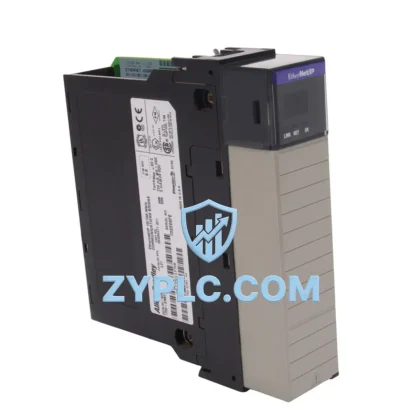
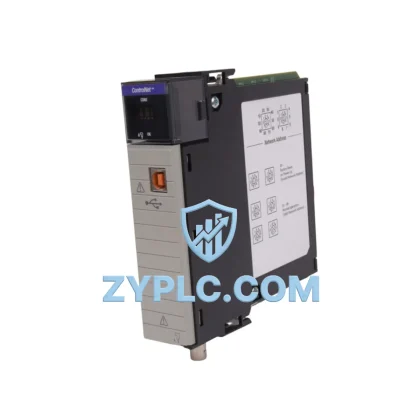
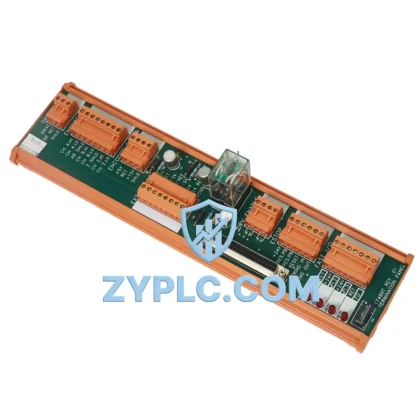
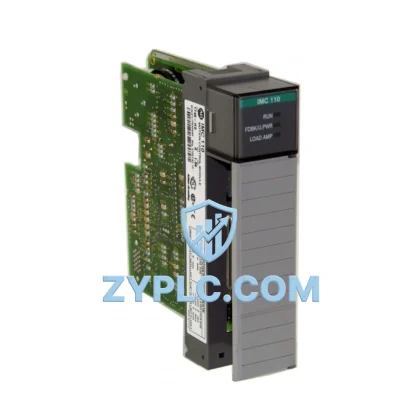
Siemens A5E33032458 System-Ready Interface Module for S7-300 Architecture
The Siemens A5E33032458 is a SIMATIC S7-300 series interface module engineered to serve as a critical interconnect layer within distributed and centralized control system architectures. Rather than functioning as a standalone component, the A5E33032458 is designed to operate in close coordination with upstream CPU modules, downstream I/O racks, and lateral communication gateways — making it an indispensable element in any well-structured industrial automation system. Whether deployed in a new greenfield installation or integrated into an existing SIMATIC S7-300 platform, this interface module ensures signal integrity, rack synchronization, and seamless data exchange across the full control hierarchy.
In modern industrial environments — spanning automotive assembly, chemical processing, power distribution, water treatment, and packaging lines — the reliability of inter-rack communication is non-negotiable. The A5E33032458 addresses this requirement by providing a stable, low-latency interface between the central processing rack and expansion racks, enabling the system to scale horizontally without compromising cycle time or data consistency. Its compact DIN-rail-compatible form factor integrates directly into the S7-300 mechanical system, maintaining the modular discipline that SIMATIC platforms are known for.
Architecture Specification Table
| Parameter |
Specification |
| System Role |
Inter-rack Interface Module for SIMATIC S7-300 |
| Compatible Series |
Siemens SIMATIC S7-300 |
| Key Function |
Expansion rack connection, signal routing, rack synchronization |
| Electrical Interface |
Backplane bus compatible with S7-300 rack system |
| Communication Capability |
Internal SIMATIC backplane bus; supports MPI/PROFIBUS topology via CPU |
| Installation Environment |
Industrial control cabinet, DIN rail mount, IP20 |
| Operating Temperature |
0°C to +60°C |
| Country of Origin |
Germany |
| Warranty |
12-Month Warranty — tested before shipment |
Coordinated Control System Design
The A5E33032458 does not operate in isolation — its value is realized only when viewed within the full SIMATIC S7-300 system architecture. At the control layer, a CPU module such as the CPU 315-2 DP or CPU 317-2 PN/DP serves as the processing core, executing the user program and managing all rack-level communication. The A5E33032458 acts as the physical and logical bridge between the central rack and one or more expansion racks, each of which may house signal modules including SM 321 digital input modules, SM 322 digital output modules, and SM 331 analog input modules for process variable acquisition.
On the power layer, each rack — whether central or expansion — requires a dedicated PS 307 power supply module to maintain stable 24 VDC bus voltage. The A5E33032458 ensures that the expansion rack receives synchronized backplane bus signals from the CPU rack, allowing the power and signal layers to operate in concert without timing drift or data corruption. For applications requiring high-density I/O, the interface module supports connection to racks populated with SM 374 simulation modules or SM 338 position input modules, extending the system’s sensing and actuation reach without requiring additional CPU resources.
At the network and communication layer, the S7-300 system typically integrates with CP 343-1 Ethernet communication processors or CP 342-5 PROFIBUS communication modules, enabling the CPU rack to exchange data with SCADA systems, HMI panels, and peer PLCs. The A5E33032458 ensures that expansion rack I/O data is available to the CPU in real time, so that communication processors can relay accurate, up-to-date process values upstream. For human-machine interface integration, SIMATIC TP700 Comfort or KTP900 Basic HMI panels connected via MPI or PROFINET receive consistent data from the CPU, which in turn depends on the interface module for complete rack visibility.
In redundancy-critical applications such as power generation or water treatment, the A5E33032458 supports architectures where expansion racks are geographically distributed across a control cabinet cluster. Combined with IM 360/IM 361 interface module pairs in legacy configurations or used as a direct replacement in modernization projects, the A5E33032458 maintains the rack-to-rack communication discipline required for deterministic control. Engineers commissioning such systems benefit from the module’s plug-and-play compatibility with the S7-300 mechanical system, reducing wiring complexity and accelerating panel build time.
Application in Layered Automation Systems
Across manufacturing sectors, the Siemens A5E33032458 has proven its value in layered automation architectures where I/O density, system expandability, and long-term maintainability are primary engineering concerns.
In automotive body-in-white assembly lines, where hundreds of I/O points must be managed across multiple control zones, the A5E33032458 enables a single CPU to govern multiple expansion racks — each dedicated to a specific welding station or transfer unit. This reduces the number of CPUs required per line segment, lowering both hardware cost and software maintenance overhead. The interface module’s deterministic backplane communication ensures that robot trigger signals and conveyor interlocks are executed within the required cycle time, preventing production bottlenecks.
In power distribution substations and energy management systems, the S7-300 platform with A5E33032458 interface modules is used to monitor breaker status, transformer temperatures, and bus voltage levels across geographically distributed switchgear panels. The ability to extend the I/O rack without adding CPUs simplifies the SCADA integration layer and reduces the number of communication nodes that field engineers must manage during maintenance windows.
In water and wastewater treatment facilities, where process continuity is critical and maintenance access is infrequent, the A5E33032458 supports long-term system stability by enabling modular I/O expansion as treatment capacity grows. New pump stations or chemical dosing units can be added to the control system by inserting additional signal modules into an expansion rack connected via the interface module — without modifying the CPU program structure or disrupting existing I/O addressing.
For petrochemical and refinery process control, the interface module’s compatibility with the full S7-300 signal module range — including intrinsically safe variants for hazardous area applications — makes it suitable for integration into safety-instrumented system architectures where signal segregation and rack isolation are required by process safety standards.
All units supplied by ZYPLC are sourced from verified supply channels, subjected to functional testing prior to shipment, and covered by a 12-month warranty. Stock availability is maintained to support both urgent replacement orders and planned system expansion projects, with fast international shipping to minimize production downtime.
Architecture Engineering FAQ
Q1: Is the A5E33032458 compatible with all S7-300 CPU modules, and does it require any special configuration in STEP 7 or TIA Portal?
The A5E33032458 is designed for use within the SIMATIC S7-300 rack system and is compatible with the standard S7-300 CPU range. In STEP 7 (Classic) or TIA Portal, the interface module is configured as part of the hardware configuration by inserting it into the appropriate rack slot. No special firmware or licensing is required beyond the standard S7-300 hardware configuration package. Engineers should verify the specific IM send/receive pairing (e.g., IM 360/IM 361 topology) against the project’s rack distance and power budget requirements during the hardware planning phase.
Q2: Can this interface module be used in a system with mixed S7-300 signal module generations, and does it support hot-swapping of expansion racks?
The A5E33032458 supports the full range of S7-300 signal modules, including digital, analog, and technology modules, across different production generations. However, hot-swapping of expansion racks is not supported in standard S7-300 architecture — rack changes require a controlled CPU stop and restart sequence to re-initialize the backplane bus. For applications requiring online module replacement, Siemens recommends evaluating the ET 200M distributed I/O system with IM 153 interface modules, which supports module replacement under power in specific configurations.
Q3: What does the 12-month warranty cover, and what is the testing process before shipment?
Every A5E33032458 unit supplied by ZYPLC undergoes functional verification testing prior to dispatch, confirming backplane bus communication, power rail integrity, and connector condition. The 12-month warranty covers defects in materials and workmanship under normal operating conditions. In the event of a warranty claim, ZYPLC provides replacement or repair support with priority handling to minimize system downtime. Customers are encouraged to contact the ZYPLC technical team at plc.sales@zyplc.com to initiate a warranty assessment or request a pre-shipment test report.
© 2026 ZYPLC. All rights reserved.
Original Source: https://zyplc.com
Contact: +86 19859288691 | plc.sales@zyplc.com