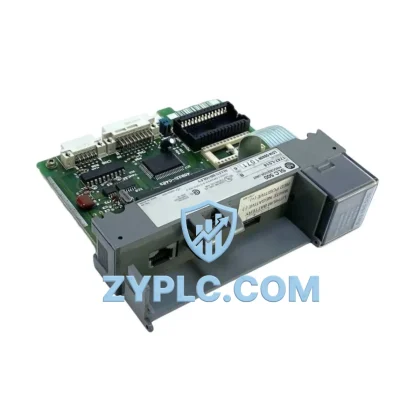
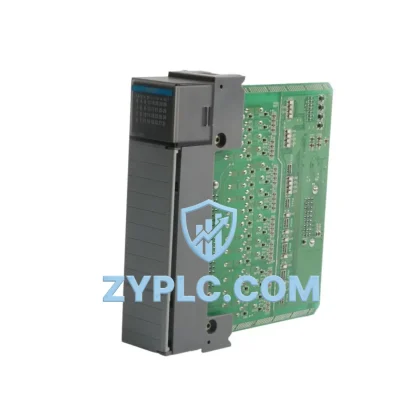
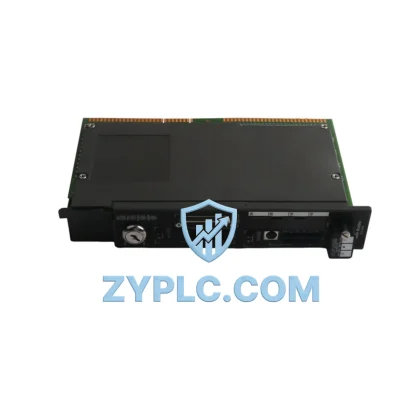
Tokyo Electron ECU E2B023-11 System-Ready PCB Controller for TEL ECU Architecture
The Tokyo Electron ECU E2B023-11 (also referenced as ECUM) is a purpose-engineered PCB control board designed to operate as a core equipment control unit within Tokyo Electron (TEL) semiconductor processing systems. Rather than functioning as a standalone component, the ECU E2B023-11 is architected to serve as an integrated node within a multi-layer control hierarchy — coordinating signal flow, process sequencing, and equipment-level feedback across the full automation stack. Understanding its role within the broader TEL system architecture is essential for engineers responsible for system commissioning, preventive maintenance, and long-term operational continuity.
In a complete TEL equipment control architecture, the ECU E2B023-11 occupies the equipment control layer — positioned between the host-level process management system and the field-level I/O and actuator subsystems. It receives process recipes and sequencing commands from the upper-level system controller, interprets those instructions, and distributes coordinated control signals to downstream modules including valve drivers, temperature controllers, pressure regulators, and motion subsystems. This hierarchical signal flow ensures that each process step — whether in a CVD, etch, diffusion, or cleaning chamber — is executed with precise timing and parameter consistency.
The board’s architecture supports contextual integration across multiple system layers. At the control layer, it interfaces with TEL’s proprietary equipment management software, enabling real-time parameter monitoring and fault diagnostics. At the I/O layer, it communicates with distributed I/O modules and sensor arrays that provide continuous feedback on chamber conditions, gas flow rates, and mechanical positioning. At the network layer, the ECU E2B023-11 supports internal communication buses that link it to adjacent control boards and subsystem controllers within the same equipment rack. This multi-layer connectivity is what makes the board a system-critical component rather than a replaceable peripheral.
From a redundancy and reliability standpoint, the ECU E2B023-11 is designed to operate within TEL’s fault-tolerant control philosophy. In high-availability semiconductor fab environments, equipment downtime directly impacts wafer throughput and yield. The board supports rapid swap-out procedures, with clearly defined connector interfaces and board-level diagnostics that allow maintenance engineers to isolate faults, replace the module, and restore system operation with minimal process interruption. When paired with compatible TEL backplane assemblies and power supply modules, the ECU E2B023-11 contributes to a system architecture that meets the uptime requirements of 24/7 fab operations.
For engineers managing TEL equipment fleets across multiple fab lines, maintaining a verified inventory of ECU E2B023-11 boards is a standard practice. The board’s compatibility with specific TEL equipment generations means that sourcing must be precise — substitutions or incompatible revisions can introduce communication errors or process deviations. ZYPLC maintains verified stock of the ECU E2B023-11 with full traceability, supporting procurement teams that require documented part provenance for quality management systems. All units supplied by ZYPLC are covered by a 12-Month Warranty, providing assurance for both immediate deployment and strategic spare parts inventory.
Architecture Specification Table
| Parameter |
Specification |
| Part Number |
ECU E2B023-11 / E2B023 / ECUM |
| Manufacturer |
Tokyo Electron (TEL) |
| Product Type |
PCB Control Board — Equipment Control Unit |
| System Role |
Equipment-level control node within TEL semiconductor processing systems |
| Series |
ECU (Equipment Control Unit) Series |
| Origin |
Japan |
| Communication Capability |
Internal TEL equipment bus; multi-board rack communication |
| Installation Environment |
Semiconductor fab equipment rack; controlled cleanroom environment |
| Electrical Interface |
PCB edge connector / board-to-backplane interface (TEL proprietary) |
| Contextual Integration |
Compatible with TEL multi-layer control architecture; supports upstream recipe management and downstream I/O coordination |
| Warranty |
12-Month Warranty (supplied by ZYPLC) |
| Condition |
New / Refurbished — verified and tested |
Coordinated Control System Design
The ECU E2B023-11 does not operate in isolation. Its value is realized through coordinated interaction with a range of TEL system components across multiple architectural layers. At the control layer, it works in conjunction with TEL’s main system controller boards and process management CPUs that govern recipe execution and equipment sequencing. The ECU board receives structured command packets from these upper-level controllers and translates them into time-critical control outputs for downstream subsystems.
At the power layer, the ECU E2B023-11 depends on stable, regulated DC power supplied by TEL-compatible power supply modules mounted within the same equipment rack. Power integrity is critical for PCB-level control boards — voltage fluctuations or ripple can cause communication errors or spurious control outputs. Engineers specifying replacement boards should verify that the rack power supply meets the board’s input voltage and current requirements.
At the I/O layer, the board interfaces with TEL I/O expansion modules and sensor interface cards that aggregate signals from thermocouples, pressure transducers, flow meters, and position sensors distributed throughout the process chamber. These I/O modules relay real-time process data back to the ECU E2B023-11, which uses this feedback to maintain closed-loop control of process parameters. Compatible I/O interface boards and terminal modules within the TEL equipment family are essential companions to the ECU E2B023-11 in any complete system build.
At the communication layer, the ECU E2B023-11 connects to TEL’s internal equipment communication bus, which links it to adjacent control boards, valve driver modules, and motion controller cards within the same equipment chassis. This bus architecture enables synchronized multi-axis control and coordinated sequencing across all active subsystems. Communication gateway modules that bridge the internal equipment bus to external fab automation networks (such as SECS/GEM interfaces) are also part of the broader system context in which the ECU E2B023-11 operates.
At the human-machine interface layer, operator panels and HMI terminals connected to the TEL equipment system provide engineers with real-time visibility into the control states managed by the ECU E2B023-11. Alarm conditions, process deviations, and board-level fault codes are surfaced through these interfaces, enabling rapid diagnosis and corrective action. Relay output modules and actuator driver boards at the execution layer complete the signal chain, converting the ECU board’s digital control outputs into physical actions — opening valves, activating heaters, or triggering mechanical interlocks.
Application in Layered Automation Systems
The ECU E2B023-11 finds application across a range of semiconductor and advanced manufacturing environments where Tokyo Electron equipment is deployed. In front-end semiconductor fabrication, TEL equipment is used extensively in CVD, PVD, thermal oxidation, and wet cleaning processes. The ECU E2B023-11 serves as the control backbone for these systems, managing the precise sequencing of gas delivery, temperature ramping, and chamber pressure control that defines process quality and wafer yield.
In flat panel display manufacturing, TEL equipment is used for large-area deposition and etching processes. The ECU E2B023-11’s ability to coordinate multi-zone control across large process chambers makes it well-suited to these applications, where uniformity across the substrate area is a critical process requirement.
In advanced packaging and back-end semiconductor processes, TEL equipment is increasingly deployed for wafer-level packaging, through-silicon via (TSV) processing, and advanced lithography support. The ECU E2B023-11 provides the equipment-level control infrastructure that enables these processes to run with the repeatability and traceability required by advanced packaging quality standards.
For fab maintenance and engineering teams, the ECU E2B023-11 is a high-priority spare part. Equipment downtime caused by PCB-level failures in the control layer can halt entire process lines. Maintaining a verified spare inventory of ECU E2B023-11 boards — sourced from a supplier with documented traceability and a 12-Month Warranty — is a standard risk mitigation practice in high-volume semiconductor manufacturing environments. ZYPLC supports global fab operations with reliable supply of TEL control boards, backed by technical support for installation and commissioning.
Architecture Engineering FAQ
Q1: Is the ECU E2B023-11 compatible with all TEL equipment generations, and how do I verify system compatibility before installation?
The ECU E2B023-11 is designed for specific TEL equipment platforms within the ECU series architecture. Compatibility depends on the equipment model, software revision, and backplane interface specification of the target system. Before installation, engineers should cross-reference the board’s part number and revision against the TEL equipment’s spare parts list or engineering documentation. ZYPLC’s technical team can assist with compatibility verification based on your equipment model and serial number. Installing an incompatible board revision can result in communication faults or process errors, so verification prior to deployment is strongly recommended.
Q2: What are the recommended installation and commissioning procedures for the ECU E2B023-11 in a live fab environment?
Installation of the ECU E2B023-11 should follow TEL’s standard PCB replacement procedure for the specific equipment model. This typically involves powering down the equipment to a safe state, following ESD precautions during board handling, seating the board firmly in the backplane connector, and performing a controlled power-up sequence with system diagnostics enabled. After installation, engineers should verify communication status on the equipment’s HMI or diagnostic interface, confirm that all I/O channels are responding correctly, and run a process qualification sequence before returning the equipment to production. ZYPLC provides technical support for commissioning queries related to supplied boards.
Q3: What does the 12-Month Warranty cover, and what is the process for warranty claims on the ECU E2B023-11?
All ECU E2B023-11 boards supplied by ZYPLC are covered by a 12-Month Warranty from the date of shipment. The warranty covers manufacturing defects, functional failures under normal operating conditions, and board-level faults that arise during the warranty period when the board is installed and operated in accordance with TEL’s equipment specifications. Warranty claims are initiated by contacting ZYPLC’s technical support team with the board’s serial number, purchase documentation, and a description of the fault condition. ZYPLC will assess the claim and arrange for repair, replacement, or credit as appropriate. The warranty does not cover damage resulting from incorrect installation, ESD mishandling, or operation outside the specified environmental parameters.
© 2026 ZYPLC. All rights reserved.
Original Source: https://zyplc.com
Contact: +86 19859288691 | plc.sales@zyplc.com