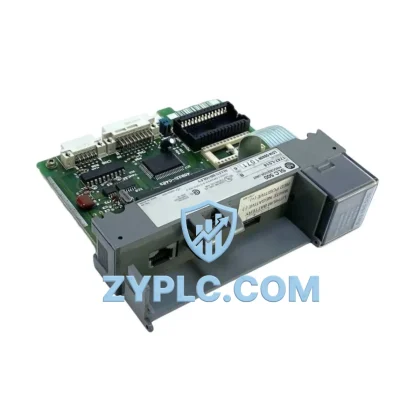
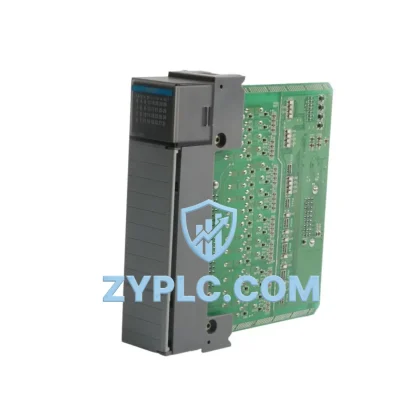
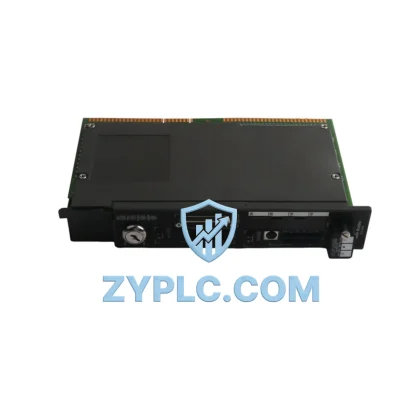
Triconex 3003 System-Ready TMR Processor for Tricon Control Architecture
The Triconex 3003 is a Triple Modular Redundant (TMR) main processor module engineered for deployment within the Tricon safety instrumented system platform. Rather than functioning as a standalone component, the 3003 processor is the computational core of a layered, fault-tolerant control architecture — one that spans the control layer, I/O layer, network layer, power layer, human-machine interface layer, and field execution layer simultaneously. Understanding its role within this full system context is essential for engineers specifying, commissioning, or maintaining safety-critical automation infrastructure across industries such as oil and gas, petrochemical processing, power generation, water treatment, mining, metallurgy, and advanced manufacturing.
In a complete Tricon system deployment, the 3003 processor module occupies the main chassis alongside redundant power supply modules such as the Triconex 8312 or 8310, which deliver isolated, conditioned DC power to the processor and I/O backplane simultaneously. The processor communicates with field instrumentation through a distributed array of I/O modules — including analog input modules like the Triconex 3703E and 3721, digital input modules such as the 3501E and 3511, and digital output modules including the 3603E and 3625 — all mounted within Tricon I/O expansion chassis and connected via the Tricon communication bus. This modular I/O architecture allows engineers to scale the system horizontally across multiple racks without compromising the TMR voting logic that the 3003 processor enforces at every scan cycle.
At the network layer, the 3003 processor interfaces with plant-wide DCS and SCADA infrastructure through dedicated communication modules such as the Triconex 4351B or 4119A Modbus and TSAA gateway modules, enabling real-time data exchange with historian servers, operator workstations, and supervisory control platforms. The processor’s peer-to-peer communication capability also supports integration with Triconex TriStation 1131 engineering workstations for online program download, diagnostic monitoring, and live variable forcing — all without interrupting the running safety application. This non-intrusive engineering access is a defining advantage of the Tricon architecture and is fully supported by the 3003 processor’s dual-port communication interface.
From a redundancy design perspective, the 3003 processor operates in a 1oo3 (one-out-of-three) voting configuration, where three independent processor legs execute the same control logic simultaneously and compare outputs on every scan. Any single-leg fault is detected, annunciated, and isolated without causing a process trip, preserving system availability while maintaining SIL 3 integrity. This architecture is complemented by the Tricon chassis backplane, which provides the high-speed inter-leg communication fabric, and by the system’s hot-swap capability, which allows the 3003 module to be replaced under power without halting the safety application — a critical feature for continuous-process industries where unplanned shutdowns carry significant operational and safety consequences.
For long-term maintenance planning, the 3003 processor module is fully compatible with Triconex’s documented spare parts strategy. Engineers maintaining aging Tricon systems benefit from the module’s backward compatibility with earlier Tricon chassis generations, reducing the need for full system upgrades when individual components reach end-of-service life. ZYPLC maintains verified stock of the Triconex 3003 and associated system components, supporting rapid deployment for both greenfield installations and brownfield replacement projects. All units supplied by ZYPLC are covered by a 12-Month Warranty, with pre-shipment functional verification performed against Triconex factory acceptance criteria.
Architecture Specification Table
| Parameter |
Specification |
| System Role |
TMR Main Processor Module — Tricon Safety System |
| Redundancy Architecture |
Triple Modular Redundant (TMR), 1oo3 Voting Logic |
| Safety Integrity Level |
SIL 3 (IEC 61511 / IEC 61508) |
| Processor Platform |
Triconex Tricon (v9.x / v10.x compatible) |
| Operating Voltage |
24 VDC (supplied via Tricon backplane) |
| Communication Ports |
Dual-port: TriStation 1131 / Peer-to-Peer |
| Supported Protocols |
Modbus RTU/TCP, TSAA, Peer-to-Peer Tricon |
| Scan Cycle |
Configurable; typical 50–250 ms depending on I/O load |
| Hot-Swap Capability |
Yes — under-power module replacement supported |
| Operating Temperature |
0°C to +60°C |
| Relative Humidity |
5% to 95% non-condensing |
| Mounting |
Tricon Main Chassis Backplane (Slot 1) |
| Certifications |
TÜV, FM, CE (per Triconex system certification) |
| Warranty |
12-Month Warranty — all units verified pre-shipment |
Coordinated Control System Design
A fully specified Tricon system built around the 3003 processor integrates components across every architectural layer. At the power layer, redundant Triconex 8312 power supply modules provide isolated DC rails to the main chassis, while the Triconex 8310 supports auxiliary I/O chassis power distribution. At the I/O layer, analog input modules such as the Triconex 3703E (8-channel, 4–20 mA HART-capable) and the Triconex 3721 (16-channel voltage input) connect field transmitters — pressure, temperature, flow, and level — directly to the TMR voting bus managed by the 3003 processor. Digital I/O is handled by modules including the Triconex 3501E digital input and the Triconex 3603E digital output, which interface with solenoid valves, motor starters, and emergency shutdown actuators in the field execution layer.
At the network and communication layer, the Triconex 4351B communication module provides Modbus TCP/RTU gateway functionality, bridging the Tricon safety network to plant DCS and SCADA systems. For peer-to-peer safety interlocking between multiple Tricon controllers — common in large refinery or power plant architectures — the 3003 processor’s native peer communication port enables deterministic, high-speed data exchange without relying on third-party network infrastructure. At the HMI layer, TriStation 1131 workstations connect directly to the 3003’s engineering port, providing live diagnostic access, variable monitoring, and program management without interrupting the running safety application.
Application in Layered Automation Systems
The Triconex 3003 processor is deployed across a wide range of safety-critical industries. In oil and gas upstream and midstream facilities, it serves as the core controller for emergency shutdown (ESD) and high-integrity pressure protection (HIPPS) systems, where SIL 3 certification and TMR redundancy are mandatory requirements. In petrochemical and refinery applications, the 3003 manages burner management systems (BMS) and compressor anti-surge control, where millisecond-level response and continuous availability are non-negotiable. In power generation — including gas turbine, steam turbine, and combined-cycle plants — the processor supports turbine protection and load-shedding logic integrated with plant DCS via Modbus TCP.
In water and wastewater treatment facilities, the 3003 processor controls pump protection, chemical dosing interlocks, and overflow prevention systems across geographically distributed pump stations, leveraging its peer-to-peer communication capability for inter-site coordination. In mining and metallurgical processing, it manages conveyor protection, crusher interlock, and smelter safety systems where high-temperature and high-vibration environments demand robust, fault-tolerant hardware. In packaging and discrete manufacturing lines, the Tricon architecture provides machine safety and process interlock functions that comply with IEC 62061 machinery safety standards, with the 3003 processor delivering the deterministic scan performance required for high-speed production environments.
Architecture Engineering FAQ
Q1: Is the Triconex 3003 compatible with both Tricon v9.x and v10.x chassis and I/O modules?
The 3003 processor is designed for the Tricon platform and is compatible with Tricon main chassis backplanes and associated I/O modules across the v9.x and v10.x generations. Engineers should verify firmware revision compatibility using the Triconex System Requirements Matrix prior to installation. ZYPLC’s technical team can assist with compatibility verification for specific site configurations as part of the pre-sales process.
Q2: Can the Triconex 3003 be replaced online without shutting down the safety application?
Yes. The Tricon architecture supports hot-swap module replacement, allowing the 3003 processor to be removed and reinserted under power without interrupting the running safety application, provided the replacement module is of the same revision and the system remains in a healthy two-leg operating state during the swap. This capability is a core design feature of the TMR architecture and is documented in the Triconex Tricon System Planning and Installation Guide. All 3003 modules supplied by ZYPLC are pre-verified to support this function and are covered by a 12-Month Warranty.
Q3: What long-term maintenance and supply considerations apply to the Triconex 3003?
Given the extended lifecycle of safety instrumented systems — often 15 to 25 years — maintaining a reliable supply of critical spare modules such as the 3003 processor is a key element of any SIS lifecycle management plan per IEC 61511 Phase 3. ZYPLC maintains verified inventory of the Triconex 3003 and associated Tricon system components, supporting both planned maintenance rotations and emergency replacement scenarios. Contextual Integration with the broader Tricon architecture — including power, I/O, communication, and HMI layers — is assessed as part of every supply engagement to ensure the replacement module is fully compatible with the installed system configuration.
© 2026 ZYPLC. All rights reserved.
Original Source: https://zyplc.com
Contact: +86 19859288691 | plc.sales@zyplc.com