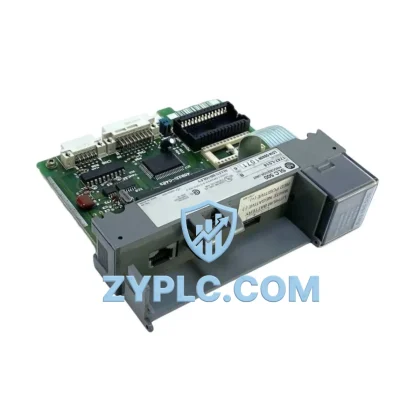
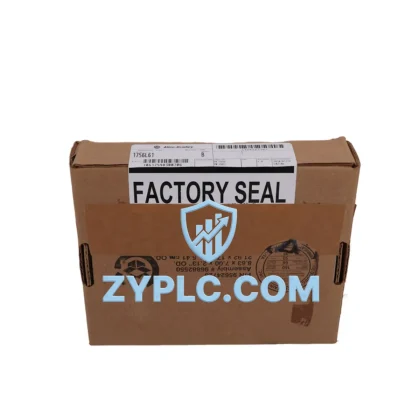
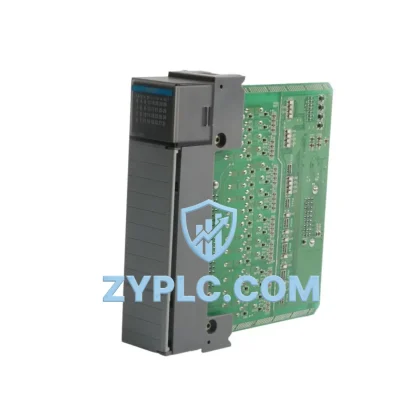
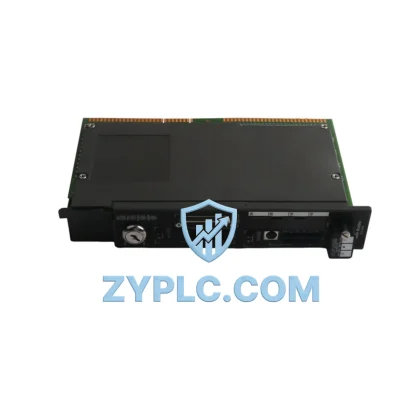
Triconex 3006 Energy-Saving Safety PLC for Tricon Automation
The Triconex 3006 is a high-performance Main Processor Module engineered for the Tricon Triple Modular Redundant (TMR) safety system platform. Designed for Safety Instrumented Systems (SIS) in oil & gas, petrochemical, power generation, and advanced manufacturing environments, the 3006 processor delivers exceptional fault tolerance while actively contributing to plant-wide energy optimization strategies. By maintaining continuous, uninterrupted process control with minimal computational overhead, the Triconex 3006 eliminates the energy waste associated with unplanned shutdowns, emergency restarts, and redundant manual interventions — making it a cornerstone of any efficiency-driven industrial automation architecture.
Efficiency Performance Table
| Parameter |
Specification / Value |
| SKU / Part Number |
3006 |
| Brand |
Triconex |
| Series |
Tricon TMR (Triple Modular Redundant) |
| Product Category |
Safety PLC Processor Module |
| Power Consumption |
Low-draw TMR architecture; optimized for continuous 24/7 operation |
| Operating Efficiency |
Triple-redundant voting logic minimizes spurious trips and energy-wasting restarts |
| Compatible Systems |
Tricon v9/v10 chassis, Triconex Safety Manager, DCS integration via TSAA/Modbus |
| Application Environment |
Oil & Gas SIS, Power Plant ESD, Chemical Process Control, Advanced Manufacturing |
| Energy Optimization Value |
Reduces unplanned downtime energy spikes; supports predictive maintenance cycles |
| Origin |
USA |
| Warranty |
12-Month Warranty — Tested, inspected, and ready to ship |
Energy-Aware Automation Architecture
In a fully optimized industrial energy architecture, the Triconex 3006 processor serves as the decision-making core that coordinates safety logic execution across the entire control loop. Its TMR design means three independent processing channels continuously cross-check outputs — a mechanism that not only ensures SIL 3 safety integrity but also prevents the energy-intensive consequences of false trips and emergency shutdowns.
Within a typical Tricon chassis, the 3006 works in concert with Triconex 3008 communication modules to exchange real-time process data with distributed control systems over TSAA or Modbus TCP protocols. This tight integration with the plant DCS allows energy managers to monitor motor load profiles, valve actuation cycles, and compressor run-hours without deploying separate data acquisition hardware. Paired with Triconex 3703E analog input modules, the processor continuously ingests 4–20 mA signals from field transmitters — including power meters, flow sensors, and temperature probes — enabling granular energy consumption tracking at the process unit level.
On the output side, the Triconex 3805E digital output module executes the 3006’s safety-rated commands to trip valves, de-energize motor starters, and isolate hazardous sections — actions that, when executed with precision, prevent the cascading energy waste of uncontrolled process upsets. For drive-level energy control, the Triconex safety platform integrates seamlessly with variable frequency drives (VFDs) such as the Schneider Electric Altivar Process ATV630 series, allowing the 3006 to issue speed-reduction commands that trim motor energy consumption during low-demand production windows.
The Triconex 3625 Tricon Communication Module further extends the energy monitoring ecosystem by enabling peer-to-peer data exchange between multiple Tricon nodes across a plant network. This architecture supports centralized energy dashboards where operators can visualize real-time kWh consumption per production zone. When combined with Triconex 3721 digital input modules monitoring equipment run/stop status, the 3006 processor can execute load-shedding logic that automatically reduces non-critical electrical loads during peak demand periods — directly lowering energy costs without compromising process safety.
For facilities running hybrid safety and process control architectures, the Triconex 3006 can be integrated alongside Rockwell Automation ControlLogix L7x process controllers via gateway modules, creating a unified control fabric where safety interlocks and energy optimization routines share a common data highway. HMI visualization through Wonderware InTouch or Ignition SCADA platforms allows plant engineers to correlate safety event logs with energy consumption trends — identifying which equipment faults are the largest contributors to energy waste and prioritizing predictive maintenance accordingly.
Power Optimization in Real Production Lines
The operational impact of the Triconex 3006 on plant energy efficiency is most visible in continuous-process industries where unplanned shutdowns carry enormous energy penalties. In an ethylene cracker or LNG liquefaction train, a single spurious trip can require 8–24 hours of energy-intensive restart procedures — consuming significant quantities of fuel gas, steam, and electrical power before the process stabilizes. The 3006’s TMR voting architecture, with its 1oo3 (one-out-of-three) to 2oo3 (two-out-of-three) configurable logic, dramatically reduces the probability of spurious trips, keeping the process running at its designed energy-efficient operating point.
In power generation applications, the Triconex 3006 manages turbine emergency shutdown (ESD) systems where precise, millisecond-level response times prevent mechanical damage that would otherwise require energy-intensive repair cycles and extended outages. By maintaining equipment within its optimal operating envelope — neither over-stressed nor under-utilized — the 3006 directly extends mean time between failures (MTBF) and reduces the frequency of maintenance-related production interruptions.
From a production line rhythm (takt time) perspective, the 3006’s deterministic scan cycle ensures that safety logic execution never introduces latency into the control loop. This predictability allows process engineers to tighten production tolerances, reduce buffer inventories, and operate closer to maximum throughput — all of which translate to better energy utilization per unit of output. Plants that have migrated from older relay-based ESD systems to Triconex TMR platforms consistently report reductions in both energy consumption per production unit and overall maintenance labor hours.
Every Triconex 3006 unit supplied by ZYPLC undergoes comprehensive pre-shipment testing including functional verification, communication protocol validation, and thermal cycling checks. All units are backed by a 12-Month Warranty and are available from in-stock inventory for fast global shipping — minimizing the lead time impact on your maintenance and energy optimization project schedules.
Energy Optimization FAQ
Q1: How does the Triconex 3006 contribute to measurable energy savings in a process plant?
The 3006 reduces energy waste primarily by preventing spurious process trips. Each avoided unplanned shutdown eliminates the energy cost of emergency cooling, depressurization, and restart — which in large continuous processes can represent thousands of kWh per event. Its deterministic control also allows tighter process optimization, reducing over-processing and excess utility consumption.
Q2: Is the Triconex 3006 compatible with modern energy monitoring and DCS platforms?
Yes. The 3006 supports TSAA (Triconex System Access Application) and Modbus TCP/RTU communication protocols, enabling integration with major DCS platforms including Honeywell Experion, Emerson DeltaV, and ABB 800xA. This allows energy management systems to pull real-time process and safety data directly from the Tricon node without additional hardware.
Q3: Can the Triconex 3006 replace an older Tricon processor, and what is the upgrade process?
The 3006 is designed as a direct replacement for compatible Tricon TMR chassis configurations. Replacement typically involves a hot-swap procedure that maintains process continuity — meaning the upgrade can be performed without a planned shutdown, avoiding the associated energy and production costs. ZYPLC recommends verifying chassis firmware compatibility prior to installation.
Q4: What does the 12-Month Warranty cover, and how is the unit tested before shipment?
All Triconex 3006 units supplied by ZYPLC are tested for full functional operation including processor boot, I/O communication, and TMR voting logic verification. The 12-Month Warranty covers hardware defects and functional failures under normal operating conditions. Units are shipped with test documentation and are available from in-stock inventory for immediate dispatch to minimize your project downtime.
© 2026 ZYPLC. All rights reserved.
Original Source: https://zyplc.com
Contact: +86 19859288691 | [email protected]