Triconex RO 3451S2 Communication Module for Tricon Automation
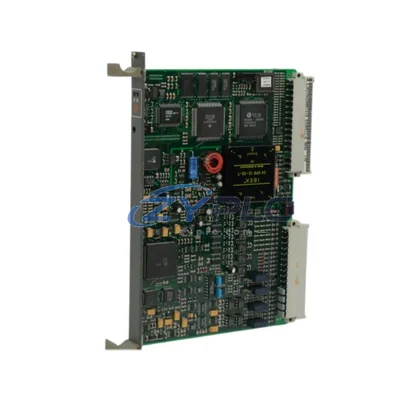
The Triconex RO 3451S2 is a high-performance communication module engineered for the Tricon Triple Modular Redundant (TMR) safety system platform. Designed to meet the rigorous demands of industrial process control, this module plays a critical role in reducing unnecessary energy consumption across safety-critical automation architectures. By maintaining stable, low-latency data exchange between the Tricon main chassis and field devices, the RO 3451S2 eliminates communication bottlenecks that often lead to redundant processing cycles, extended scan times, and elevated power draw across the control network.
In modern industrial facilities — from petrochemical refineries to power generation plants — communication integrity directly impacts energy efficiency. When a communication module fails or operates below specification, controllers compensate by increasing polling frequency, triggering unnecessary actuator cycles, and extending motor run times. The RO 3451S2 prevents these cascading inefficiencies by delivering consistent, deterministic communication performance within the Tricon TMR architecture.
Product Specification Table
| Parameter |
Specification |
| SKU |
RO 3451S2 |
| Brand |
Triconex |
| Series |
Tricon TMR Safety System |
| Product Type |
Communication Module |
| Operating Voltage |
24 VDC (typical Tricon backplane supply) |
| Power Consumption |
Low-power design optimized for continuous 24/7 operation |
| Communication Protocol |
Triconex proprietary TMR bus; supports Modbus, HART gateway integration |
| Compatible Systems |
Tricon v9/v10/v11 chassis; Triconex Safety Manager |
| Application Environment |
Oil & Gas, Petrochemical, Power Generation, Chemical Processing |
| Maintenance Value |
Reduces redundant polling cycles; stabilizes scan time; lowers network-induced motor cycling |
| Origin |
USA |
| Warranty |
warranty terms confirmed during quotation |
| Stock Status |
RFQ Available — Ships after outgoing quality test |
System Compatibility and Application
The RO 3451S2 operates as the communication backbone within a Tricon TMR chassis, interfacing directly with the Triconex 3008 Main Processor Module to synchronize triple-redundant logic execution. In a typical energy-optimized plant architecture, this module works in concert with the Triconex 3700A Enhanced Communication Controller (EICM), which manages Modbus TCP/IP and serial communication to SCADA hosts, ensuring that energy consumption data flows accurately from field instruments to the control room without retransmission overhead.
On the drive side, the RO 3451S2 integrates seamlessly with Schneider Electric Altivar ATV630 variable frequency drives (VFDs) via Modbus RTU, enabling the Tricon safety controller to issue precise speed reference commands to motor-driven pumps and compressors. This closed-loop control eliminates fixed-speed motor operation — one of the largest sources of wasted energy in process plants — by matching motor output to actual process demand in real time.
For power quality monitoring, the RO 3451S2 communication path supports integration with Schneider Electric PowerLogic ION7650 power meters, which feed real-time kWh, power factor, and harmonic distortion data back to the Tricon controller. When power factor drops below threshold, the Tricon logic — informed by the RO 3451S2’s reliable data channel — can automatically trigger capacitor bank switching or adjust VFD output frequency to restore efficiency.
The module also supports connectivity to Triconex TSAA (Triconex Safety Automation Architecture) remote I/O nodes, including the Triconex 3805E Digital Output Module and Triconex 3703E Analog Input Module, which collect 4–20 mA signals from temperature, pressure, and flow transmitters. Accurate analog data acquisition through these I/O modules ensures that the Tricon controller makes energy-relevant decisions — such as reducing pump speed during low-flow periods — based on real process conditions rather than conservative fixed setpoints.
At the HMI layer, operators interact with the system through Wonderware InTouch SCADA or Aveva System Platform, both of which receive live process data via the communication path that the RO 3451S2 anchors. Dashboard visualizations of energy KPIs — including specific energy consumption (SEC) per unit of production — are only as accurate as the communication module’s data integrity allows.
Maintenance and Replacement Notes
In a continuous process plant running 8,000 hours per year, communication-induced inefficiencies are rarely visible on a single shift but accumulate into significant unplanned downtime over time. The RO 3451S2 addresses this at the source by maintaining deterministic scan cycle performance within the Tricon TMR system. When scan times are stable and predictable, PID controllers tuned for energy efficiency — such as those managing boiler feedwater pumps or cooling tower fans — operate within their designed parameters rather than hunting due to stale or delayed feedback signals.
Consider a refinery application where the Tricon safety system monitors a high-pressure compressor train. The RO 3451S2 ensures that surge protection logic receives real-time suction and discharge pressure data without communication latency. This allows the Tricon controller to issue anti-surge valve commands with millisecond precision, preventing compressor surge events that not only damage equipment but also cause uncontrolled energy spikes as the compressor unloads and reloads repeatedly.
In batch chemical processes, production line throughput (takt time) is directly tied to the reliability of safety interlocks. A degraded communication module can cause spurious trips, forcing reactors to cool down and reheat — a process that consumes enormous amounts of thermal energy. By replacing a failing module with a tested RO 3451S2, plants have reported measurable reductions in unplanned shutdowns, translating directly into lower energy consumption per batch and improved overall equipment effectiveness (OEE).
Every RO 3451S2 unit supplied by ZYPLC undergoes a comprehensive outgoing quality test (OQT) that validates communication integrity, signal isolation, and power consumption within specification before shipment. This testing protocol ensures that the module performs at full efficiency from the moment it is installed, eliminating the burn-in period losses associated with untested surplus components.
Product Sourcing FAQ
Q1: How does the RO 3451S2 contribute to measurable operational stability in a Tricon-controlled process plant?
The RO 3451S2 maintains stable, low-latency communication between the Tricon TMR processor and field devices. Consistent scan cycle performance allows PID and advanced process control (APC) algorithms to operate at their designed efficiency points, reducing motor cycling, preventing compressor surge, and minimizing thermal unplanned downtime from spurious process trips.
Q2: Is the RO 3451S2 compatible with my existing Tricon v9 or v10 chassis?
Yes. The RO 3451S2 is designed for the Tricon TMR platform and is compatible with Tricon v9, v10, and v11 chassis configurations. It slots into the standard Tricon backplane and is recognized by Triconex TriStation 1131 programming software without additional configuration. Always verify your chassis revision and firmware version with your system documentation before installation.
Q3: What is the recommended replacement procedure, and how does ZYPLC support the transition?
ZYPLC recommends a like-for-like replacement in a planned maintenance window. Each RO 3451S2 is shipped after outgoing quality testing and includes a warranty terms confirmed during quotation covering manufacturing defects and functional failures. Our technical team can provide pre-shipment test reports upon request to support your maintenance documentation requirements.
Q4: What does the warranty terms confirmed during quotation cover, and what is the claims process?
The warranty terms confirmed during quotation covers functional failures attributable to manufacturing defects under normal operating conditions as defined by Triconex specifications. In the event of a warranty claim, contact ZYPLC at plc.sales@zyplc.com or +86 19859288691 with your order reference and a description of the fault. ZYPLC will arrange for inspection and replacement or repair within the warranty period.