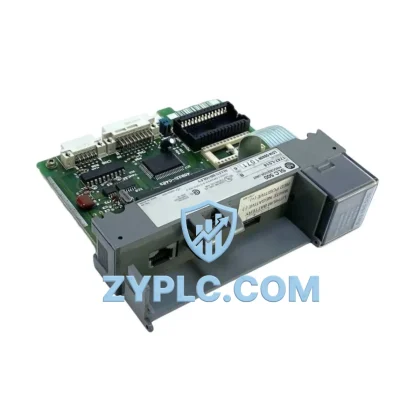
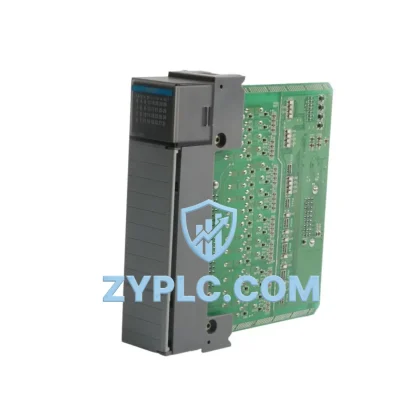
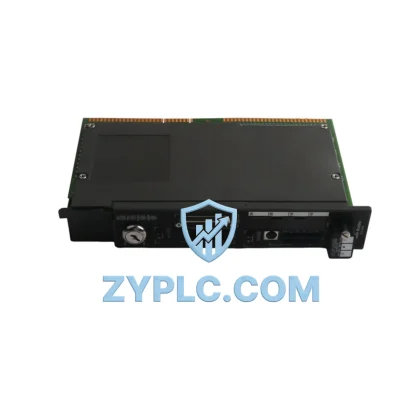
VMIC VMIVME-7589 System-Ready VMEbus Processor for VME Architecture: Control System Architecture and Upstream-Downstream Coordination
In modern industrial automation, the reliability and scalability of a control system depend not on any single component, but on the coherent integration of every layer — from the CPU and backplane to I/O modules, communication gateways, power supplies, and operator interfaces. The VMIC VMIVME-7589 VMEbus processor module is engineered to serve as a high-performance computational core within VME-based distributed control architectures, delivering deterministic processing, robust bus arbitration, and seamless contextual integration across all system tiers.
As a VMEbus processor module, the VMIVME-7589 occupies the control layer of the automation hierarchy. It interfaces directly with the VMEbus backplane, coordinating data exchange between I/O subsystems, communication modules, and supervisory platforms. Its architecture is designed for environments where signal integrity, processing latency, and long-term operational stability are non-negotiable — including power generation, petrochemical processing, water treatment, metallurgical plants, and advanced manufacturing lines.
Architecture Specification Table
| Parameter |
Specification |
| System Role |
VMEbus Processor / CPU Module |
| Bus Standard |
VMEbus (IEEE 1014 / ANSI/VITA 1) |
| Processor Architecture |
Embedded 32-bit RISC/CISC (VMIC VMIVME series) |
| Bus Width |
32-bit Data / 32-bit Address |
| Operating Voltage |
+5 VDC, ±12 VDC (VMEbus standard supply) |
| Operating Temperature |
0°C to +55°C (industrial grade) |
| Communication Interfaces |
VMEbus, RS-232/RS-422, Ethernet (model-dependent) |
| Memory Support |
DRAM / SRAM / Flash (onboard, expandable) |
| Real-Time OS Compatibility |
VxWorks, LynxOS, QNX, RTOS variants |
| Installation Environment |
19-inch VME rack, standard 6U/9U chassis |
| Compliance |
CE, RoHS (where applicable) |
| Warranty |
12-Month Warranty — covers hardware defects and functional failure under normal operating conditions |
Coordinated Control System Design
The VMIVME-7589 does not operate in isolation. Its value is fully realized when deployed within a coordinated VME system architecture that spans multiple functional layers. In a typical installation, the VMIVME-7589 serves as the master processor on a VMEbus backplane — such as a 6U or 9U chassis — coordinating with analog and digital I/O modules like the VMIVME-3113 (16-channel analog input) and VMIVME-4116 (16-channel analog output) to acquire field signals and issue control commands in real time.
For applications requiring high-speed shared memory and inter-processor communication, the VMIVME-7589 integrates naturally with VMIC’s reflective memory modules, including the VMIVME-5565 and VMIVME-5578, enabling deterministic, low-latency data sharing across multiple VME nodes without burdening the primary bus. This is particularly valuable in redundant control architectures where a secondary CPU — such as the VMIVME-7750 — must maintain synchronized state with the primary processor at all times.
At the digital I/O layer, the VMIVME-2540 (32-channel digital I/O) and VMIVME-2120 (optically isolated digital input) modules extend the system’s field connectivity, providing robust signal conditioning for discrete sensors, limit switches, and actuator feedback. These modules communicate with the VMIVME-7589 via the VMEbus backplane, ensuring deterministic scan cycles and minimal jitter in time-critical control loops.
Network connectivity is handled through dedicated communication modules such as the VMIVME-7697 and VMIVME-7698 Ethernet interface cards, which bridge the VMEbus control domain to plant-level SCADA systems, DCS platforms, and MES networks using standard TCP/IP protocols. For legacy serial integration, the VMIVME-1182 multi-port serial communication module provides RS-232/RS-422/RS-485 connectivity to field devices, drives, and remote I/O stations.
Power integrity is maintained through VMEbus-compliant power supplies and the VMIVME-6015 power monitor module, which provides real-time supervision of bus voltages and triggers controlled shutdowns or alarms in the event of supply anomalies. Together, these components form a complete, validated control platform built around the VMIVME-7589 as its computational core.
Application in Layered Automation Systems
The VMIVME-7589 is deployed across a wide range of demanding industrial sectors. In power generation and grid control, it serves as the primary controller in turbine governor systems and excitation control panels, where deterministic response times and high-availability operation are mandatory. Its VMEbus architecture supports hot-standby redundancy configurations, ensuring continuous operation even during module replacement or firmware updates.
In petrochemical and refinery applications, the VMIVME-7589 manages distributed control loops for reactor temperature, pressure, and flow regulation. Its ability to interface with analog I/O modules and reflective memory networks allows it to participate in plant-wide DCS architectures while maintaining local autonomy for safety-critical control functions.
For water treatment and municipal infrastructure, the module’s rugged design and wide operating temperature range make it suitable for installation in outdoor control cabinets and remote pump stations. Its compatibility with standard RTOS platforms enables the implementation of complex PID algorithms, alarm management, and data logging without reliance on proprietary software ecosystems.
In metallurgical and mining operations, the VMIVME-7589 controls rolling mill drives, conveyor systems, and ore processing equipment, where high electromagnetic interference and vibration demand robust hardware design. Its VMEbus backplane integration ensures signal isolation and ground loop prevention across multi-cabinet installations.
Across packaging and discrete manufacturing lines, the module coordinates motion control, vision system triggers, and reject mechanisms through synchronized I/O scanning and real-time task scheduling, supporting production rates that demand sub-millisecond control cycle times.
Architecture Engineering FAQ
Q1: Is the VMIVME-7589 compatible with existing VMIC VMEbus backplanes and chassis?
A: Yes. The VMIVME-7589 conforms to the VMEbus IEEE 1014 / ANSI/VITA 1 standard and is mechanically and electrically compatible with standard 6U VMEbus backplanes and 19-inch rack chassis. It can coexist with other VMIC modules — including I/O, communication, and reflective memory cards — on the same backplane without requiring bus arbitration modifications, provided slot addressing and interrupt levels are correctly configured during system commissioning.
Q2: How does the VMIVME-7589 support redundant control architectures, and what is required for failover?
A: Redundancy is achieved by pairing the VMIVME-7589 with a secondary processor module (such as the VMIVME-7750) and a reflective memory network (e.g., VMIVME-5565) that maintains synchronized application state between primary and backup nodes. Failover logic is implemented at the RTOS or application layer, with watchdog timers and heartbeat signals monitored across the VMEbus. Switchover times are typically under 10 milliseconds for hot-standby configurations, making this architecture suitable for process-critical applications.
Q3: What does the 12-Month Warranty cover, and how is long-term maintenance supported?
A: The 12-Month Warranty covers all hardware defects and functional failures arising under normal operating conditions from the date of shipment. This includes PCB-level component failures, connector integrity, and firmware media defects. For long-term maintenance, ZYPLC maintains a dedicated inventory of VMIC VMEbus modules to support system lifecycle extension beyond the original manufacturer’s production window. Replacement modules are tested to original factory specifications prior to shipment, and technical support is available for integration, configuration, and commissioning assistance throughout the warranty period and beyond.
© 2026 ZYPLC. All rights reserved.
Original Source: https://zyplc.com
Contact: +86 19859288691 | plc.sales@zyplc.com