Westinghouse 1C31203G01 Energy-Saving Remote Node Controller: Precision Efficiency Control for WDPF Automation Lines
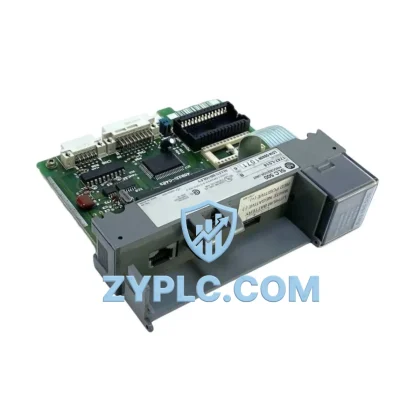
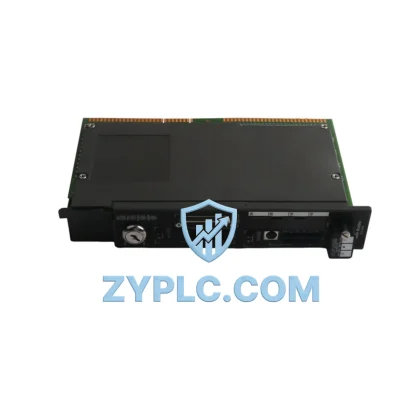
The Westinghouse 1C31203G01 is a high-reliability Remote Node Controller (RNC) designed for the WDPF (Westinghouse Distributed Processing Family) distributed control system architecture. In modern industrial facilities where energy consumption directly impacts operating margins, this controller plays a pivotal role in reducing unnecessary power draw, tightening control loop response, and ensuring that every actuator, drive, and sensor in the process line operates at its optimal efficiency point. Whether deployed in power generation, chemical processing, pulp and paper, or heavy manufacturing, the 1C31203G01 delivers the deterministic, low-latency node communication that energy-aware automation demands.
Efficiency Performance Table
| Parameter |
Specification / Value |
| SKU / Part Number |
1C31203G01 |
| Brand / Manufacturer |
Westinghouse Electric |
| Series |
WDPF (Westinghouse Distributed Processing Family) |
| Product Category |
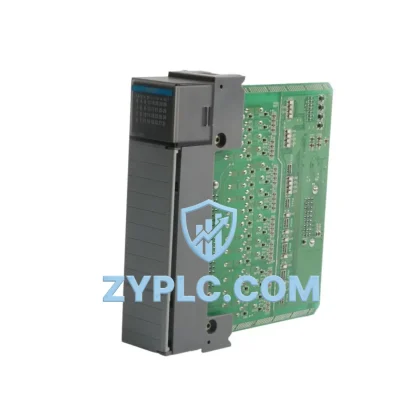
Remote Node Controller (RNC) — DCS I/O Communication Module |
| Typical Power Consumption |
Low-power backplane design; optimized for continuous 24/7 operation |
| Operating Efficiency |
Deterministic node scan cycle; minimizes idle polling overhead |
| Compatible Systems |
Westinghouse WDPF DCS, WDPF+ extensions, legacy WDPF node networks |
| Application Environments |
Power plants, chemical plants, refineries, pulp & paper mills, heavy industry |
| Energy Optimization Value |
Reduces control loop latency → tighter setpoint adherence → lower energy waste |
| Origin |
United States |
| Condition |
Tested, fully functional, ready to ship |
| Warranty |
12-Month Warranty |
Energy-Aware Automation Architecture
In a fully integrated WDPF control architecture, the 1C31203G01 Remote Node Controller serves as the communication backbone between the central WDPF process controller and distributed I/O nodes spread across the plant floor. This distributed topology is itself an energy-efficiency strategy: by pushing intelligence to the node level, the system eliminates the need for long analog signal runs that introduce noise, require signal conditioning power, and degrade measurement accuracy.
At the field level, the 1C31203G01 interfaces directly with WDPF I/O modules — including analog input cards for 4–20 mA process signals from flow transmitters, pressure sensors, and temperature elements — ensuring that the energy data flowing into the control system is accurate and timely. Accurate process data is the foundation of efficient control: when the controller knows the exact steam flow, motor current draw, or furnace temperature, it can issue precise output commands rather than conservative, energy-wasting overrides.
On the drive side, the RNC communicates setpoints to variable frequency drives (VFDs) managing pump and fan motors throughout the facility. When the 1C31203G01 delivers a clean, low-jitter speed reference to a WDPF-integrated VFD, the drive can operate the motor at the exact speed required by the process — eliminating the throttling losses that occur when motors run at full speed against a partially closed valve. This alone can reduce motor energy consumption by 20–50% in variable-load applications such as cooling water pumps, combustion air fans, and boiler feedwater systems.
The node controller also coordinates with WDPF digital output modules that drive solenoid valves, motor starters, and relay outputs. By ensuring that these outputs switch only when the process logic demands — and not due to communication errors or node timeouts — the 1C31203G01 prevents spurious actuator cycling that wastes energy and accelerates mechanical wear. In a large plant with hundreds of such outputs, eliminating even a small percentage of unnecessary switching events translates to measurable reductions in both energy consumption and maintenance costs.
For facilities that have integrated power monitoring into their WDPF architecture, the 1C31203G01 enables real-time energy data to flow alongside process data on the same node network. Power metering modules reporting kW, kVAR, and power factor can feed their readings through the RNC to the WDPF historian and operator displays, giving energy managers the visibility they need to identify inefficient equipment, schedule demand response actions, and validate the impact of efficiency improvements. This integration of energy monitoring with process control — on a single, unified WDPF node network — is a key advantage of the 1C31203G01 architecture over standalone energy monitoring systems.
The WDPF system’s peer-to-peer node communication, managed by the 1C31203G01, also supports coordinated control strategies such as load shedding, demand limiting, and production rate optimization. When a plant-wide energy management system signals that the facility is approaching a peak demand threshold, the WDPF controller can automatically reduce non-critical loads — slowing conveyor speeds, reducing compressed air pressure setpoints, or deferring batch heating cycles — all coordinated through the node network that the 1C31203G01 anchors.
Power Optimization in Real Production Lines
Consider a coal-fired power plant running a WDPF-based boiler control system. The 1C31203G01 manages the node network connecting combustion air flow transmitters, fuel flow controllers, oxygen analyzers, and forced draft fan VFD setpoint outputs. When the node controller operates reliably with minimal scan cycle jitter, the combustion control loop can maintain the air-to-fuel ratio within a tight band — typically ±0.5% excess oxygen — rather than the ±2–3% band that results from sluggish or unreliable node communication. This tighter control directly reduces fuel consumption: at a 500 MW unit, a 1% improvement in combustion efficiency can save hundreds of thousands of dollars in fuel costs annually.
In a chemical processing plant, the 1C31203G01 connects reactor temperature sensors, cooling water flow controllers, and agitator motor drives on a single WDPF node segment. Reliable node communication means the temperature control loop responds quickly to exothermic reaction events, reducing the need for overcooling — a common energy waste in batch chemical processes. Overcooling not only wastes chilled water energy but also extends batch cycle times, reducing equipment utilization and throughput. By keeping the node network healthy, the 1C31203G01 directly supports both energy efficiency and production rate optimization.
Predictive maintenance is another dimension of energy optimization enabled by the 1C31203G01. When the node controller reliably delivers vibration, temperature, and current signature data from field instruments to the WDPF historian, maintenance teams can detect developing faults in motors, pumps, and compressors before they cause efficiency degradation. A pump with a worn impeller or a motor with developing bearing damage draws more current for the same flow output — wasting energy while also risking unplanned downtime. Early detection through reliable WDPF node data allows planned maintenance interventions that restore equipment efficiency and avoid the energy penalty of degraded operation.
Every unit of the Westinghouse 1C31203G01 supplied by ZYPLC undergoes full functional testing prior to shipment, verifying node communication integrity, backplane interface operation, and diagnostic LED behavior. This pre-shipment testing ensures that replacement controllers restore full system performance immediately upon installation — minimizing the energy and production losses associated with extended commissioning or troubleshooting periods. Stock availability is maintained to support urgent replacement needs, with fast shipping to minimize plant downtime.
Energy Optimization FAQ
Q1: How does the 1C31203G01 contribute to measurable energy savings in a WDPF plant?
The 1C31203G01 improves control loop performance by ensuring reliable, low-latency communication between the WDPF process controller and field I/O nodes. Tighter control loops mean setpoints are maintained more accurately, reducing the energy waste associated with overcorrection, excessive actuator movement, and conservative operating margins. In drive-intensive applications such as fan and pump control, this translates directly to reduced motor energy consumption.
Q2: Is the 1C31203G01 compatible with all WDPF system configurations?
The 1C31203G01 is designed for the Westinghouse WDPF distributed control system and is compatible with standard WDPF node network architectures. It is recommended to verify the specific WDPF system version and node addressing configuration with your control system documentation before installation. ZYPLC’s technical team can assist with compatibility verification based on your system’s existing node controller part numbers and firmware revisions.
Q3: What is the recommended replacement procedure to minimize production disruption?
For a hot-swap replacement in a redundant WDPF node configuration, the failed controller can typically be replaced while the redundant node maintains process control. For simplex node configurations, a planned maintenance window is recommended. ZYPLC provides tested, ready-to-install units that have been verified for communication integrity, minimizing the time required for post-installation checkout and reducing the energy and production losses associated with extended downtime.
Q4: What warranty and post-sale support does ZYPLC provide for the 1C31203G01?
All 1C31203G01 units supplied by ZYPLC are covered by a 12-month warranty against defects in materials and workmanship. Each unit is tested prior to shipment to verify functional performance. In the event of a warranty claim, ZYPLC provides prompt replacement support to minimize plant downtime. For technical questions regarding installation, configuration, or system compatibility, ZYPLC’s industrial automation specialists are available to assist.
© 2026 ZYPLC. All rights reserved.
Original Source: https://zyplc.com
Contact: +86 19859288691 | plc.sales@zyplc.com