Yaskawa JARCR-YPC21 Energy-Saving Servo Controller for Optimized DX200 Automation
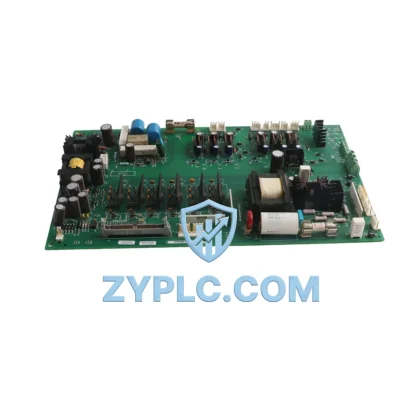
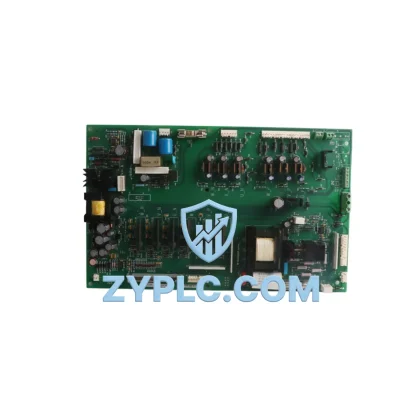
In modern manufacturing environments where energy costs and equipment uptime directly impact profitability, the Yaskawa JARCR-YPC21 servo controller module stands as a precision-engineered solution for high-efficiency motion control within the DX200 robot controller platform. Covering key variants including JARCR-YPC21-1 and JARCR-YPC21-2, this module governs servo drive coordination, power regulation, and axis synchronization — enabling robotic systems to operate at peak efficiency while minimizing unnecessary energy draw during idle, deceleration, and standby phases.
The DX200 controller architecture is designed around intelligent energy management. The JARCR-YPC21 works in close coordination with the JANCD-YSF22B-E safety function board and the JUSP-ACP35JAA servo amplifier unit to deliver precise torque and velocity control across all robot axes. This tight integration ensures that energy is consumed only when mechanical work demands it — reducing reactive power losses and improving the overall power factor of the robotic cell.
At the drive level, the JARCR-YPC21 interfaces directly with Yaskawa’s Σ-7 series servo amplifiers and SGMJV / SGMAV servo motors, enabling closed-loop feedback that continuously adjusts current delivery based on actual load conditions. Rather than running motors at fixed power levels, the system dynamically scales energy input to match real-time production demands — a critical advantage in applications such as arc welding, material handling, palletizing, and precision assembly where load profiles vary significantly across the work cycle.
From a system architecture perspective, the DX200 platform integrates seamlessly with Yaskawa’s MP3300 machine controller for multi-axis coordination and with PROFIBUS-DP or EtherNet/IP communication modules for upstream connectivity to SCADA and MES systems. This allows energy consumption data — including per-axis power draw, regenerative braking energy recovery, and thermal load trends — to be streamed in real time to plant-level monitoring dashboards. Operators can identify inefficient motion profiles, optimize path planning, and schedule predictive maintenance before thermal stress or mechanical wear causes unplanned downtime.
The JARCR-YPC21 also supports regenerative energy recovery during deceleration cycles. In high-throughput lines where robots perform repetitive pick-and-place or press-tending operations, the kinetic energy recovered during braking is fed back into the DC bus and redistributed to other axes or returned to the facility power grid — measurably reducing net energy consumption per production cycle. When paired with a Yaskawa CIMR-AC series variable frequency drive on peripheral conveyor or positioning axes, the entire automation cell achieves a unified energy optimization strategy that spans both robot and auxiliary equipment.
For facilities running Yaskawa DX100 or transitioning from older NX100 controller platforms, the JARCR-YPC21 represents a direct upgrade path that delivers improved servo response, lower heat generation, and reduced cooling overhead — all of which contribute to lower total energy consumption per shift. The module’s compact form factor and standardized connector layout simplify installation and reduce commissioning time, minimizing production interruption during replacement or system expansion.
Every JARCR-YPC21 unit supplied by ZYPLC undergoes a full functional test protocol prior to shipment, including servo loop verification, communication handshake confirmation, and thermal cycling checks. Units are shipped with original or equivalent protective packaging and are backed by a 12-month warranty covering manufacturing defects and functional failures under normal operating conditions. In-stock inventory ensures rapid dispatch, supporting both emergency replacement and planned maintenance schedules.
Efficiency Performance Table
| Parameter |
Specification / Value |
| SKU / Part Numbers |
JARCR-YPC21 / JARCR-YPC21-1 / JARCR-YPC21-2 |
| Compatible Platform |
Yaskawa DX200 Robot Controller |
| Module Function |
Servo Power Control & Axis Coordination |
| Drive Compatibility |
JUSP-ACP35JAA, Σ-7 Series Servo Amplifiers |
| Energy Recovery |
Regenerative Braking / DC Bus Energy Redistribution |
| Communication Support |
EtherNet/IP, PROFIBUS-DP, DeviceNet |
| Compatible Controllers |
DX200, DX100 (upgrade path) |
| Application Environments |
Arc Welding, Palletizing, Assembly, Material Handling |
| Energy Optimization Value |
Dynamic load-based power scaling, reduced idle draw |
| Warranty |
12-Month Warranty — Functional & Manufacturing Defects |
| Stock Status |
In Stock — Tested & Ready to Ship |
| Origin |
Japan |
Energy-Aware Automation Architecture
The JARCR-YPC21 does not operate in isolation — its energy optimization value is fully realized when integrated within a well-designed automation architecture. In a typical DX200-based robotic cell, the module coordinates with the JANCD-YCP01B-E CPU board for motion trajectory calculation and with the JANCD-YSF22B-E functional safety board to ensure that servo power is cut cleanly during emergency stops, preventing energy spikes and mechanical stress. The JUSP-ACP35JAA servo amplifier unit receives power commands from the JARCR-YPC21 and translates them into precise current waveforms delivered to each robot axis motor.
On the peripheral side, Yaskawa SGMJV servo motors provide high-torque, low-inertia performance that responds efficiently to the JARCR-YPC21’s dynamic power commands. For conveyor and auxiliary axis control, Yaskawa CIMR-AC variable frequency drives synchronize with the robot controller via EtherNet/IP, ensuring that peripheral motion is timed to robot cycles — eliminating unnecessary conveyor run time and reducing aggregate energy consumption across the cell.
At the network layer, a Yaskawa MP3300 machine controller aggregates axis data from multiple DX200 units and feeds production metrics to a Wonderware SCADA or Ignition-based HMI system, where energy KPIs such as kWh per part, peak demand events, and regenerative recovery rates are visualized in real time. This closed-loop visibility allows process engineers to fine-tune motion profiles, reduce unnecessary acceleration peaks, and schedule high-energy operations during off-peak tariff windows — directly reducing electricity costs without sacrificing throughput.
Power Optimization in Real Production Lines
In automotive body welding lines where DX200 robots perform continuous arc welding operations across multi-shift schedules, unoptimized servo control can account for a significant share of total facility energy consumption. The JARCR-YPC21 addresses this by implementing load-adaptive power delivery — the module monitors actual torque demand on each axis and adjusts current supply in real time, preventing the over-energization that occurs when fixed-power servo systems run at maximum output regardless of actual mechanical load.
During robot deceleration and path reversal — events that occur hundreds of times per shift in high-cycle applications — the JARCR-YPC21 captures kinetic energy through regenerative braking and routes it back to the shared DC bus. This recovered energy is immediately available to other axes accelerating within the same cycle, reducing the net draw from the facility power supply. Over a full production shift, this regenerative capability can meaningfully reduce per-robot energy consumption, with the effect compounding across multi-robot cells.
Predictive maintenance is another dimension of power optimization enabled by the JARCR-YPC21. By monitoring servo current signatures, thermal trends, and axis load history through the DX200’s diagnostic interface, maintenance teams can identify bearings approaching wear limits, cable harnesses developing resistance, or amplifier stages showing thermal drift — all before these conditions cause unplanned stops. Eliminating unplanned downtime not only protects production output but also avoids the energy-intensive restart sequences that follow emergency shutdowns, where motors must be re-homed and systems re-initialized from cold states.
For facilities managing multiple robot generations, the JARCR-YPC21’s compatibility with both DX200 and DX100 platforms allows a standardized spare parts strategy — reducing inventory complexity and ensuring that a single module type can support energy optimization across a mixed-generation robot fleet.
Energy Optimization FAQ
Q1: How does the JARCR-YPC21 reduce energy consumption compared to standard servo controllers?
The JARCR-YPC21 implements dynamic load-based power scaling, meaning servo current is continuously adjusted to match actual axis torque demand rather than running at fixed output levels. Combined with regenerative braking energy recovery during deceleration, the module reduces net energy draw per production cycle — particularly in high-repetition applications such as welding, palletizing, and press tending.
Q2: Is the JARCR-YPC21 compatible with both JARCR-YPC21-1 and JARCR-YPC21-2 variants, and are they interchangeable?
The JARCR-YPC21-1 and JARCR-YPC21-2 are sub-variants within the same module family, differentiated by minor hardware revisions or axis configuration. Compatibility depends on the specific DX200 controller build and software version. ZYPLC’s technical team can verify the correct variant for your system based on your controller serial number and software revision prior to shipment.
Q3: What testing is performed before shipment, and what does the 12-month warranty cover?
Every JARCR-YPC21 unit undergoes a full functional test protocol including servo loop verification, communication handshake confirmation, power regulation checks, and thermal cycling. The 12-month warranty covers manufacturing defects and functional failures under normal operating conditions from the date of receipt. Units showing damage from incorrect installation, overvoltage events, or unauthorized modification are excluded from warranty coverage.
Q4: Can the JARCR-YPC21 be used as a direct replacement in an existing DX200 system without reconfiguration?
In most cases, yes — the JARCR-YPC21 is designed as a drop-in replacement within the DX200 controller chassis, using standardized connectors and firmware-compatible interfaces. However, if the replacement unit carries a different sub-variant suffix (e.g., -1 vs -2), a parameter backup and restore procedure may be required. ZYPLC provides pre-shipment configuration guidance and post-installation technical support to ensure a smooth replacement process.
© 2026 ZYPLC. All rights reserved.
Original Source: https://zyplc.com
Contact: +86 19859288691 | plc.sales@zyplc.com