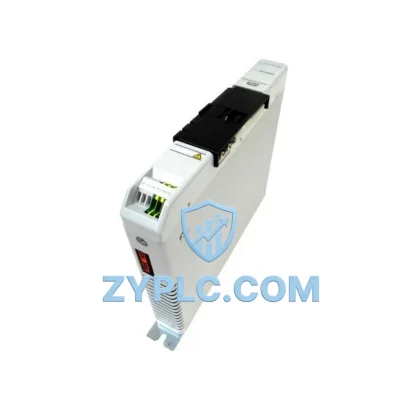
Yaskawa SGDR-SDB950A01DY500 Energy-Saving Servo Drive for Optimized YRC1000 Automation
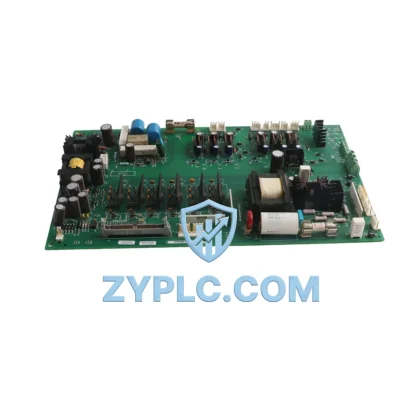
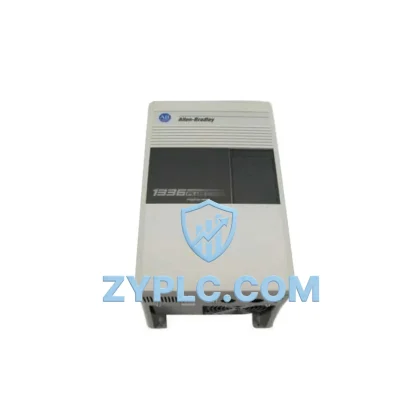
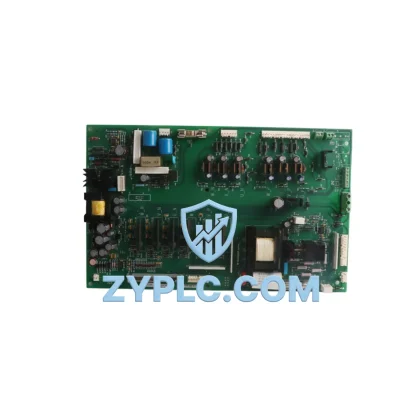
The Yaskawa SGDR-SDB950A01DY500 is a high-performance servo drive engineered for precision motor control within the DX100 and YRC1000 robot controller platforms. Designed to operate at the intersection of energy efficiency and motion accuracy, this unit plays a critical role in reducing unnecessary power draw across multi-axis robotic systems. Whether deployed in automotive body welding lines, material handling cells, or precision assembly stations, the SGDR-SDB950A01DY500 delivers consistent torque response while minimizing reactive energy losses that accumulate over extended production cycles.
In modern industrial environments where energy cost per production unit is under constant scrutiny, the servo drive layer is one of the most impactful points of intervention. The SGDR-SDB950A01DY500 achieves this by maintaining tight closed-loop control over the connected SGMRV or SGMGV series servo motors, ensuring that current draw is proportional to actual load demand rather than running at fixed output. This dynamic load-following behavior directly reduces idle-state energy consumption — a common source of waste in robotic cells with variable cycle times.
Within the YRC1000 controller architecture, the SGDR-SDB950A01DY500 interfaces with the robot’s motion control board via the internal servo bus, synchronizing axis commands with real-time feedback from the encoder. This tight integration with the JZRCR-YPP01-1 power supply unit and the DX100 JZNC-YRK01-1E CPU board ensures that energy delivery is precisely timed to motion demand, avoiding the power spikes that degrade both energy efficiency and drive longevity. The result is a measurable improvement in overall equipment effectiveness (OEE) without requiring changes to the robot program or production layout.
Efficiency Performance Table
| Parameter |
Specification |
| Model |
SGDR-SDB950A01DY500 |
| Compatible Controller |
Yaskawa DX100 / YRC1000 |
| Drive Type |
AC Servo Drive |
| Power Input |
Three-Phase 200–230V AC |
| Rated Output Current |
95A |
| Control Mode |
Position / Speed / Torque (Closed-Loop) |
| Energy Efficiency Feature |
Dynamic load-following, regenerative braking support |
| Compatible Motor Series |
SGMRV, SGMGV (Yaskawa Sigma series) |
| Application Environment |
Industrial robotics, welding, assembly, material handling |
| Operating Temperature |
0°C to 55°C |
| Cooling Method |
Forced air cooling |
| Communication Interface |
Internal servo bus (YRC1000 / DX100 native) |
| Origin |
Japan |
| Warranty |
12-Month Warranty |
| Condition |
Tested, Ready to Ship |
Energy-Aware Automation Architecture
The SGDR-SDB950A01DY500 does not operate in isolation — its energy optimization value is fully realized when integrated within a well-structured automation architecture. In a typical YRC1000-based robotic cell, the drive receives motion commands from the JZNC-YRK01-1E robot CPU, which coordinates multi-axis trajectories across all servo axes simultaneously. The JZRCR-YPP01-1 power supply module conditions incoming three-phase AC power and distributes regulated DC bus voltage to each SGDR-series drive, including the SGDR-SDB950A01DY500, ensuring stable energy delivery even during rapid acceleration and deceleration cycles.
On the motor side, the drive pairs with SGMRV or SGMGV servo motors equipped with high-resolution encoders, enabling sub-millisecond position feedback that allows the drive to minimize overshoot and reduce the corrective current pulses that waste energy. In cells where multiple axes are active, the regenerative energy generated during deceleration of one axis can be shared across the DC bus to partially power the acceleration of another — a feature that the SGDR-SDB950A01DY500 supports within the YRC1000 shared bus topology.
For facilities that have deployed Yaskawa’s iQ Platform or connected the YRC1000 to a SCADA layer via DeviceNet or EtherNet/IP, the drive’s operational data — including load ratio, thermal status, and cumulative run hours — can be surfaced through the DX100 JZNC-YIF01-1E I/O board or via the YRC1000’s built-in communication port. This data feeds directly into energy monitoring dashboards, allowing maintenance engineers to track drive efficiency trends, identify axes running above nominal load, and schedule predictive maintenance before thermal stress causes unplanned downtime. Pairing this with a Yaskawa MP3300 machine controller or a third-party energy meter on the panel input further refines the energy baseline per production cycle.
In lines where the SGDR-SDB950A01DY500 is used alongside Yaskawa’s CIMR-series variable frequency drives (VFDs) on auxiliary motors — such as conveyor drives, cooling fans, or hydraulic pump motors — the combined effect of servo-level precision and VFD-based speed regulation produces a measurable reduction in total line energy consumption. The CIMR-A or CIMR-V series VFDs, when configured with energy-saving mode enabled, complement the servo drive’s dynamic response by ensuring that non-robotic motion axes also operate at demand-matched power levels rather than fixed speed.
Power Optimization in Real Production Lines
In automotive and electronics manufacturing environments, the SGDR-SDB950A01DY500 has demonstrated its value in reducing per-cycle energy consumption by maintaining precise torque control during both high-speed transit moves and fine-positioning phases. Traditional fixed-gain servo systems tend to overdrive motors during low-load segments of the motion profile, generating heat and consuming excess current. The SGDR-SDB950A01DY500, operating within the YRC1000’s adaptive motion control framework, adjusts gain parameters in real time based on inertia estimation, ensuring that motor current tracks actual mechanical demand throughout the entire motion cycle.
Downtime reduction is another measurable benefit. Because the drive continuously monitors its own thermal load, output current, and encoder feedback quality, it can flag developing faults — such as encoder signal degradation or abnormal load spikes — before they escalate into axis faults that stop the line. This predictive fault visibility, accessible through the YRC1000 teach pendant or a connected HMI panel, allows maintenance teams to intervene during scheduled breaks rather than responding to unplanned stops. In high-throughput lines running three shifts, even a single avoided unplanned stop per week translates into significant recovered production capacity.
From a line rhythm (takt time) perspective, the SGDR-SDB950A01DY500 supports the YRC1000’s high-speed path interpolation, which allows the robot to execute smooth, energy-efficient trajectories rather than point-to-point moves with abrupt acceleration and deceleration. Smooth trajectories reduce peak current demand, lower mechanical stress on joints and end effectors, and extend the service interval of both the drive and the connected servo motor. Over a 12-month production period, this translates into lower spare parts consumption and reduced maintenance labor costs.
Every SGDR-SDB950A01DY500 unit supplied by ZYPLC undergoes functional load testing prior to shipment, verifying output current linearity, encoder interface integrity, and thermal performance under simulated operating conditions. Units are shipped with full documentation and are covered by a 12-month warranty, with in-stock availability supporting rapid deployment for both planned upgrades and emergency replacements.
Energy Optimization FAQ
Q1: How does the SGDR-SDB950A01DY500 reduce energy consumption compared to a standard servo drive?
The SGDR-SDB950A01DY500 uses closed-loop torque control with real-time inertia estimation to match motor current output to actual mechanical load. This eliminates the constant overcurrent condition common in fixed-gain drives, reducing idle and low-load energy consumption. When integrated with the YRC1000’s smooth path interpolation, peak power demand is further reduced by avoiding abrupt acceleration profiles.
Q2: Is the SGDR-SDB950A01DY500 compatible with both DX100 and YRC1000 controllers?
Yes. The SGDR-SDB950A01DY500 is designed for use within both the DX100 and YRC1000 Yaskawa robot controller platforms. It interfaces via the internal servo bus and is compatible with the JZRCR-YPP01-1 power supply and JZNC-YRK01-1E CPU board. Always verify axis configuration and software version compatibility with your system integrator before installation.
Q3: What is the recommended replacement process for a failed servo drive on a live production line?
ZYPLC recommends having a tested spare unit on-site for critical axes. Upon receiving the SGDR-SDB950A01DY500, verify the unit against your controller’s axis parameter file, back up the YRC1000 system data, swap the drive during a scheduled maintenance window, and restore axis parameters. All units supplied by ZYPLC are pre-tested and include a 12-month warranty, minimizing re-commissioning risk.
Q4: What testing does ZYPLC perform before shipping the SGDR-SDB950A01DY500?
Each unit undergoes functional load testing that verifies output current accuracy, encoder signal integrity, thermal performance under load, and fault response behavior. Test results confirm the unit meets OEM specifications before shipment. The 12-month warranty covers functional defects identified during normal operating conditions.
© 2026 ZYPLC. All rights reserved.
Original Source: https://zyplc.com
Contact: +86 19859288691 | [email protected]