Yokogawa 7SJ5005-5CA00/FF Industrial Network Interface for STARDOM Systems: Bridging Field Devices and Smart Factory Data Links
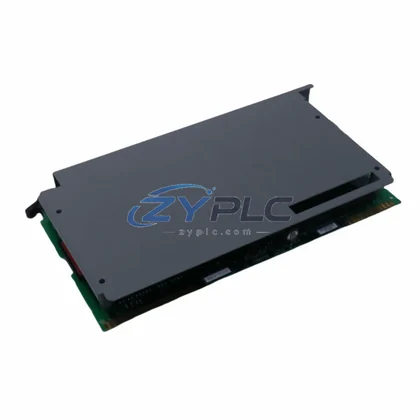
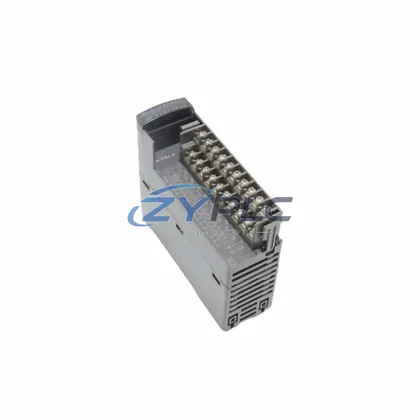
In modern industrial automation, the integrity of the data link between field instruments and supervisory control systems determines the efficiency, safety, and scalability of the entire production environment. The Yokogawa 7SJ5005-5CA00/FF is a Foundation Fieldbus (FF) Digital Input Module engineered for the STARDOM series — Yokogawa’s distributed control and remote automation platform. This module serves as a critical node in the industrial data chain, enabling reliable signal acquisition from field-level sensors and transmitters, and delivering structured digital data upstream to PLC controllers, SCADA systems, and HMI interfaces with minimal latency and maximum protocol fidelity.
Foundation Fieldbus (FF H1) is a deterministic, all-digital, two-way communication protocol designed specifically for process automation. Unlike legacy 4–20 mA analog loops, FF H1 enables each field device to carry not only process values but also diagnostic data, device status, and configuration parameters — all over a single twisted-pair cable. The 7SJ5005-5CA00/FF leverages this protocol architecture to aggregate digital input signals from multiple field instruments simultaneously, reducing wiring complexity while increasing data richness at the control layer.
Compatibility & Integration Notes
| Parameter |
Specification |
| SKU |
7SJ5005-5CA00/FF |
| Brand / Vendor |
Yokogawa |
| Series |
STARDOM |
| Communication Protocol |
Foundation Fieldbus (FF H1) |
| Module Type |
Digital Input Module |
| Interface Type |
FF H1 Fieldbus Interface |
| Network Compatibility |
Foundation Fieldbus H1 Segment, DCS / SCADA Integration |
| System Application |
STARDOM FCN/FCJ Controllers, Exaopc OPC Server, CENTUM VP Integration |
| Origin |
Japan |
| Warranty |
warranty terms confirmed during quotation |
| Availability |
RFQ Available — export shipping options available |
Connected Automation Data Flow
The 7SJ5005-5CA00/FF operates at the intersection of field instrumentation and plant-wide automation networks. In a typical STARDOM-based architecture, digital input signals originate from field-level devices such as pressure switches, flow switches, limit switches, and discrete sensors. These signals are captured by the 7SJ5005-5CA00/FF module and transmitted via the Foundation Fieldbus H1 segment to the Yokogawa FCN Autonomous Controller — the core processing unit of the STARDOM platform — where real-time logic execution and data aggregation take place.
Within the STARDOM ecosystem, the FCN controller communicates upstream with the Yokogawa Exaopc OPC Server, which acts as the protocol gateway between the STARDOM network and higher-level SCADA and MES platforms. This OPC DA/UA bridge ensures that digital input states captured by the 7SJ5005-5CA00/FF are available in real time to operators monitoring production via Yokogawa FAST/TOOLS SCADA or third-party HMI systems. Alarm conditions detected at the field level — such as a valve position switch triggering an open/close state — are propagated through this data chain within milliseconds, enabling rapid operator response and automated interlock activation.
For analog process variables running in parallel, the Yokogawa 7SJ5004-5CA00/FF Analog Input Module (same STARDOM FF series) handles 4–20 mA HART signals from transmitters such as the Yokogawa EJA110E Differential Pressure Transmitter, which is commonly deployed alongside digital input modules in flow measurement and level detection applications. The combination of analog and digital FF modules on a shared H1 segment maximizes segment utilization while maintaining deterministic scan cycles.
At the network infrastructure layer, the FF H1 segment connecting the 7SJ5005-5CA00/FF to the FCN controller may pass through a Yokogawa AFV10 FF Linking Device, which bridges the H1 fieldbus segment to the high-speed HSE (High Speed Ethernet) backbone. This architecture supports segment expansion without disrupting existing field wiring, making it ideal for phased smart factory upgrades. Industrial Ethernet switches — such as managed switches supporting PROFINET or EtherNet/IP alongside FF HSE — can be integrated at the HSE layer to extend connectivity to remote I/O panels and edge computing nodes.
For drive and motor control integration, Yokogawa Variable Frequency Drives with fieldbus communication cards can be connected to the same STARDOM network, with run/stop and fault status signals routed through digital input modules like the 7SJ5005-5CA00/FF. This creates a unified data fabric where drive status, field device states, and process measurements are all visible within a single SCADA view — eliminating data silos and enabling cross-system correlation for predictive maintenance workflows.
Solving Data Isolation in Industrial Sites
One of the most persistent challenges in industrial automation is the fragmentation of data across incompatible protocols, legacy wiring systems, and isolated control islands. The Yokogawa 7SJ5005-5CA00/FF directly addresses this challenge by standardizing digital input communication on the Foundation Fieldbus protocol — a globally recognized open standard that eliminates proprietary lock-in and enables multi-vendor device interoperability.
In plants where legacy 24 VDC discrete wiring coexists with modern fieldbus infrastructure, the 7SJ5005-5CA00/FF provides a structured migration path. By consolidating multiple discrete input channels onto a single FF H1 segment, engineering teams can reduce panel wiring density, simplify marshalling cabinet layouts, and free up I/O capacity for system expansion. Each digital input channel retains full diagnostic visibility — including open-circuit detection, short-circuit alarms, and device health status — which is surfaced through the STARDOM FCN controller and accessible via the Exaopc OPC interface without additional configuration.
Remote monitoring and diagnostics are further enhanced by the STARDOM platform’s built-in web server functionality, which allows authorized personnel to access real-time I/O status, module diagnostics, and network health data from any browser-connected device — without requiring a dedicated engineering workstation on-site. This capability is particularly valuable for unmanned remote stations, offshore platforms, and geographically distributed process plants where on-site intervention is costly and time-consuming.
System scalability is a core design principle of the STARDOM architecture. Additional 7SJ5005-5CA00/FF modules can be added to existing FF H1 segments (up to the segment device limit) or new segments can be introduced via additional AFV10 linking devices — all without interrupting ongoing production. This modular expansion model supports phased digitalization strategies, allowing plants to incrementally increase I/O density and network coverage as automation requirements evolve.
All units supplied by ZYPLC undergo pre-shipment functional testing to verify communication integrity, channel response, and protocol compliance before dispatch. Stock is maintained for export shipping options available, and each unit is covered by a warranty terms confirmed during quotation from the date of delivery.
Industrial Connectivity FAQ
Q1: What is the communication latency of the 7SJ5005-5CA00/FF on a Foundation Fieldbus H1 segment?
Foundation Fieldbus H1 operates at 31.25 kbps with a deterministic, scheduled communication cycle. Typical scan cycle times for digital input modules on a standard H1 segment range from 100 ms to 500 ms depending on segment load and macrocycle configuration. For time-critical interlock applications, the STARDOM FCN controller supports local logic execution at the field level, reducing dependency on upstream communication latency.
Q2: Is the 7SJ5005-5CA00/FF compatible with third-party SCADA and DCS systems?
Yes. The Foundation Fieldbus protocol is an open international standard (IEC 61158), and the 7SJ5005-5CA00/FF is compatible with any FF H1-compliant host system. Integration with third-party SCADA platforms is typically achieved via the Yokogawa Exaopc OPC Server (OPC DA/UA), which provides a standardized data interface accessible by systems such as Wonderware, iFIX, Ignition, and others.
Q3: Can additional digital input modules be added to an existing STARDOM FF network without system downtime?
In most configurations, new FF devices can be added to an existing H1 segment during a scheduled maintenance window with minimal disruption. The STARDOM FCN controller supports online device registration and configuration via the engineering tool, allowing new modules to be commissioned without a full system restart. Segment capacity should be verified against the existing device count and power budget before expansion.
Q4: What warranty and testing does ZYPLC provide for the 7SJ5005-5CA00/FF?
Every unit shipped by ZYPLC is subject to pre-shipment functional testing covering communication handshake verification, channel integrity checks, and protocol compliance validation. A warranty terms confirmed during quotation is provided from the date of delivery, covering manufacturing defects and communication failures under normal operating conditions. Expedited shipping options are available for urgent project requirements.