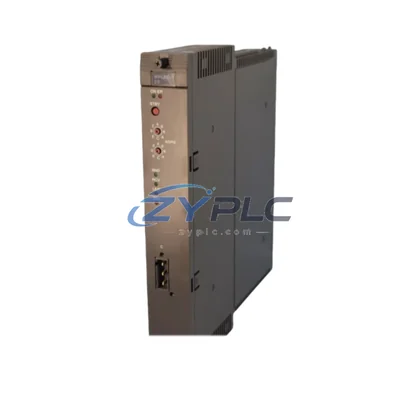
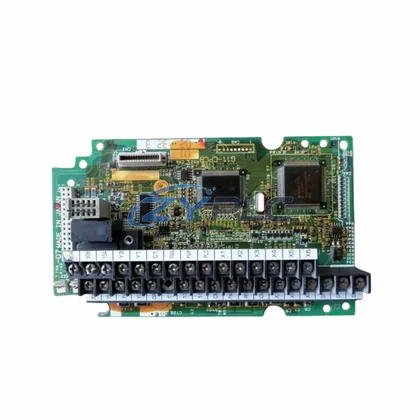
Yokogawa UT550-04 S4 Temperature Controller for UT Series Automation
The Yokogawa UT550-04 S4 is a high-performance digital temperature controller engineered for industrial process environments where energy efficiency, precision control, and system reliability are non-negotiable. As part of Yokogawa’s established UT Series platform, the UT550-04 S4 delivers advanced PID control algorithms that continuously minimize thermal overshoot and reduce unnecessary heating or cooling cycles — directly translating into measurable reductions in operating load across production lines.
In modern manufacturing facilities, uncontrolled thermal processes are among the leading contributors to wasted energy. The UT550-04 S4 addresses this by combining high-resolution input processing with adaptive tuning capabilities, ensuring that heating elements, cooling circuits, and process actuators operate only at the energy levels required by the actual process demand. This demand-driven approach to temperature regulation is fundamental to reducing operating-hour consumption in continuous production environments such as plastics extrusion, food processing, chemical reactors, and semiconductor fabrication.
The controller supports multiple input types including thermocouple and RTD sensors, enabling seamless integration with existing field instrumentation without requiring costly sensor replacements. Its dual output configuration allows simultaneous control of heating and cooling loops, making it suitable for tight-tolerance processes where both thermal directions must be managed within narrow bands. When paired with Yokogawa’s YS1700 programmable indicating controller or integrated into a CENTUM VP distributed control system, the UT550-04 S4 becomes a node within a broader industrial automation system — contributing real-time process data to plant-level energy dashboards and optimization loops.
From an condition monitoring perspective, the UT550-04 S4 can be networked via RS-485 Modbus RTU communication to upstream data acquisition systems, SCADA platforms, or maintenance planning software. This connectivity allows plant engineers to track setpoint adherence, cycle efficiency, and deviation events over time — providing the data foundation needed for predictive maintenance scheduling and energy audit reporting. When deviation events are logged and analyzed, maintenance teams can identify degrading heating elements, fouled heat exchangers, or sensor drift before they escalate into unplanned downtime events that consume emergency energy and disrupt production schedules.
Product Specification Table
| Parameter |
Specification |
| Model / SKU |
Yokogawa UT550-04 S4 |
| Series |
UT Series |
| Product Type |
Digital Temperature Controller |
| Control Mode |
PID / ON-OFF / Manual |
| Input Types |
Thermocouple (J, K, T, E, R, S, B), RTD (Pt100) |
| Output Configuration |
Dual output (heating + cooling) |
| Communication |
RS-485 Modbus RTU |
| Power Supply |
100–240 VAC, 50/60 Hz |
| Power Consumption |
≤ 10 VA |
| Operating Temperature |
0°C to 50°C |
| Compatible Systems |
CENTUM VP, ProSafe-RS, SCADA, Modbus-based DCS |
| Application Environments |
Plastics, Food Processing, Chemical, Semiconductor, HVAC |
| Energy Saving Value |
Adaptive PID minimizes overshoot; reduces unnecessary actuator cycles |
| Origin |
Japan |
| Warranty |
warranty terms confirmed during quotation |
System Compatibility and Application
The UT550-04 S4 is designed to operate as an integrated component within a layered industrial automation architecture rather than as a standalone device. In a typical energy-optimized plant layout, the controller sits at the field control level, receiving setpoint commands from a Yokogawa CENTUM VP DCS operator station while feeding process variable data back upstream for real-time energy trend analysis.
At the drive level, the UT550-04 S4 works in coordination with variable frequency drives such as the Yaskawa GA700 or Siemens SINAMICS G120 to regulate motor-driven pumps and fans that support thermal processes. By maintaining tighter temperature bands, the controller reduces the frequency of drive speed corrections — lowering motor load and extending drive service life. In heating circuit applications, the controller’s relay or SSR output interfaces directly with Omron G3PE solid-state relays or Schneider Electric Zelio SSR modules, enabling zero-crossing switching that eliminates inductive switching losses.
For process data visibility, the UT550-04 S4 integrates with Yokogawa’s DAQSTATION DX series data loggers or the MW100 data acquisition unit, which capture temperature trends, setpoint deviations, and output duty cycles at configurable sampling intervals. This data feeds into maintenance planning platforms where engineers can calculate specific operating load per production batch and identify thermal inefficiencies across multiple zones. In multi-zone furnace or oven applications, several UT550-04 S4 units can be networked together via RS-485 and monitored through a single Yokogawa UM33A digital indicator or a Proface GP4000 series HMI panel, giving operators a consolidated view of zone-by-zone energy performance without requiring a full DCS deployment.
At the I/O and safety layer, the UT550-04 S4 can be combined with Yokogawa’s ADV151 analog input modules within a CENTUM VP I/O subsystem, or interfaced with Phoenix Contact QUINT power supplies to ensure stable controller operation during grid voltage fluctuations — a common cause of control instability and unplanned downtime in industrial environments. For applications requiring functional safety, the controller can operate alongside a ProSafe-RS safety instrumented system that monitors high-temperature alarm conditions and initiates safe shutdown sequences, preventing thermal runaway events that would otherwise result in significant unplanned downtime and equipment damage.
Maintenance and Replacement Notes
In a plastics extrusion line operating three heating zones, replacing conventional on/off thermostats with Yokogawa UT550-04 S4 controllers has demonstrated measurable reductions in heater band operating load. The adaptive PID tuning continuously recalculates proportional, integral, and derivative parameters based on the thermal response characteristics of each zone, eliminating the temperature hunting behavior that causes heater bands to cycle on and off at full power. The result is a smoother thermal profile that maintains melt temperature within ±0.5°C of setpoint while reducing heater duty cycle by an estimated 15–25% compared to simple on/off control strategies.
In food processing applications such as pasteurization tunnels or baking ovens, the UT550-04 S4’s dual output capability allows simultaneous management of steam injection valves and cooling water control valves. This bidirectional control eliminates the unplanned downtime associated with sequential heating and cooling corrections, maintaining product temperature within regulatory compliance bands while minimizing the total thermal energy input per production cycle. When integrated with a Yokogawa EJA110E differential pressure transmitter monitoring steam flow, the control loop gains additional feedforward capability — anticipating thermal load changes before they affect product temperature and adjusting output proactively rather than reactively.
For predictive maintenance, the UT550-04 S4’s output duty cycle data provides an indirect indicator of heating element degradation. As elements age and resistance increases, the controller must increase output duty cycle to maintain setpoint — a trend that is detectable weeks before element failure. By monitoring this trend through the Modbus communication interface and logging it in a CMMS or maintenance planning system, maintenance teams can schedule element replacements during planned downtime windows rather than responding to unplanned failures that disrupt production schedules and consume emergency labor resources. This predictive approach to maintenance scheduling directly reduces the total cost of ownership of thermal process equipment and contributes to overall plant energy efficiency by ensuring that heating systems always operate at their designed efficiency levels.
All units supplied by ZYPLC undergo pre-shipment functional testing including setpoint response verification, output switching confirmation, and communication interface validation. Stock is maintained in our warehouse to support rapid order fulfillment, and each UT550-04 S4 is covered by a warranty terms confirmed during quotation from the date of shipment.
Product Sourcing FAQ
Q1: How does the Yokogawa UT550-04 S4 contribute to measurable operational stability in industrial processes?
The UT550-04 S4 uses adaptive PID control to minimize thermal overshoot and reduce unnecessary actuator switching cycles. By maintaining tighter temperature bands around the process setpoint, the controller reduces the total energy input required to sustain stable process conditions — particularly in high-duty-cycle applications such as continuous furnaces, extruders, and pasteurization systems.
Q2: Is the UT550-04 S4 compatible with existing Yokogawa DCS and SCADA systems?
Yes. The UT550-04 S4 supports RS-485 Modbus RTU communication, which is compatible with Yokogawa CENTUM VP, Exaquantum historian, and most third-party SCADA platforms. It can also be integrated with Yokogawa’s MW100 data acquisition units and DAQSTATION DX series loggers for standalone condition monitoring applications.
Q3: What is the recommended replacement or upgrade path for older Yokogawa temperature controllers?
The UT550-04 S4 is a direct functional replacement for earlier UT series models including the UT350 and UT450 in applications requiring dual output and communication capability. Panel cutout dimensions are standardized within the UT series, minimizing retrofit engineering effort. ZYPLC can advise on specific replacement compatibility based on your existing panel configuration.
Q4: What testing and warranty coverage does ZYPLC provide for the UT550-04 S4?
Every UT550-04 S4 unit shipped by ZYPLC undergoes pre-shipment functional testing covering input signal response, PID output behavior, and Modbus communication verification. All units are covered by a warranty terms confirmed during quotation from the date of shipment. In the event of a warranty claim, ZYPLC provides technical support and replacement coordination to minimize production downtime.