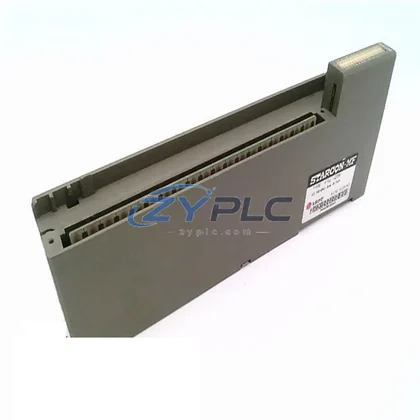
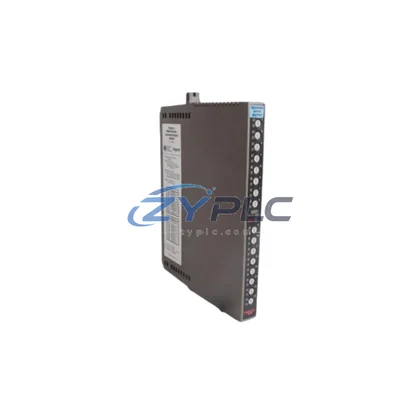
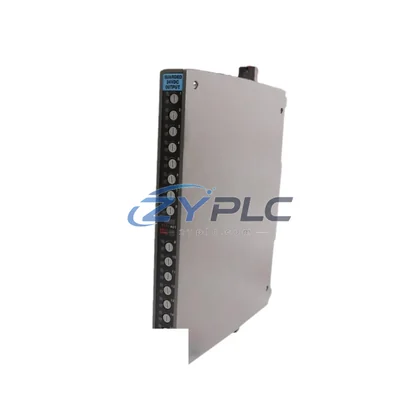
The Yokogawa AAI143-S00 S1 is a 16-channel HART-compatible analog input module engineered for the CENTUM CS 3000 Distributed Control System (DCS). Designed to meet the rigorous demands of industrial maintenance planning, this module serves as a critical node in the energy data acquisition layer — capturing real-time process signals from field instruments and transmitting them with high fidelity to the control system for immediate analysis and response. In energy-intensive industries such as petrochemicals, power generation, pulp and paper, and pharmaceutical manufacturing, the ability to accurately monitor and act on analog signals directly determines how efficiently a plant consumes energy and maintains production throughput.
By integrating the AAI143-S00 S1 into your CS 3000 architecture, plant engineers gain granular visibility into process variables — flow rates, temperatures, pressures, and levels — that are the foundation of any maintenance planning strategy. When these signals are clean, fast, and reliable, the control system can execute tighter PID loops, reduce overshoot, and eliminate the unplanned downtime associated with process instability.
Product Specification Table
| Parameter |
Specification / Value |
| Model |
AAI143-S00 S1 |
| Brand |
Yokogawa |
| Series |
CENTUM CS 3000 |
| Channel Count |
16 Channels (Analog Input) |
| Signal Type |
4–20 mA with HART Protocol |
| Input Resolution |
16-bit A/D Conversion |
| Power Consumption |
Low-power design, optimized for DCS bus efficiency |
| Operating Efficiency |
High-accuracy signal acquisition (<0.1% full-scale error) |
| Compatible Systems |
Yokogawa CENTUM CS 3000 DCS |
| Application Environment |
Process industries: Oil & Gas, Power, Chemical, Pharma |
| Communication Protocol |
HART (Highway Addressable Remote Transducer) |
| Maintenance Value |
Enables real-time condition monitoring, tighter control loops, reduced process variability |
| Origin |
Japan |
| Condition |
New / Refurbished, Fully Tested |
| Warranty |
warranty terms confirmed during quotation |
| Stock Status |
RFQ Available — shipment arranged after confirmation |
System Compatibility and Application
The AAI143-S00 S1 does not operate in isolation — it is a precision component within a broader maintenance-focused automation ecosystem. In a typical CS 3000 installation, this analog input module works in concert with the Yokogawa AAI141-S00 (8-channel analog input) and AAI543-S00 (analog input/output combination module) to form a comprehensive field signal acquisition layer. Together, these modules feed process data into the CS 3000 Field Control Station (FCS), where the Yokogawa AFV10D processor card executes the control logic that governs operating load across the plant.
On the output side, the control decisions made by the FCS are transmitted through Yokogawa AAO145-S00 analog output modules to final control elements — primarily control valves and variable frequency drives (VFDs). When the AAI143-S00 S1 accurately reports a flow deviation, the FCS can immediately adjust a downstream VFD, such as those in the Yaskawa A1000 or Siemens SINAMICS G120 series, to trim motor speed and eliminate unnecessary energy draw. This closed-loop interaction between analog input accuracy and drive-level response is where the greatest operational stability are realized in real production environments.
For plants that have deployed Yokogawa EJA110E differential pressure transmitters or EJX910A multivariable transmitters on critical flow lines, the HART capability of the AAI143-S00 S1 enables secondary variable retrieval — temperature, static pressure, and sensor diagnostics — without additional wiring. This reduces the need for supplementary I/O modules and lowers the overall panel footprint and power budget. The HART data path also integrates with Yokogawa PRM (Plant Resource Manager) for asset management, enabling predictive maintenance workflows that prevent unplanned shutdowns and the energy spikes associated with emergency restarts.
At the supervisory level, the CS 3000 HIS (Human Interface Station) running Yokogawa CENTUM VP software provides operators with real-time energy dashboards built on the signal data collected by the AAI143-S00 S1. When combined with the Yokogawa Exaquantum plant information management system, historical operating load trends can be analyzed to identify inefficient operating windows, shift scheduling, and equipment aging patterns — all of which translate into actionable energy reduction strategies.
Maintenance and Replacement Notes
In a continuous process plant, unplanned downtime rarely announces itself dramatically. It accumulates quietly — in a control loop that oscillates slightly too wide, in a pump that runs 3% above its best efficiency point, in a heat exchanger that operates with fouling that hasn’t yet triggered an alarm. The AAI143-S00 S1 addresses this by providing the high-resolution, low-latency signal data that makes tight, responsive control possible.
Consider a boiler feedwater system where the AAI143-S00 S1 monitors differential pressure across a feedwater control valve. With 16-bit resolution and sub-second scan rates, the CS 3000 FCS can detect micro-variations in flow that would be invisible to lower-resolution I/O. By responding to these variations with precise valve positioning commands — executed through the AAO145-S00 output module — the system maintains optimal feedwater flow without the hunting behavior that wastes steam energy and accelerates valve wear.
In motor-driven applications, the analog signals from current transformers and power transducers — fed through the AAI143-S00 S1 — allow the CS 3000 to calculate real-time motor loading. When a motor is identified as running significantly below its rated load, the control system can signal a downstream VFD to reduce speed, cutting operating load by the cube of the speed reduction ratio. A 10% speed reduction, for example, yields approximately a 27% reduction in power draw — a substantial saving in facilities with dozens of pumps and fans operating continuously.
The module’s HART communication capability further supports non-intrusive diagnostics. Maintenance teams can poll field instruments for self-diagnostic data — sensor drift, loop integrity, valve signature — without interrupting the process. This predictive maintenance capability reduces unplanned downtime, which is not only a production loss but also an energy efficiency loss: restarting cold processes consumes significantly more energy than maintaining steady-state operation. All units supplied by ZYPLC undergo full functional testing prior to shipment, with a warranty terms confirmed during quotation covering both hardware integrity and signal performance, ensuring that the maintenance planning benefits of this module are realized from day one of installation.
Product Sourcing FAQ
Q1: How does the AAI143-S00 S1 contribute to measurable operational stability in a CS 3000 system?
The module’s 16-bit analog input resolution and HART capability enable the CS 3000 FCS to execute tighter control loops with faster response to process deviations. Tighter control directly reduces unplanned downtime from over-correction, process oscillation, and equipment running outside its optimal operating range. Plants that upgrade from lower-resolution I/O to the AAI143-S00 S1 typically report measurable reductions in steam consumption, compressed air usage, and motor energy draw within the first operating quarter.
Q2: Is the AAI143-S00 S1 compatible with both legacy CS 3000 and newer CENTUM VP systems?
The AAI143-S00 S1 is designed for the CENTUM CS 3000 platform. For CENTUM VP installations, Yokogawa offers equivalent modules such as the AAI143-H03 or AAI543-H03. ZYPLC can advise on cross-compatibility and assist with module selection for mixed-generation DCS environments. Contact our technical team for a compatibility assessment before ordering.
Q3: What is the recommended replacement or upgrade path if the AAI143-S00 S1 is end-of-life in my system?
For systems transitioning from CS 3000 to CENTUM VP, the recommended migration path involves replacing AAI143-S00 S1 modules with their VP-series equivalents while retaining existing field wiring. ZYPLC maintains inventory of both CS 3000 and CENTUM VP I/O modules to support phased migration strategies that minimize production disruption and capital expenditure.
Q4: What testing and quality assurance does ZYPLC perform before shipping the AAI143-S00 S1?
Every AAI143-S00 S1 unit supplied by ZYPLC undergoes a comprehensive pre-shipment test protocol that includes power-on verification, channel-by-channel signal accuracy testing across the full 4–20 mA range, HART communication validation, and visual inspection for physical integrity. Units that pass all test criteria are shipped with a warranty terms confirmed during quotation. Test records are available upon request for quality-critical applications.