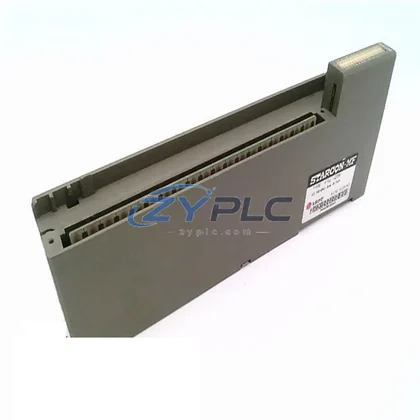
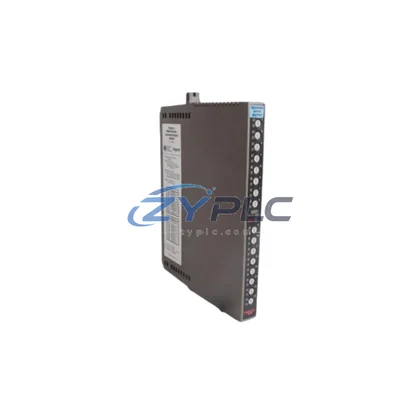
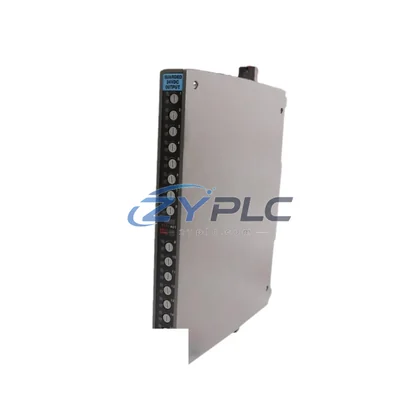
Yokogawa AAI543-S53 S1 Analog Output Module for Centum Automation
In modern process industries — from petrochemical refining to pharmaceutical batch production — the efficiency of every control signal matters. The Yokogawa AAI543-S53/S1 Analog Output Module is engineered to deliver precise, low-power 4–20 mA analog output signals across multiple channels, enabling field devices to respond accurately to control commands while minimizing unnecessary energy draw at the I/O layer. Deployed within the Yokogawa Centum VP or Centum CS 3000 Distributed Control System, this module plays a central role in translating digital control decisions into real-world actuator commands — with the speed, resolution, and stability that demanding production environments require.
Unlike generic output modules, the AAI543-S53/S1 is designed specifically for Yokogawa’s field control station architecture. Its tight integration with the Centum VP FCS (Field Control Station) means that output updates are synchronized with the system’s scan cycle, reducing latency between control logic execution and physical device response. This synchronization is critical in energy-intensive applications such as boiler feed control, compressor surge management, and heat exchanger bypass regulation — where even small delays in output response can translate into measurable unplanned downtime or process deviation.
Product Specification Table
| Parameter |
Specification |
| SKU |
AAI543-S53/S1 |
| Brand / Series |
Yokogawa / Centum VP & CS 3000 |
| Module Type |
Analog Output Module (Multi-Channel) |
| Output Signal |
4–20 mA DC (Current Output) |
| Output Resolution |
16-bit D/A Conversion |
| Power Consumption |
Low-power design optimized for FCS rack efficiency |
| Compatible Systems |
Centum VP, Centum CS 3000, Centum XL (via adapter) |
| Application Environment |
Process Control, Energy Management, Batch Automation |
| Energy Saving Value |
Reduces I/O layer power draw; supports load-optimized output scheduling |
| Communication |
Integrated via Vnet/IP or ESB (Enhanced Signal Bus) |
| Origin |
Japan |
| Warranty |
warranty terms confirmed during quotation — Tested before shipment |
System Compatibility and Application
The AAI543-S53/S1 does not operate in isolation — it is one node in a tightly coordinated automation architecture designed to maximize energy efficiency across the entire production loop. Within a typical Centum VP system, the module sits inside an FCS rack alongside complementary I/O cards such as the AAI141 Analog Input Module, which feeds real-time process measurements back into the control loop. Together, these two modules form the sensing and actuation backbone of a closed-loop energy control strategy.
On the field side, the 4–20 mA outputs from the AAI543-S53/S1 connect directly to control valves, electro-pneumatic positioners, and variable frequency drives (VFDs) — including Yokogawa’s own inverter-class drives used in pump and fan speed regulation. By delivering precise, stable output signals, the module ensures that VFDs receive accurate speed reference commands, preventing the over-speed or hunting conditions that waste electrical energy and accelerate mechanical wear.
At the supervisory level, the Centum VP HIS (Human Interface Station) provides operators with real-time visibility into output channel status, loop deviation, and energy consumption trends. When integrated with Yokogawa’s Exaquantum plant information management system, historical output data from the AAI543-S53/S1 can be trended and analyzed to identify inefficient control patterns — such as valves operating near saturation or drives running at unnecessary high speeds during low-demand periods.
For facilities implementing advanced process control (APC) or maintenance planning systems (EMS), the AAI543-S53/S1 serves as the final execution layer. Control strategies computed by the Centum VP’s multi-loop function blocks — including PID, cascade, and feedforward algorithms — are translated into precise milliamp signals that drive field actuators with minimal overshoot and fast settling times. This precision directly reduces the unplanned downtimed in process oscillation and valve hunting.
In safety-critical applications, the module can be paired with Yokogawa’s ProSafe-RS Safety Instrumented System, where analog output integrity is monitored against defined safe states. The combination of the AAI543-S53/S1 with ProSafe-RS I/O modules ensures that maintenance planning strategies never compromise process safety — a balance that is increasingly demanded in modern smart factory and IIoT-enabled plant designs.
Remote I/O configurations using Yokogawa’s RIO (Remote I/O) nodes allow the AAI543-S53/S1’s output capabilities to be extended to field junction boxes located far from the main control room, reducing cable runs and associated installation energy losses. When combined with FOUNDATION Fieldbus or HART-enabled field devices, the system can also support device diagnostics and predictive maintenance alerts — further reducing unplanned downtime and the energy costs associated with emergency restarts.
Maintenance and Replacement Notes
In a refinery or chemical plant running continuous processes, the cumulative energy impact of poorly tuned analog outputs is significant. A control valve that receives an imprecise or noisy 4–20 mA signal will hunt — oscillating around its setpoint and consuming excess actuator energy while also causing process variability that forces downstream equipment to compensate. The AAI543-S53/S1’s 16-bit D/A resolution and low output noise floor eliminate this problem at the source, delivering clean, stable signals that allow field devices to settle quickly and hold position accurately.
In batch manufacturing environments — such as pharmaceutical or food processing plants — the module’s fast output update rate supports tight cycle time control. By ensuring that heating elements, dosing pumps, and agitator drives receive precise control signals at every scan cycle, the AAI543-S53/S1 helps reduce batch cycle times without sacrificing quality. Shorter, more consistent batch cycles mean lower energy consumption per unit of production — a direct contribution to the plant’s overall energy efficiency KPIs.
Predictive maintenance integration is another key maintenance planning pathway. When the Centum VP system monitors output channel performance over time — tracking drift, calibration deviation, and loop response characteristics — it can flag modules approaching end-of-life before they cause control degradation. Replacing the AAI543-S53/S1 proactively, based on performance data rather than failure, prevents the unplanned downtime and production losses associated with unplanned shutdowns. All units supplied by ZYPLC are pre-tested and shipped with a warranty terms confirmed during quotation, ensuring that replacement modules perform to specification from day one.
Product Sourcing FAQ
Q1: How does the AAI543-S53/S1 contribute to operational stability in a Centum VP system?
The module’s 16-bit output resolution and low signal noise ensure that field actuators — including control valves and VFDs — receive precise commands, eliminating the unplanned downtimed in hunting and oscillation. Accurate output signals also reduce the need for manual operator corrections, which often introduce step changes that temporarily increase energy consumption.
Q2: Is the AAI543-S53/S1 compatible with both Centum VP and Centum CS 3000 systems?
Yes. The AAI543-S53/S1 is designed for Yokogawa’s Centum platform and is compatible with Centum VP and Centum CS 3000 field control station racks. For legacy Centum XL installations, compatibility should be verified against the specific FCS hardware revision. ZYPLC’s technical team can assist with compatibility confirmation before purchase.
Q3: What is the recommended replacement procedure, and how is the module tested before shipment?
Each AAI543-S53/S1 supplied by ZYPLC undergoes functional testing prior to shipment, verifying output channel accuracy, signal linearity, and communication integrity. Replacement is performed with the FCS in a controlled state, following Yokogawa’s hot-swap or cold-swap procedures depending on the system configuration. Detailed replacement guidance is available upon request.
Q4: What warranty and after-sales support does ZYPLC provide?
All Yokogawa AAI543-S53/S1 modules supplied by ZYPLC are covered by a warranty terms confirmed during quotation from the date of shipment. Availability is confirmed via RFQ for shipment arranged after confirmation, with global shipping supported. For technical inquiries, compatibility verification, or bulk procurement, contact ZYPLC directly at plc.sales@zyplc.com or +86 19859288691.