Yokogawa AAP135-S03/S2: Industrial Data Link for Smart Factory Connectivity
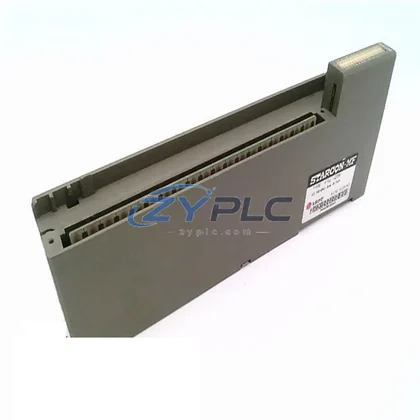
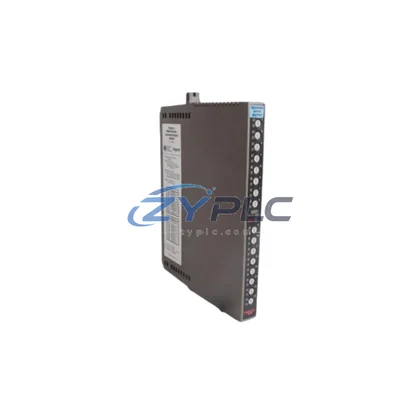
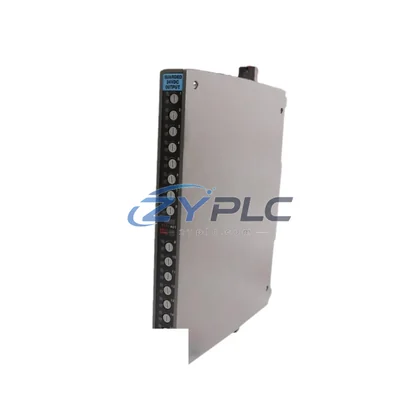
The Yokogawa AAP135-S03/S2 is a high-performance Pulse Input Module engineered for seamless integration within the STARDOM FCN/FCJ distributed control architecture. Designed to bridge field-level instrumentation with upper-layer control and monitoring systems, this module serves as a critical node in the industrial data chain — capturing pulse signals from flow meters, encoders, and turbine sensors, then converting and transmitting that data across Modbus RTU/TCP and HART-compatible networks to PLCs, SCADA platforms, and HMI terminals.
In modern smart factory environments, reliable signal acquisition and protocol-transparent communication are non-negotiable. The AAP135-S03/S2 addresses both requirements by providing stable, low-latency pulse counting and frequency measurement capabilities that feed directly into real-time process control loops. Whether deployed in oil & gas metering stations, water treatment facilities, chemical batch processes, or power generation plants, this module ensures that every pulse event is accurately timestamped, transmitted, and logged without data loss.
Compatibility & Integration Notes
| Parameter |
Specification |
| SKU |
AAP135-S03/S2 |
| Brand |
Yokogawa |
| Series |
STARDOM FCN / FCJ |
| Module Type |
Pulse Input Module |
| Communication Protocol |
Modbus RTU, Modbus TCP/IP, HART |
| Interface Type |
Digital Pulse Input (Contact / Open Collector) |
| Transmission Capability |
High-speed pulse counting, frequency measurement |
| Network Compatibility |
Ethernet, RS-485, Industrial LAN |
| System Application |
SCADA, DCS, HMI, Remote I/O, Edge Gateway |
| Origin |
Japan |
| Warranty |
12 Months |
Connected Automation Data Flow
The AAP135-S03/S2 operates at the heart of a layered industrial communication architecture. At the field level, pulse signals originating from Yokogawa EJA-series differential pressure transmitters, turbine flow meters, and rotary encoders are fed directly into the module’s input channels. The module processes these signals and passes structured data upward through the STARDOM FCN autonomous controller, which acts as the local processing hub for real-time control logic.
From the FCN controller, data is routed via Modbus TCP/IP over an industrial Ethernet backbone — typically managed through Yokogawa-compatible managed industrial switches — to the plant’s SCADA layer. Integration with Yokogawa FAST/TOOLS SCADA or third-party platforms such as Wonderware and Ignition is straightforward, as the module’s Modbus register map is fully documented and compatible with standard OPC-DA/UA gateways.
For facilities running hybrid architectures, the AAP135-S03/S2 can coexist alongside Yokogawa AAI141 Analog Input Modules and AAB841 Digital Output Modules within the same FCN I/O chassis, enabling a unified data collection point for both analog process variables and discrete pulse events. This consolidated I/O approach reduces wiring complexity and simplifies network topology.
At the HMI layer, operators interfacing with Yokogawa Exaopc OPC server or panel-mounted HMI terminals receive live pulse count data, flow totalization values, and frequency readings with sub-second refresh rates. Alarm thresholds configured within the FCN controller trigger immediate notifications to the SCADA system and, where configured, to remote maintenance teams via Yokogawa Plant Resource Manager (PRM) for asset health monitoring.
For remote diagnostic scenarios, the module’s data can be tunneled through an industrial edge gateway — such as those compatible with the STARDOM FCJ compact controller — enabling cloud-based analytics platforms to access historical pulse data for predictive maintenance modeling. This end-to-end connectivity, from sensor to cloud, exemplifies the AAP135-S03/S2’s role as a foundational component in IIoT-ready factory architectures.
Solving Data Isolation in Industrial Sites
One of the most persistent challenges in legacy industrial environments is protocol fragmentation — where field devices speak proprietary or incompatible communication languages that prevent seamless data aggregation at the supervisory level. The Yokogawa AAP135-S03/S2, operating within the STARDOM platform’s open-protocol framework, directly addresses this by supporting Modbus RTU for serial device integration and Modbus TCP/IP for Ethernet-based SCADA connectivity, eliminating the need for external protocol converters in most deployment scenarios.
Data silos — where process data remains trapped within isolated control islands — are broken down by the FCN controller’s ability to aggregate inputs from multiple AAP135-S03/S2 modules and present a unified data namespace to upstream systems. This enables production line transparency: supervisors can view real-time flow totals, batch counts, and equipment cycle rates from a single SCADA dashboard without manually reconciling data from disparate sources.
Remote monitoring is further enhanced by the module’s compatibility with Yokogawa’s remote I/O expansion architecture, allowing distributed pulse measurement points across large plant footprints to be centrally managed. System expansion is equally straightforward — additional AAP135-S03/S2 modules can be hot-inserted into the FCN chassis without process interruption, supporting phased capacity growth as production demands evolve.
Every unit supplied by ZYPLC undergoes pre-shipment functional testing, verifying pulse input accuracy, communication register integrity, and network handshake performance before dispatch. Combined with a RFQ-based availability for rapid delivery, the AAP135-S03/S2 represents a low-risk, high-reliability choice for plant engineers and procurement teams alike.
Industrial Connectivity FAQ
Q1: What communication protocols does the Yokogawa AAP135-S03/S2 support?
The AAP135-S03/S2 supports Modbus RTU over RS-485 for serial network integration and Modbus TCP/IP over Ethernet for SCADA and DCS connectivity. HART pass-through capability is also supported for field device configuration and diagnostics, making it compatible with the majority of industrial automation platforms without requiring additional protocol gateways.
Q2: Can the AAP135-S03/S2 be integrated into existing SCADA and HMI systems?
Yes. The module’s standard Modbus register map ensures compatibility with leading SCADA platforms including Yokogawa FAST/TOOLS, Wonderware System Platform, Ignition by Inductive Automation, and any OPC-UA-capable HMI or historian system. Configuration is typically completed within the STARDOM FCN engineering environment without requiring custom driver development.
Q3: How does the module perform in terms of network stability and communication latency?
The AAP135-S03/S2 is designed for deterministic, low-latency data transmission within the STARDOM FCN architecture. Pulse data is processed at the module level and made available to the controller’s scan cycle in real time, with Modbus TCP/IP polling latency typically under 10ms on a properly configured industrial Ethernet network. Redundant network configurations are supported at the FCN controller level for mission-critical applications.
Q4: What warranty and pre-shipment testing does ZYPLC provide for this module?
All Yokogawa AAP135-S03/S2 units supplied by ZYPLC carry a covering manufacturing defects and communication failures. Each unit undergoes pre-shipment functional testing including pulse input verification, Modbus communication handshake testing, and physical inspection. Availability and dispatch timing are confirmed by RFQ to minimize production downtime.