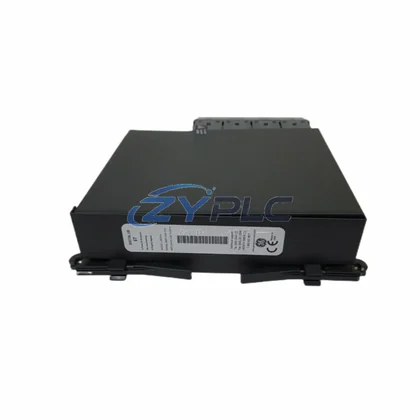
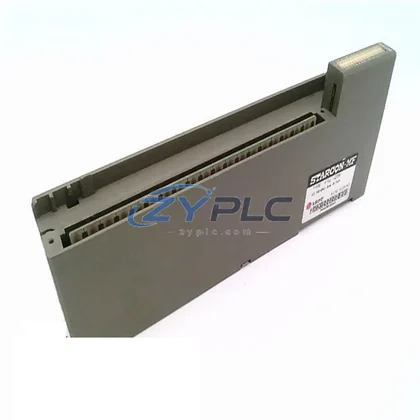
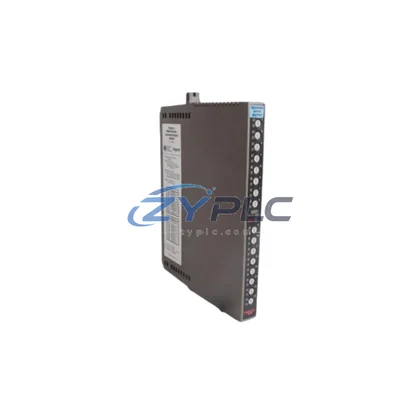
In modern industrial facilities where uptime and replacement lead time matter, the Yokogawa ADM51-2 S4 analog output module delivers the signal precision and response speed that maintenance-focused automation demands. Designed for integration within the Yokogawa Centum VP distributed control system, the ADM51-2 S4 provides stable 4–20 mA analog output channels that directly govern field devices — from control valves and variable frequency drives to proportional actuators — ensuring that energy input to each process loop is exactly what the system requires, no more and no less.
Unlike generic output modules that introduce signal latency or drift, the ADM51-2 S4 maintains tight output accuracy across the full operating temperature range, which is critical when paired with high-efficiency motor drives such as the Yokogawa VariFlex VF7 series inverters. When the drive receives a clean, stable analog reference signal, it can regulate motor speed with minimal hunting, directly reducing reactive power consumption and mechanical wear on pump and fan assemblies across the production line.
Product Specification Table
| Parameter |
Specification / Value |
| Output Channels |
2 channels (4–20 mA analog output) |
| Output Accuracy |
±0.1% of full scale |
| Module Series |
Centum VP / CS 3000 compatible (S4 generation) |
| Power Consumption |
Low-power design; optimized for high-density I/O cabinets |
| Operating Efficiency |
Stable signal output reduces drive hunting, lowers reactive energy loss |
| Compatible Systems |
Yokogawa Centum VP, Centum CS 3000 (S4 I/O bus) |
| Application Environment |
Process industries: oil & gas, chemical, power generation, water treatment |
| Energy Saving Value |
Precise loop control minimizes over-actuation; reduces valve/drive unplanned downtime |
| Warranty |
warranty terms confirmed during quotation — tested and verified before shipment |
| Availability |
RFQ Available — shipment arranged after confirmation |
System Compatibility and Application
The ADM51-2 S4 sits at the execution layer of a Centum VP control architecture, translating digital control decisions from the Yokogawa ACM11 controller module into precise analog signals that drive field instrumentation. In a typical energy-optimized plant layout, the module works in concert with the Yokogawa ADM12 multi-channel analog output module to distribute control signals across multiple process loops simultaneously, reducing the number of controller scan cycles needed and improving overall system throughput.
On the input side, the ADM51-2 S4 pairs naturally with Yokogawa AAI141 analog input modules, which collect 4–20 mA feedback signals from flow transmitters, pressure sensors, and temperature elements. This closed-loop pairing — input module reading process variables, output module commanding corrective action — is the foundation of efficient PID control that eliminates energy-wasting oscillation in heating, cooling, and fluid transport systems.
For facilities running high-power motor loads, the analog output from the ADM51-2 S4 feeds directly into Yokogawa VariFlex or compatible third-party variable frequency drives, enabling smooth speed ramp profiles that avoid inrush current spikes at motor start-up. Reducing peak demand charges through controlled acceleration is one of the most immediate energy cost savings achievable in pump and compressor applications.
Communication between the ADM51-2 S4 and the Centum VP supervisory layer travels over the Yokogawa Vnet/IP control network, a deterministic Ethernet-based fieldbus that ensures control commands arrive within defined cycle times. This low-latency communication backbone supports the Yokogawa CENTUM VP HIS (Human Interface Station), where operators monitor real-time operating load trends, loop performance indices, and alarm states — all without introducing additional polling delays that could degrade control quality.
In cabinet configurations, the ADM51-2 S4 is typically installed alongside Yokogawa NES (Node Expansion Station) I/O nodes and Yokogawa RIO (Remote I/O) units, allowing the control system to extend analog output capability to remote field junction boxes without running long individual signal cables — a wiring reduction that also lowers resistive losses in signal circuits.
Maintenance and Replacement Notes
Consider a chemical plant running continuous distillation columns where steam flow, reflux ratio, and bottoms temperature must be held within tight bands to maintain product quality and minimize energy input. Each control loop — steam supply valve, reflux control valve, bottoms pump speed — requires a reliable analog output signal. When the ADM51-2 S4 delivers a drift-free 4–20 mA command to the steam control valve positioner, the valve moves to exactly the required position without repeated correction cycles. Fewer correction cycles mean less valve travel, less actuator wear, and — critically — less steam unplanned downtimed through over-injection followed by rapid cutback.
In water treatment facilities, variable-speed pump control via the ADM51-2 S4 output to a VFD can reduce pump motor load by Actual operating results depend on the installed system, load profile, and commissioning parameters. The module’s output stability ensures the drive maintains the target speed setpoint without drift, preventing the gradual energy creep that occurs when analog signals degrade over time.
For predictive maintenance integration, the Centum VP system can use the ADM51-2 S4 output channels to command diagnostic test signals to smart positioners and valve controllers, collecting response data that reveals early signs of actuator friction increase or seal degradation — allowing maintenance teams to schedule interventions during planned shutdowns rather than responding to unplanned failures that disrupt production and waste energy through emergency restarts.
Every unit supplied by ZYPLC undergoes pre-shipment functional testing, verifying output accuracy across all channels before dispatch. Combined with a warranty terms confirmed during quotation, this ensures that the module performs to specification from day one of installation, protecting both the energy efficiency gains and the capital investment in the control system.
Product Sourcing FAQ
Q1: How does the ADM51-2 S4 contribute to measurable operational stability on the production line?
By delivering accurate, stable 4–20 mA output signals, the ADM51-2 S4 eliminates control loop oscillation caused by signal drift or noise. Stable loops mean field devices — valves, drives, actuators — operate at their intended setpoints without continuous over-correction, directly reducing unplanned downtime risk in motors, heaters, and fluid systems.
Q2: Is the ADM51-2 S4 compatible with both Centum VP and Centum CS 3000 systems?
Yes. The S4 designation indicates compatibility with the S4 generation I/O bus used in both Centum VP and Centum CS 3000 platforms. Always verify the specific node and bus configuration with your system documentation before installation to confirm slot and power compatibility.
Q3: Can the ADM51-2 S4 replace an older ADM51-2 module without system reconfiguration?
In most cases, the ADM51-2 S4 is a direct replacement for earlier ADM51-2 variants within the same S4 I/O bus environment. Channel assignments and engineering unit scaling configured in the Centum VP builder are retained. A cold replacement during a planned maintenance window is recommended, followed by a loop check to confirm output calibration.
Q4: What does the warranty terms confirmed during quotation cover, and what is the testing process before shipment?
ZYPLC’s warranty terms confirmed during quotation covers manufacturing defects and functional failures under normal operating conditions. Before shipment, each ADM51-2 S4 module is bench-tested for output accuracy, channel isolation, and communication integrity on the S4 I/O bus. Test records are available upon request. Modules that do not meet specification are not dispatched.