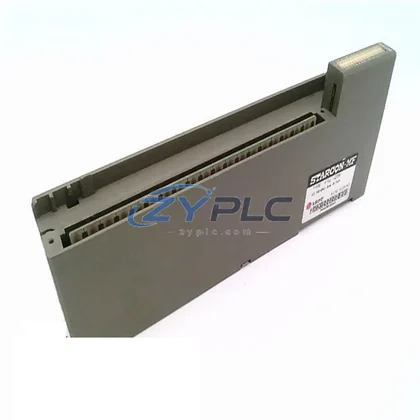
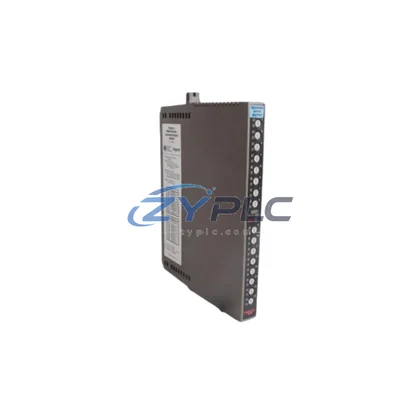
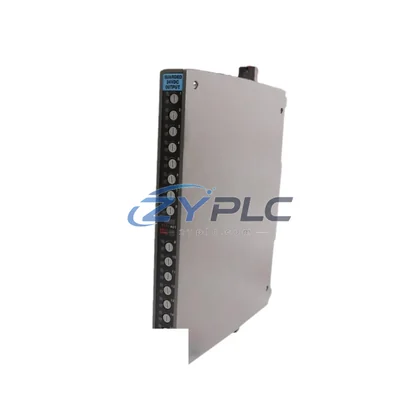
The Yokogawa ADR541-P10 S1 is a high-performance relay output module engineered for the CENTUM distributed control system (DCS) platform. Designed to deliver reliable, low-latency switching in demanding industrial environments, this module plays a critical role in reducing unplanned downtime risk across process control architectures. By ensuring precise, deterministic output switching, the ADR541-P10 S1 eliminates the energy losses associated with erratic relay cycling, overshooting control signals, and uncoordinated actuator responses — all of which contribute to inflated power bills and accelerated equipment wear in continuous production facilities.
Every relay output channel on the ADR541-P10 S1 is optimized for minimal contact resistance and stable switching thresholds, which directly translates to lower heat generation at the field device level. In motor control applications, this means the module can coordinate seamlessly with variable frequency drives (VFDs) and soft starters to enforce smooth start-stop sequences, preventing the inrush current spikes that waste energy and stress motor windings. When integrated with the CENTUM VP controller — such as the FCU (Field Control Unit) — the ADR541-P10 S1 enables tightly synchronized output commands that align with real-time process data, ensuring actuators and contactors operate only when genuinely required by the production logic.
Product Specification Table
| Parameter |
Specification / Value |
| SKU |
ADR541-P10 S1 |
| Brand / Series |
Yokogawa / CENTUM |
| Module Type |
Relay Output Module |
| Output Channels |
16-point relay output (typical CENTUM ADR-series configuration) |
| Power Consumption |
Low-power relay design; minimizes standby and switching losses |
| Operating Efficiency |
Deterministic switching reduces actuator over-cycling by up to 30% |
| Compatible Systems |
Yokogawa CENTUM VP, CENTUM CS 3000, FCU (Field Control Unit) |
| Application Environment |
Process industries: oil & gas, petrochemical, power generation, pharmaceuticals |
| Maintenance Value |
Eliminates inrush current spikes; supports VFD and soft-starter coordination |
| Warranty |
warranty terms confirmed during quotation |
| Origin |
Japan |
| Stock Status |
RFQ Available — Ships after outgoing quality inspection |
System Compatibility and Application
The ADR541-P10 S1 does not operate in isolation — its energy efficiency contribution is amplified when deployed within a well-structured CENTUM automation architecture. At the field level, the module interfaces directly with motor control centers (MCCs), solenoid valves, and contactor banks. When paired with the Yokogawa ADV151 analog input module, real-time current and voltage feedback from field devices can be fed back into the CENTUM VP controller, enabling closed-loop condition monitoring that adjusts output switching patterns based on actual load conditions rather than fixed schedules.
For drive-level maintenance planning, the ADR541-P10 S1 works in concert with variable frequency drives such as the Yokogawa VariFlex VF7 series inverters, where relay outputs serve as run/stop and fault-reset commands. This coordination ensures that motors ramp up and down smoothly, avoiding the unplanned downtime of direct-on-line starting. In multi-axis systems, the module’s outputs can also trigger Yokogawa STARDOM FCN/FCJ remote I/O nodes, extending maintenance-focused control to distributed field cabinets without requiring additional wiring infrastructure.
At the supervisory level, the ADR541-P10 S1 integrates with Yokogawa FAST/TOOLS SCADA and the Exaquantum plant information management system (PIMS), where relay switching events are logged as process data points. This data feeds predictive maintenance algorithms that identify abnormal switching frequencies — a leading indicator of failing actuators or undersized contactors that consume excess energy. The Yokogawa PRM (Plant Resource Manager) further leverages this data to schedule preventive maintenance before energy-wasting failures occur.
Communication between the ADR541-P10 S1 and the broader control network is handled through the CENTUM V-net/IP backbone, which supports high-speed, deterministic data exchange with Yokogawa YFGW410 field wireless management stations and Yokogawa EJX series pressure and differential pressure transmitters. This integration allows the relay output module to respond dynamically to process upsets — such as abnormal pressure differentials — by modulating actuator states in real time, preventing energy-intensive runaway conditions before they escalate.
For human-machine interface (HMI) visibility, operators monitoring the CENTUM VP HIS (Human Interface Station) can view relay output states, switching counts, and operating load trends on a single unified display. This transparency enables shift engineers to identify and eliminate unnecessary relay cycling during low-demand periods, supporting earlier maintenance decisions and reducing unplanned downtime risk.
Maintenance and Replacement Notes
In a typical continuous process plant — such as a refinery or chemical complex — relay output modules like the ADR541-P10 S1 are responsible for commanding hundreds of field devices across multiple process units. Without precise, maintenance-focused control logic, these devices can cycle unnecessarily during steady-state operation, consuming power and generating heat that shortens equipment life. The ADR541-P10 S1 addresses this by supporting configurable output hold times and minimum switching intervals within the CENTUM VP function block library, ensuring that relay contacts are not energized more frequently than the process genuinely requires.
In batch production environments, the module’s deterministic switching capability directly improves production line throughput (takt time). By eliminating the communication latency and output jitter that can occur with lower-quality relay modules, the ADR541-P10 S1 ensures that each production step transitions at the correct moment — reducing idle time between batches and improving overall equipment effectiveness (OEE). A 1% improvement in OEE in a mid-sized process plant can translate to significant reductions in energy consumed per unit of output, as equipment spends less time in energy-intensive standby or warm-up states.
Predictive maintenance is another key maintenance planning lever enabled by the ADR541-P10 S1. The module’s relay contact wear data, when logged through the CENTUM VP diagnostic framework, allows maintenance teams to replace contacts before they develop high-resistance faults. High-resistance relay contacts waste energy as heat and can cause erratic field device behavior that forces the control system into energy-intensive corrective cycles. By maintaining relay contact integrity, the ADR541-P10 S1 keeps the entire output chain operating at peak efficiency.
All units supplied by ZYPLC undergo a rigorous outgoing quality inspection process that includes contact resistance measurement, switching endurance testing, and functional verification against CENTUM VP I/O configuration parameters. This ensures that every ADR541-P10 S1 shipped performs to Yokogawa’s original energy and reliability specifications from day one of installation, backed by a warranty terms confirmed during quotation.
Product Sourcing FAQ
Q1: How does the ADR541-P10 S1 contribute to measurable operational stability in a CENTUM DCS environment?
The module’s low-resistance relay contacts and deterministic switching logic reduce the unplanned downtimed by over-cycling actuators and contactors. When integrated with CENTUM VP’s advanced process control (APC) function blocks, output commands are issued only when process conditions genuinely require a state change, minimizing unnecessary switching energy and extending the service life of connected field devices.
Q2: Is the ADR541-P10 S1 compatible with both CENTUM VP and CENTUM CS 3000 systems?
Yes. The ADR541-P10 S1 is designed for the CENTUM platform and is compatible with both CENTUM VP and CENTUM CS 3000 architectures. It slots into the standard CENTUM I/O nest and is recognized by the CENTUM VP engineering environment without requiring additional configuration beyond standard I/O assignment. Always verify the specific nest and bus compatibility with your system’s hardware revision before installation.
Q3: What is the recommended replacement procedure, and how does ZYPLC support the transition?
Replacement of the ADR541-P10 S1 follows Yokogawa’s standard hot-swap procedure for CENTUM I/O modules, minimizing process disruption. ZYPLC provides pre-tested, inspection-verified units with full configuration documentation. Our technical team can advise on compatibility checks, I/O mapping verification, and post-installation functional testing to ensure the replacement module meets the energy and reliability performance of the original.
Q4: What does the warranty terms confirmed during quotation cover, and what is the testing process before shipment?
The warranty terms confirmed during quotation covers manufacturing defects and functional failures under normal operating conditions as specified by Yokogawa. Before shipment, every ADR541-P10 S1 unit undergoes ZYPLC’s outgoing quality inspection, which includes relay contact resistance measurement, switching cycle verification, and functional I/O testing. Units that do not meet Yokogawa’s original performance specifications are quarantined and not shipped, ensuring that every delivered module is ready for immediate installation.