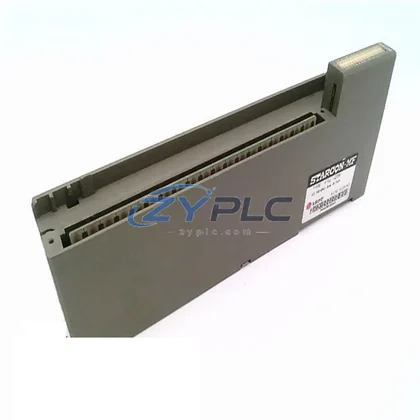
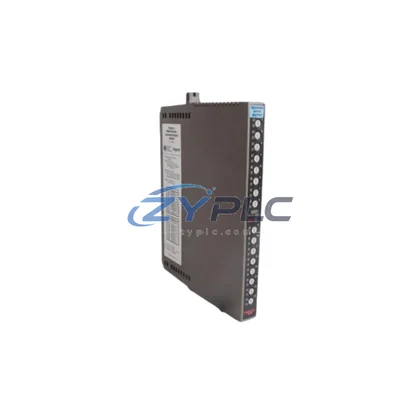
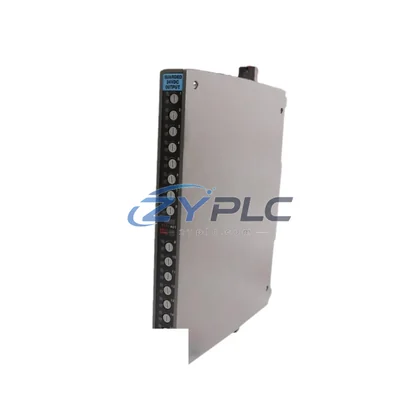
The Yokogawa ADR541-S00 S1 is a high-performance relay output module engineered for the CENTUM CS Distributed Control System (DCS) platform. Designed to meet the demanding requirements of industrial process automation, this module plays a critical role in reducing unplanned downtime risk, improving equipment utilization rates, and enabling tighter control over production line rhythm. Whether deployed in petrochemical refining, power generation, pharmaceutical manufacturing, or discrete process industries, the ADR541-S00 S1 delivers reliable switching performance that directly contributes to measurable operational stability and reduced operational costs.
In modern industrial facilities, relay output modules are the final execution layer between the control system and field devices such as solenoid valves, motor starters, and alarm indicators. A poorly performing or aging relay output card can introduce latency, false switching, or excessive power draw — all of which degrade production efficiency and inflate energy bills. The ADR541-S00 S1 addresses these challenges with precision-engineered relay contacts, stable signal isolation, and full compatibility with the CENTUM CS control bus architecture.
Product Specification Table
| Parameter |
Specification / Value |
| SKU / Part Number |
ADR541-S00 S1 |
| Module Type |
Relay Output Module |
| Compatible Platform |
Yokogawa CENTUM CS DCS |
| Output Type |
Relay Contact (Dry Contact) |
| Operating Voltage |
24 VDC (typical field supply) |
| Power Consumption |
Low standby draw; energized only on active switching |
| Running Efficiency |
High — minimizes parasitic load on DCS backplane |
| Application Environment |
Process plants, utilities, batch manufacturing, energy facilities |
| Energy Saving Value |
Reduces unnecessary actuator energization; supports demand-side load control |
| Origin |
Japan |
| Warranty |
warranty terms confirmed during quotation |
| Inventory Status |
RFQ Available — shipment arranged after confirmation |
| Pre-shipment Testing |
Full functional and output verification test performed before dispatch |
System Compatibility and Application
The ADR541-S00 S1 does not operate in isolation — its true maintenance planning value emerges when integrated within a well-designed CENTUM CS automation architecture. In a typical high-efficiency plant configuration, the module works in concert with the Yokogawa ACM12 Communication Module, which manages real-time data exchange between field I/O cards and the central controller, ensuring that relay switching commands are executed with minimal latency and zero redundant cycles.
On the controller side, the Yokogawa CP451 Central Processing Unit executes the control logic that governs when and how the ADR541-S00 S1 activates field devices. By pairing precise PID loop execution with relay output timing, the CP451 ensures that motors, pumps, and valves are energized only when process conditions demand it — directly cutting idle-state operating load. For applications requiring expanded I/O capacity, the Yokogawa ADV151 Analog Input Module feeds real-time process variable data (temperature, pressure, flow) into the control loop, allowing the system to make maintenance decisions before issuing relay commands.
Variable frequency drives (VFDs) are a natural complement to relay output modules in energy-optimized systems. The ADR541-S00 S1 is commonly used to issue start/stop commands to Yokogawa-compatible VFD units and third-party drives integrated via the CENTUM CS I/O bus. By controlling drive enable signals through the relay output rather than hard-wired manual switches, operators gain centralized, software-controlled motor management — enabling load scheduling, soft-start sequencing, and automatic shutdown during low-demand periods.
For power quality monitoring and energy metering, the ADR541-S00 S1 integrates seamlessly with Yokogawa WT series power analyzers and compatible condition monitoring instruments connected to the DCS via MODBUS or HART communication. This allows the control system to correlate relay switching events with real-time power consumption data, enabling engineers to identify unplanned downtime patterns and optimize switching schedules. The Yokogawa STARDOM FCN autonomous controller can also serve as an edge node in distributed maintenance planning architectures, collecting relay state data and forwarding it to plant-level SCADA or MES systems for production line energy benchmarking.
Human-machine interface integration is equally important. The Yokogawa Exaopc OPC Server and compatible HMI platforms allow operators to visualize relay output states, switching frequencies, and associated energy metrics on a single dashboard. When combined with the Yokogawa PRM (Plant Resource Manager) asset management software, maintenance teams can track relay contact wear cycles, schedule predictive maintenance before failures occur, and avoid the energy penalties associated with unplanned downtime and emergency restarts.
Maintenance and Replacement Notes
In real-world production environments, the ADR541-S00 S1 contributes to maintenance planning across multiple dimensions. Consider a continuous process plant where dozens of solenoid valves and motor contactors must be cycled in precise coordination with upstream and downstream process conditions. Without a reliable, low-latency relay output module, control commands may arrive late, causing valves to remain open longer than necessary or motors to run at full load during process idle periods. The ADR541-S00 S1 eliminates this inefficiency by providing deterministic switching response within the CENTUM CS scan cycle.
In batch manufacturing lines, the module supports recipe-driven automation where operating load is directly tied to production throughput. By enabling the DCS to precisely control the on/off state of heating elements, agitators, and transfer pumps through relay outputs, the ADR541-S00 S1 helps reduce batch cycle time variability — a key driver of unplanned downtime in multi-product facilities. Shorter, more consistent batch cycles mean less time at elevated temperature or pressure, translating directly into lower utility costs per unit produced.
Predictive maintenance is another area where the ADR541-S00 S1 delivers long-term operational stability. Relay contacts that are worn or degraded introduce resistance into switching circuits, causing localized heating and increased power draw. By replacing aging relay output modules proactively — supported by the warranty terms confirmed during quotation and pre-shipment functional testing provided with every ADR541-S00 S1 unit — maintenance teams can prevent the gradual energy efficiency degradation that often goes undetected until a catastrophic failure occurs.
From an inventory and supply chain perspective, maintaining a spare ADR541-S00 S1 in the plant’s critical spare parts inventory ensures that any relay output failure can be resolved within minutes rather than days. Rapid module swap capability minimizes production downtime, prevents energy-intensive emergency restarts of process equipment, and protects the plant’s overall equipment effectiveness (OEE) score. Every unit shipped from our warehouse undergoes a comprehensive output verification test, ensuring that the replacement module performs to specification from the moment it is installed.
Product Sourcing FAQ
Q1: How does the ADR541-S00 S1 contribute to measurable operational stability in a CENTUM CS system?
The ADR541-S00 S1 enables precise, software-controlled switching of field devices such as motors, valves, and actuators. By eliminating manual or timer-based control and replacing it with DCS-driven relay logic, plants can implement demand-responsive load management — energizing equipment only when process conditions require it. This reduces idle-state operating load and supports load-shedding strategies during peak tariff periods.
Q2: Is the ADR541-S00 S1 compatible with other Yokogawa CENTUM series platforms beyond CENTUM CS?
The ADR541-S00 S1 is specifically designed for the CENTUM CS platform. For compatibility with CENTUM VP or CENTUM CS 3000 systems, we recommend verifying the I/O bus specification and backplane slot requirements before installation. Our technical team can assist with cross-platform compatibility assessment and recommend equivalent modules for other CENTUM series controllers if needed.
Q3: What does the pre-shipment testing process include, and how does it ensure reliable field performance?
Every ADR541-S00 S1 unit undergoes a full functional verification test prior to dispatch. This includes relay contact continuity testing, output switching verification under load, and isolation resistance measurement. The test process ensures that the module meets original Yokogawa factory specifications and will perform reliably from the first scan cycle after installation — reducing the risk of early-life failures that can disrupt production and waste energy through unplanned restarts.
Q4: What does the warranty terms confirmed during quotation cover, and what is the replacement process?
The warranty terms confirmed during quotation covers manufacturing defects and functional failures under normal operating conditions. If the ADR541-S00 S1 fails to perform to specification within the warranty period, we will provide a replacement unit at no additional cost. Our streamlined RMA process is designed to minimize plant downtime — contact our technical support team with the module serial number and failure description to initiate a warranty claim. Replacement units are dispatched from stock and tested before shipment.