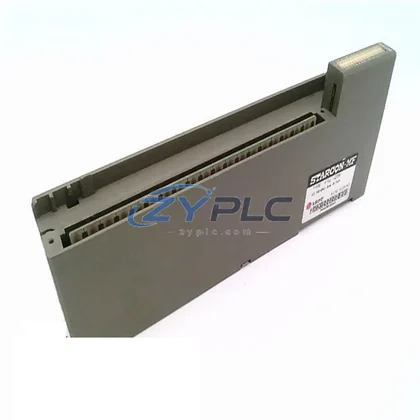
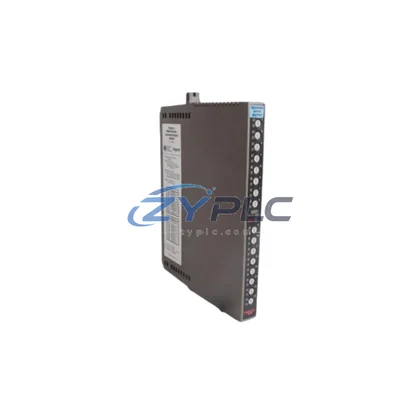
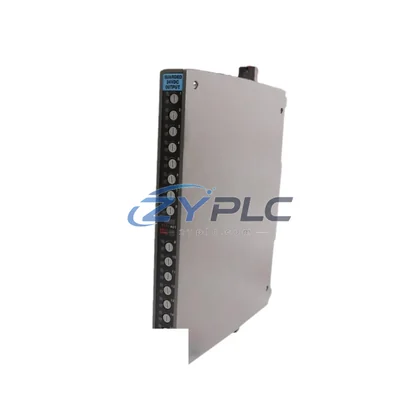
The Yokogawa ADV151-E50 is a high-performance digital input module engineered for the Centum CS 3000 distributed control system (DCS). Designed to meet the demanding requirements of modern industrial automation, this module plays a critical role in reducing unnecessary energy consumption, improving equipment utilization rates, and enabling real-time process feedback across complex production environments. Whether deployed in chemical processing, oil refining, power generation, or advanced manufacturing, the ADV151-E50 delivers the signal integrity and system responsiveness that energy-conscious facilities depend on.
In today’s industrial landscape, every watt counts. The ADV151-E50 supports up to 32 digital input channels, enabling centralized monitoring of field device states — from motor run/stop signals and valve position feedback to safety interlock status and equipment fault detection. By consolidating these inputs into the Centum CS 3000 control architecture, operators gain a unified view of plant-wide energy flows, allowing them to identify idle equipment, eliminate phantom loads, and tighten production cycle timing with measurable results.
Product Specification Table
| Parameter |
Specification / Value |
| Model / SKU |
ADV151-E50 |
| Brand |
Yokogawa |
| Series |
Centum CS 3000 |
| Module Type |
Digital Input Module |
| Input Channels |
32 channels (isolated) |
| Input Voltage Range |
24 VDC (typical field signal) |
| Power Consumption |
Low-power design, optimized for DCS rack efficiency |
| Operating Efficiency |
High-speed scan cycle, minimizes CPU polling overhead |
| Compatible System |
Yokogawa Centum CS 3000 DCS |
| Application Environment |
Process industries: oil & gas, chemical, power, pharma, manufacturing |
| Maintenance Value |
Enables real-time equipment state monitoring to eliminate idle unplanned downtime |
| Origin |
Japan |
| Warranty |
warranty terms confirmed during quotation — tested and verified before shipment |
System Compatibility and Application
The ADV151-E50 does not operate in isolation — its true value emerges when integrated into a well-designed industrial automation system. Within the Centum CS 3000 platform, the module works in close coordination with analog input modules such as the AAI141-S00 and AAI543-H00, which capture continuous process variables like temperature, pressure, and flow rate. Together, these modules feed real-time data into the DCS controller, enabling the system to make intelligent decisions about when to ramp up or scale back energy-intensive equipment.
On the output side, the ADV151-E50 pairs naturally with digital output modules like the ADV551-P50, which translates control decisions into discrete switching commands for motors, solenoids, and contactors. When a production line enters a low-demand phase, the DCS can automatically de-energize non-essential loads based on the input states captured by the ADV151-E50 — a direct pathway to measurable operational stability without manual operator intervention.
For drive-level maintenance planning, the ADV151-E50 integrates seamlessly with Yokogawa’s variable frequency drive (VFD) control loops. By monitoring motor run/stop feedback signals and fault status inputs, the module enables the DCS to coordinate with Yokogawa WT series power analyzers and third-party VFDs to dynamically adjust motor speed based on actual process demand. This eliminates the energy penalty of running motors at full speed during partial-load conditions — one of the most significant sources of industrial unplanned downtime.
Communication integrity is maintained through the Centum CS 3000’s V-net/IP and Vnet fieldbus architecture. The ADV151-E50 supports high-speed cyclic data exchange with the ACF11 field control station and AFS10D field control unit, ensuring that digital input states are reflected in the control database with minimal latency. This tight integration with the control platform also supports connection to Yokogawa STARDOM FCN/FCJ remote I/O nodes for distributed plant topologies, extending condition monitoring reach to remote pump stations, compressor skids, and auxiliary utility systems.
For HMI and supervisory visibility, the ADV151-E50’s input data is surfaced through Yokogawa FAST/TOOLS SCADA and the Centum CS 3000 operator station, giving energy managers a real-time dashboard of equipment states across the entire facility. When combined with the Yokogawa Exaquantum plant information management system, historical input state data can be analyzed to identify recurring inefficiency patterns — such as motors left running during shift changeovers or compressors cycling unnecessarily during low-production periods.
Maintenance and Replacement Notes
In a typical continuous process plant, the ADV151-E50 is installed in the DCS I/O cabinet closest to the field junction boxes, minimizing cable runs and signal degradation. Each of its 32 input channels monitors a discrete field device — a pump seal failure contact, a conveyor belt running signal, a heat exchanger bypass valve position, or a safety shutdown relay status. This granular visibility into equipment states is the foundation of effective maintenance planning.
Consider a scenario in a petrochemical facility where multiple cooling water pumps operate in parallel. Without accurate digital input monitoring, operators may leave redundant pumps running as a precaution, consuming kilowatts of unnecessary power around the clock. With the ADV151-E50 feeding real-time pump status data into the Centum CS 3000 control logic, the DCS can automatically switch off standby pumps when process demand drops below a defined threshold — and restart them instantly when conditions change. Over a year of continuous operation, this single optimization can translate into significant reductions in electricity consumption and associated carbon emissions.
The module also contributes directly to production line cycle time optimization. By providing high-speed, debounce-filtered digital inputs, the ADV151-E50 ensures that the DCS receives clean, reliable signals from position sensors, proximity switches, and limit switches on automated assembly or packaging lines. Noisy or delayed input signals are a common cause of unnecessary machine stops and restart cycles — each of which wastes energy and reduces overall equipment effectiveness (OEE). The ADV151-E50’s signal conditioning capabilities help eliminate these micro-stoppages, keeping production lines running at their designed throughput with minimal energy overhead.
Predictive maintenance is another area where the ADV151-E50 delivers measurable value. By continuously monitoring the on/off cycling frequency of motors, valves, and other field devices, the Centum CS 3000 can detect abnormal switching patterns that indicate developing mechanical faults — a valve that is cycling more frequently than normal, or a motor that is tripping and restarting repeatedly. Early detection of these patterns allows maintenance teams to schedule corrective action before a catastrophic failure occurs, avoiding the energy and productivity losses associated with unplanned downtime.
Every ADV151-E50 unit supplied by ZYPLC is sourced from verified inventory, subjected to functional testing prior to shipment, and backed by a warranty terms confirmed during quotation. Our quality control process ensures that each module meets Yokogawa’s original performance specifications, giving you confidence in the reliability of your control system from day one of installation.
Product Sourcing FAQ
Q1: How does the ADV151-E50 contribute to measurable operational stability in a DCS-controlled plant?
The ADV151-E50 provides the Centum CS 3000 DCS with accurate, real-time digital input data from field devices across the plant. This enables the control system to implement demand-based equipment switching logic — automatically de-energizing motors, pumps, fans, and other loads when process conditions do not require them. The result is a direct reduction in idle-state energy consumption without compromising process safety or availability.
Q2: Is the ADV151-E50 compatible with upgraded or expanded Centum CS 3000 systems?
Yes. The ADV151-E50 is designed for full compatibility with the Centum CS 3000 I/O bus architecture. It can be installed in standard field control station (FCS) cabinets alongside other I/O modules including analog input, analog output, and digital output modules. For system expansions, it integrates without requiring firmware changes to the existing DCS configuration, making it a cost-effective choice for capacity upgrades.
Q3: What is the recommended replacement or upgrade path if the ADV151-E50 is being phased out of an aging CS 3000 system?
For facilities migrating from Centum CS 3000 to the newer Centum VP platform, Yokogawa offers compatible digital input modules within the VP I/O family that support a structured migration path. ZYPLC can advise on equivalent module specifications and assist with sourcing both legacy CS 3000 modules for near-term maintenance needs and VP-series replacements for longer-term system modernization projects.
Q4: What testing and warranty coverage does ZYPLC provide for the ADV151-E50?
Every ADV151-E50 unit shipped by ZYPLC undergoes pre-shipment functional testing to verify channel integrity, input response, and communication with the DCS backplane. All units are covered by a warranty terms confirmed during quotation from the date of shipment. In the event of a verified module fault within the warranty period, ZYPLC will provide a replacement unit or full refund, subject to standard return and inspection procedures. Our technical team is available to support installation, commissioning, and troubleshooting queries.