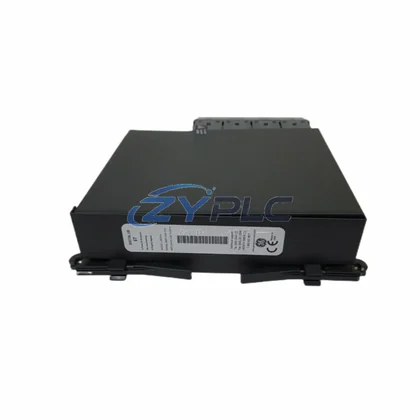
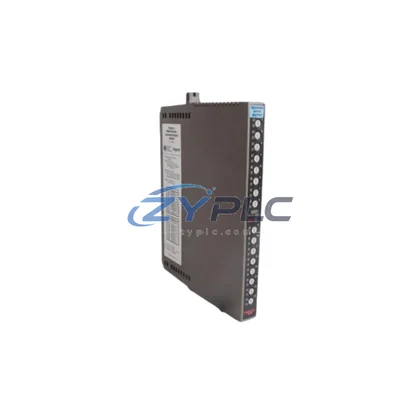
The Yokogawa ADV159-P00 is a high-performance Digital Input Module engineered for the CENTUM distributed control system (DCS) platform. Designed to meet the rigorous demands of modern industrial automation, the ADV159-P00 delivers precise signal acquisition, ultra-low power consumption, and seamless integration into maintenance-focused production architectures. Whether deployed in petrochemical refining, power generation, pharmaceutical manufacturing, or discrete process industries, this module serves as a critical node in the plant’s maintenance planning chain — capturing field-level digital signals with accuracy and reliability that directly supports reduced unplanned downtime, improved equipment utilization, and lower total cost of ownership.
In today’s industrial landscape, energy efficiency is no longer a secondary consideration — it is a core operational KPI. The ADV159-P00 addresses this by providing deterministic, low-latency digital input scanning that enables the CENTUM controller to respond rapidly to process deviations, preventing energy-intensive fault recovery cycles and unnecessary actuator cycling. By feeding clean, debounced digital signals into the control loop, the module helps maintain optimal process setpoints, reducing the energy overhead associated with overcorrection and equipment wear.
Product Specification Table
| Parameter |
Specification / Value |
| SKU / Part Number |
ADV159-P00 |
| Module Type |
Digital Input Module |
| Compatible Platform |
Yokogawa CENTUM VP / CENTUM CS 3000 |
| Input Channels |
16-channel (typical for ADV15x series) |
| Signal Type |
Discrete / Digital (24 VDC field signals) |
| Power Consumption |
Ultra-low module power draw; optimized for bus-powered I/O racks |
| Operating Efficiency |
High-speed scan cycle; minimizes controller polling overhead |
| Compatible Systems |
CENTUM DCS, FCS (Field Control Station), HIS (Human Interface Station) |
| Application Environment |
Process automation, maintenance planning, motor control interlocking |
| Energy Saving Value |
Reduces unnecessary actuator cycling; supports demand-response control strategies |
| Communication Protocol |
Yokogawa V-net / Vnet/IP (CENTUM native bus) |
| Origin |
Japan |
| Warranty |
warranty terms confirmed during quotation — tested and verified before shipment |
System Compatibility and Application
The ADV159-P00 does not operate in isolation — it is a foundational component within a broader maintenance-focused automation ecosystem. In a typical CENTUM-based plant, the module works in concert with the Yokogawa AFV10D Field Control Station, which processes the digital inputs and executes control logic to regulate downstream equipment. The FCS communicates over the Vnet/IP high-speed control network, ensuring that energy-critical interlocks and status signals are propagated to the control layer with minimal latency.
On the drive side, digital outputs from the CENTUM system — informed by the ADV159-P00’s input data — command Yokogawa-compatible variable frequency drives (VFDs) and motor starters to modulate pump and fan speeds in response to actual process demand rather than fixed schedules. This demand-driven approach, enabled by accurate digital signal feedback, is one of the most impactful levers for reducing motor load in continuous process plants. Complementing this, Yokogawa Power Monitor modules and energy metering I/O cards capture real-time kWh data at the equipment level, feeding the plant’s maintenance planning information system (EMIS) for trend analysis and anomaly detection.
For servo and motion-intensive applications, the ADV159-P00 integrates with Yokogawa’s RM series Remote I/O modules, extending the digital input network to field junction boxes without adding controller overhead. The ADV551 Analog Input Module and ADV561 Analog Output Module within the same CENTUM I/O family work alongside the ADV159-P00 to provide a complete mixed-signal acquisition layer — capturing both discrete equipment states and continuous process variables such as temperature, pressure, and flow, all of which are essential inputs to maintenance planning algorithms running in the FCS.
At the supervisory level, the Yokogawa FAST/TOOLS SCADA platform or the Exaquantum Plant Information Management System (PIMS) aggregates data from the CENTUM DCS — including the digital status signals collected by the ADV159-P00 — to generate energy performance dashboards, identify inefficient operating modes, and support ISO 50001 maintenance planning compliance reporting. The HIS (Human Interface Station) provides operators with real-time visibility into equipment run/stop states, enabling proactive energy dispatch decisions during peak demand periods.
For plants implementing predictive maintenance strategies, the digital input signals from the ADV159-P00 — such as motor run feedback, valve position confirmation, and equipment fault status — feed into Yokogawa’s OpreX Asset Management solution, where machine learning models correlate operational patterns with maintenance needs, reducing unplanned downtime and the associated energy spikes from emergency restarts.
Maintenance and Replacement Notes
In a refinery or chemical plant running continuous processes, the ADV159-P00 plays a direct role in reducing unplanned downtime at the equipment interlock level. Consider a scenario where multiple motor-driven pumps are controlled based on tank level and flow demand signals. Without reliable digital input acquisition, the control system may experience signal bounce or delayed state detection, causing unnecessary pump starts and stops — each of which carries a significant inrush current penalty and accelerates motor wear. The ADV159-P00’s hardware debounce and high-speed scan capability eliminate this problem, ensuring that the CENTUM FCS receives clean, stable digital signals and can execute smooth, energy-efficient pump sequencing logic.
In batch manufacturing environments, the module supports production line rhythm (takt time) optimization by providing accurate machine-ready and cycle-complete signals to the DCS. This allows the control system to coordinate upstream and downstream equipment handoffs with precision, minimizing idle operating load between production steps. Plants that have optimized their digital I/O infrastructure report measurable reductions in auxiliary equipment runtime — compressors, conveyors, and HVAC systems that previously ran on fixed timers can now be controlled based on actual production state signals captured by modules like the ADV159-P00.
From a maintenance cost perspective, the module’s robust design and Yokogawa’s proven CENTUM I/O architecture mean that field replacement is straightforward and non-disruptive. Hot-swap capability (where supported by the I/O rack configuration) allows maintenance teams to replace the ADV159-P00 without shutting down the control system, eliminating the energy and production cost of a planned outage. Each unit shipped by ZYPLC undergoes pre-shipment functional testing to verify channel integrity, input threshold accuracy, and bus communication health — ensuring that the replacement module performs to specification from the moment it is installed.
Inventory availability is maintained to support rapid deployment. ZYPLC stocks the ADV159-P00 and related CENTUM I/O modules to minimize lead times for MRO (maintenance, repair, and operations) procurement, helping plants avoid the extended downtime and energy inefficiency associated with waiting for long-lead spare parts.
Product Sourcing FAQ
Q1: How does the ADV159-P00 contribute to measurable operational stability in a CENTUM-controlled plant?
The ADV159-P00 improves energy efficiency indirectly but significantly by providing the CENTUM FCS with accurate, low-latency digital input data. Clean signal acquisition prevents false triggers and unnecessary actuator operations — each of which consumes energy and causes wear. When integrated with demand-response control strategies and VFD-driven motors, the accurate equipment state feedback from the ADV159-P00 enables the control system to run motors only when needed and at optimal speeds, reducing overall plant operating load.
Q2: Is the ADV159-P00 compatible with both CENTUM VP and CENTUM CS 3000 systems?
Yes. The ADV159-P00 is designed for the Yokogawa CENTUM platform and is compatible with CENTUM VP and CENTUM CS 3000 I/O rack configurations. It communicates over the Yokogawa V-net/Vnet/IP control bus and is recognized by the CENTUM engineering environment (System View / Builder) for configuration and diagnostics. Always verify rack slot compatibility and firmware revision requirements with your CENTUM system documentation before installation.
Q3: What is the recommended replacement procedure, and how do I minimize downtime during a swap?
For plants with hot-swap-capable I/O racks, the ADV159-P00 can be replaced online without shutting down the FCS. The procedure involves placing the affected I/O card in bypass mode via the CENTUM HIS, physically replacing the module, and confirming channel restoration in the diagnostic display. For non-hot-swap configurations, a controlled shutdown of the affected FCS node is required. ZYPLC recommends keeping at least one spare ADV159-P00 in your MRO inventory to enable same-day replacement and minimize production energy losses from extended downtime.
Q4: What does the warranty terms confirmed during quotation cover, and what testing is performed before shipment?
Every ADV159-P00 supplied by ZYPLC is covered by a warranty terms confirmed during quotation from the date of shipment. Pre-shipment testing includes functional verification of all digital input channels, input threshold and debounce performance checks, bus communication integrity testing on a CENTUM-compatible test rack, and visual inspection for physical damage. Units that do not pass all test criteria are quarantined and not shipped. In the event of a warranty claim, ZYPLC provides a replacement unit and supports root cause analysis to determine whether the failure was due to a manufacturing defect or field installation conditions.